Sandstone, Limestone, Bluestone and Travertine Compared
Most of our work is in Sydney sandstone, and we also work in limestone, bluestone and travertine. Here is how they compare, and what to know about sandstone before you choose.
Sydney sandstone
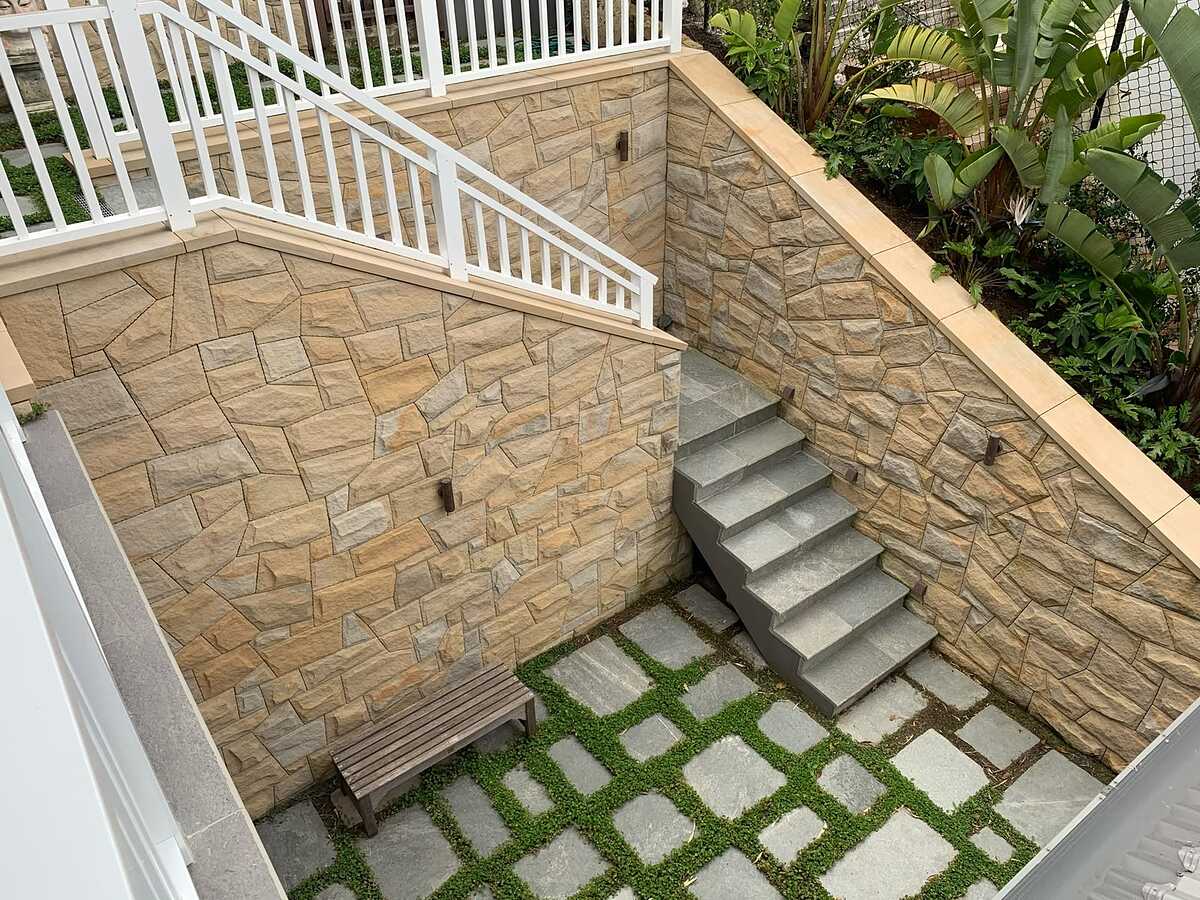
The local stone of Sydney's headlands, cliffs and older buildings. Warm gold, cream and brown tones, easy to cut and shape, and right at home on the Northern Beaches. It is porous, so it needs the right grade for the job and sensible sealing.
Strengths
Matches the natural rock and older stonework of Sydney
Can be sawn, split, rock-faced or hand-dressed for very different looks
Light colours stay relatively cool underfoot
Weathers in gracefully; recycled stone available for matching
Workable on site for curves, steps and custom details
Watch for
Porous: absorbs water, stains and salt without a sealer
Softer grades can powder or flake in salt and wet areas
Quality varies between quarries and beds, so grade matters
Can grow mould and lichen in shade
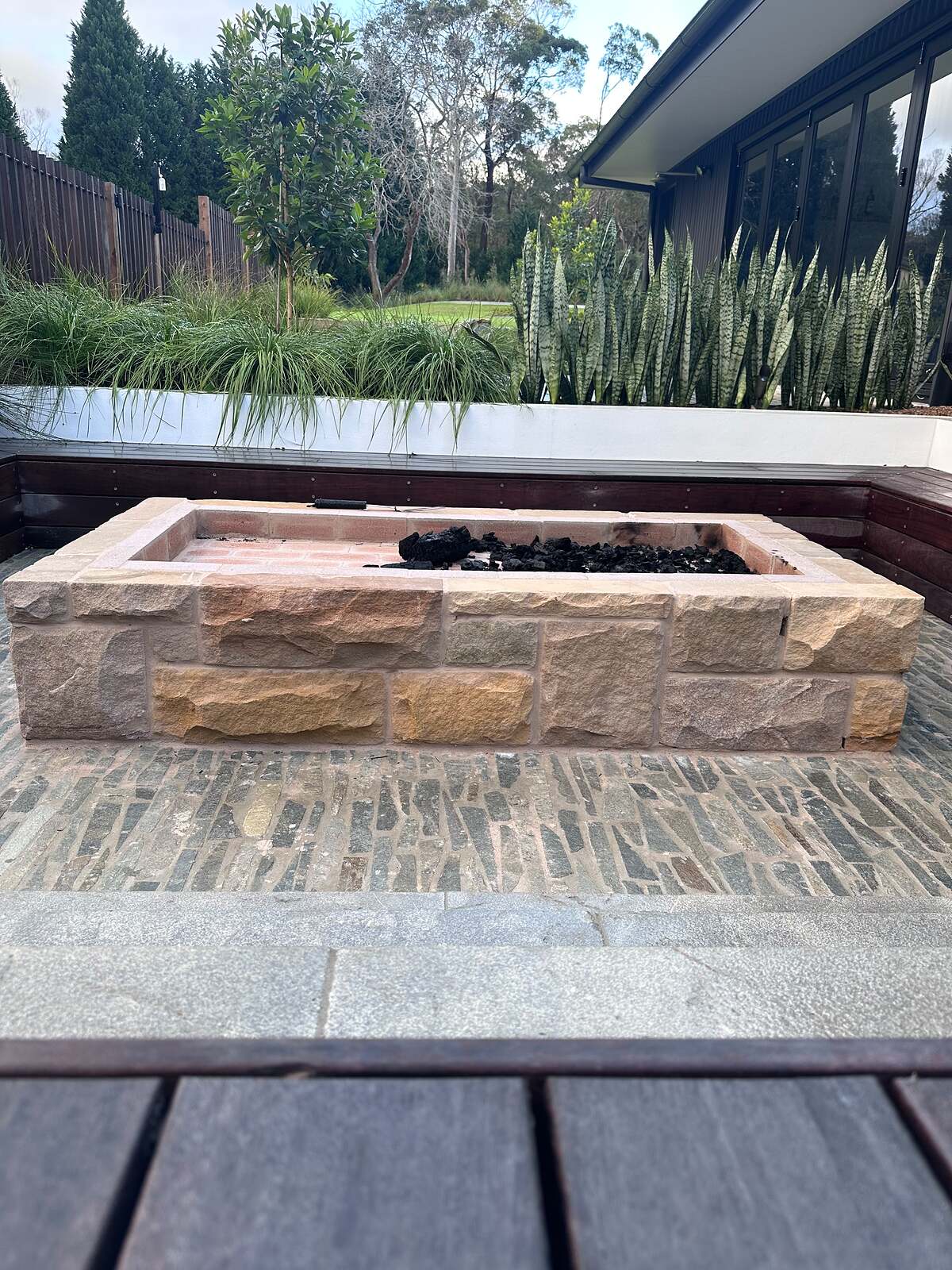
Best for: Retaining and garden walls, Cladding and fireplaces, Steps and paving, Heritage repairs and matching
Bluestone
A dense, hard volcanic stone (basalt) in grey to charcoal tones. In Australia it is quarried in Victoria, and a lot of the bluestone sold for paving is imported. It is tough, low in porosity and suits crisp, modern designs.
Strengths
Dense and hard-wearing, good for high-traffic paving
Low porosity, so it handles salt and pool water well
Sawn or textured finishes give good grip
Cool grey tones suit contemporary homes
Watch for
Darker stone gets hot in full sun
Harder and heavier to cut and shape than sandstone
Can show light marks and patina over time
Some honed finishes can be slippery when wet
Best for: Paving and pool surrounds, Steps and treads, Crazy paving and cobbles, Driveway and entry details
Limestone
Limestone is a sedimentary stone made mostly of calcium carbonate. The limestones used in Sydney homes are usually imported, in even creams, ivories and pale greys, and suit a cleaner, more contemporary look than golden sandstone.
Strengths
Even, consistent colour from piece to piece
Light tones stay relatively cool underfoot
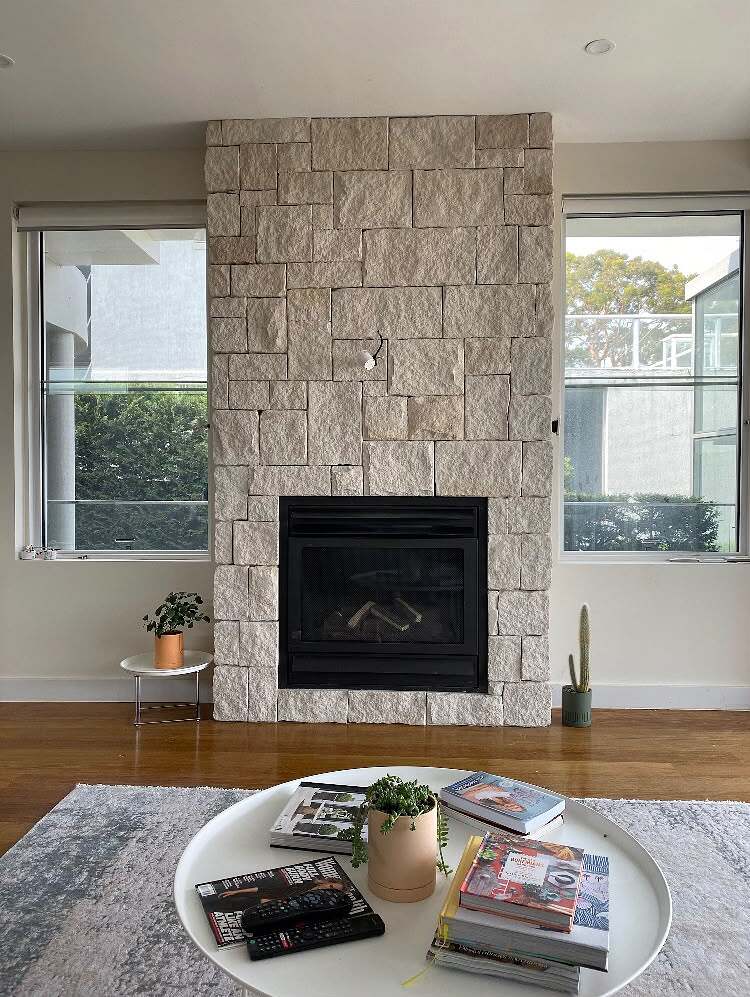
Fine texture suits split-face cladding, fireplaces and honed paving
Works well beside render, timber and dark window frames
Watch for
Acids such as lemon juice, wine and some cleaners can etch it
Density and porosity vary a lot between quarries and grades
Needs a breathable penetrating sealer, especially outdoors
Pale stone shows dirt and leaf stains until it is sealed
Best for: Facade and feature wall cladding, Fireplaces, Paving and pool surrounds (dense grades)
Travertine
A form of limestone laid down by mineral springs, mostly imported, in creams, beiges and soft walnut tones. It is popular for pool surrounds because light colours stay cool, but it has natural holes and needs sealing.
Strengths
Light colours stay cool underfoot
Tumbled and honed finishes give a soft, resort look
Consistent tiles and pavers are easy to lay in patterns
Good grip in tumbled or textured finishes
Watch for
Natural holes, which may be filled or left open
Sensitive to acids, including some cleaners
Needs sealing and regular upkeep, especially near pools
Quality and density vary between sources
Best for: Pool coping and surrounds, Courtyards and patios, Indoor-outdoor flooring
Side by side
Sandstone, limestone, bluestone and travertine compared
Property
Sandstone
Limestone
Bluestone
Travertine
Heat underfoot
Cool to warm, by colour
Cool, light colours
Hot when dark
Cool
Grip when wet
Good, sawn or textured
Good when textured; honed can be slippery
Good, sawn or textured
Good, tumbled or honed
Porosity
Medium to high
Low to high, varies by grade
Low
Medium, with holes
Salt and pools
Needs dense grade and care
Dense grades only, sealed
Very good
Good when sealed
Sealing
Needed
Needed
Recommended
Needed
Hardness and wear
Softer, varies by grade
Softer, varies by grade
Very hard
Medium
Look
Warm golds and bands
Even creams, ivories and pale greys
Grey to charcoal
Creams and beiges
Ageing
Weathers and softens in tone
Holds its even tone; acids can mark it
Develops a patina
Mellows, holes may open
Shaping on site
Easy
Easy to moderate
Harder
Moderate
What Sydney sandstone is
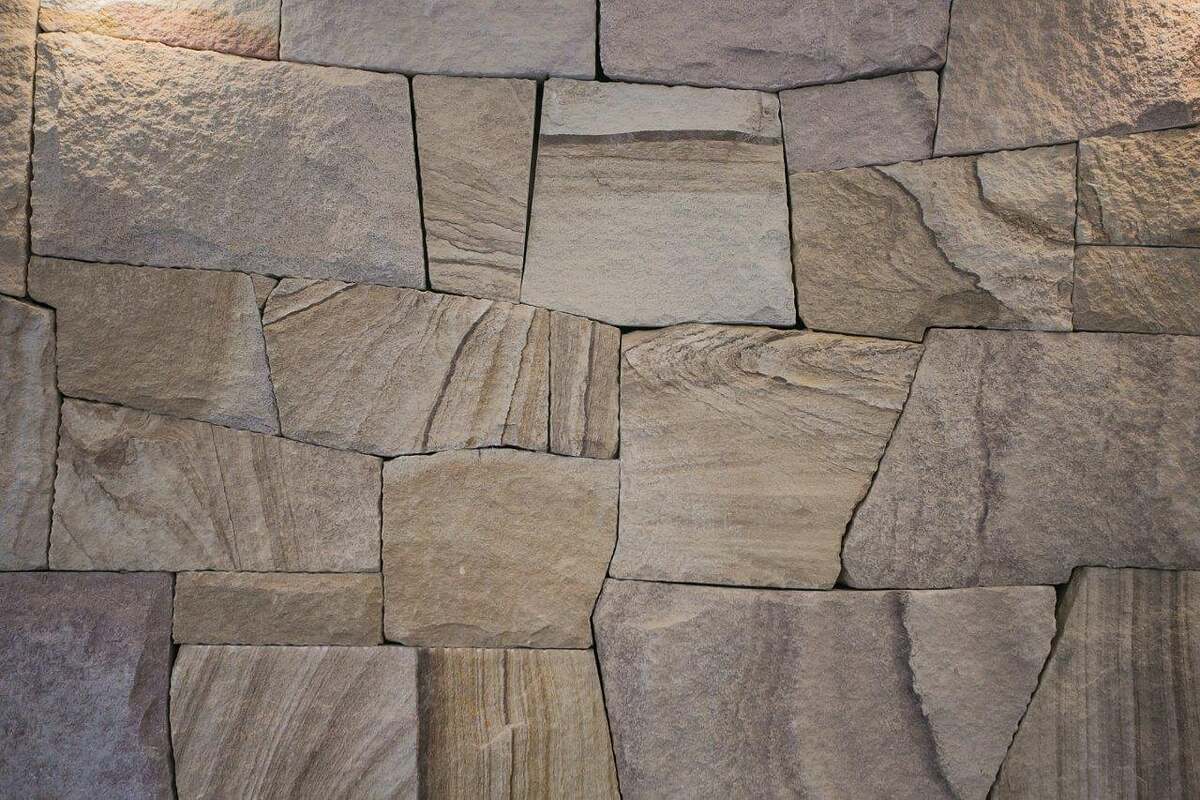
Sydney sandstone, often called Hawkesbury sandstone, is the bedrock under much of Sydney, including the Northern Beaches and North Shore. It was laid down in the Middle Triassic, roughly 247 to 242 million years ago, probably by a large river system and delta. It is mostly very pure quartz (silica) grains with a little of the iron mineral siderite, bound in a clay matrix.
That iron is why the stone changes colour. Freshly cut sandstone is often grey or cream, and as the iron oxidises it turns the warm yellow-brown seen on old Sydney buildings. Look closely and you will see cross-bedding and ripple marks left by ancient currents. Many of Sydney's best-known buildings, including St Mary's Cathedral and the Queen Victoria Building, are built from it.
Sawn, split-face and rock-face sandstone
The same stone can look completely different depending on how it is finished. The choice is mostly about the style of the house and garden, though finish also affects joints, grip and cost.
Sawn: cut smooth on all faces for clean lines and tight joints. Suits modern homes, coping, treads and flagging. Usually the most expensive finish.
Split-face: split along the stone to give a textured but fairly flat face. Popular for cladding, fireplaces and feature walls.
Rock-face (pitched): the face is dressed back to a bold, rugged edge. Gives a traditional, solid look for retaining walls and pillars.
Rough-squared and rubble: less processed stone for dry-stacked garden walls and rustic work.
Hand-dressed: tooled by a mason with chisels for heritage matching and special details.
Local or imported sandstone?
You will see sandstone from local quarries in the Sydney Basin and sandstone imported from overseas. Local quarries argue that Australian stone holds up better in our sun and salt air, and established suppliers test their stone for durability, porosity and strength. Imported stone can be cheaper and more uniform in colour.
Our view is that the label matters less than the test data and the bed the stone came from. Some imported stone performs well, and some local stone is too soft for a pool edge. We choose stone by exposure: denser grades for coping, treads and coastal or pool areas, and more figured stone where it is protected and mainly for looks. If matching Sydney's older stonework matters to you, local stone is usually the closer match.
Recycled sandstone
Recycled sandstone comes from demolished walls, buildings and old kerbs. It already has the weathered colour that new stone takes years to develop, which makes it the best option for repairing or extending older walls and for heritage work. It also keeps good stone out of landfill.
Supply is irregular, so we source it per project. Expect old mortar, tooling marks and some variation, which is part of the appeal. Each piece should be checked for cracks, salt damage and soft beds before it goes into a wall.
Grades and choosing the right stone
Sandstone varies a lot, even from the same quarry. Denser, finer-grained stone with lower water absorption suits wet, salty and high-wear places. Softer, more open stone can be beautiful but is better kept to sheltered walls and indoor work.
Ask for test data on water absorption, porosity and strength for paving, coping and treads.
Look for even colour through the stone, not just on the face.
Avoid pieces with clay seams, soft bands or iron spots that crumble when scratched.
Match the grade to the exposure: pool edges and beachfront homes need the best stone.
Sealing and care
Outdoor sandstone is best sealed with a breathable penetrating sealer, not a film-forming coating, so moisture and salts can escape. Older walls laid in lime mortar usually should not be sealed at all. Clean with pH-neutral products and avoid strong acids and close high-pressure jets, which can damage the surface.
In coastal and pool areas, an occasional fresh-water rinse does a lot to keep salt out of the stone. Joints should be softer and more permeable than the stone, so any salt damage goes to the joint, which can be repointed, rather than to the stone. Our guides on sealing sandstone and on sandstone around saltwater pools go into more detail.
Is Hawkesbury sandstone the same as Sydney sandstone?
Hawkesbury sandstone and Sydney sandstone are usually the same thing: the Middle Triassic quartz sandstone that forms the bedrock of Sydney, including the Northern Beaches. Suppliers and specifications use both names, and "yellowblock" refers to its golden, iron-stained form. Colour, density and quality still vary between quarries and beds, so it pays to compare samples.
Is bluestone hotter than sandstone underfoot?
Dark bluestone is usually noticeably hotter underfoot than light sandstone in full Sydney sun, because darker stone absorbs more heat. Light sandstone and light travertine stay more comfortable for bare feet. If you love bluestone for a pool or a west-facing patio, choose a lighter grey, add shade, or use it for steps and borders.
Is travertine better than sandstone for pavers?
Travertine is not better than sandstone for pavers, just different. Travertine pavers stay cool, come in consistent sizes and suit pool areas, but have natural holes and are sensitive to acids. Sandstone pavers suit Sydney gardens, can be cut on site and match local stonework, but are more porous. Both need sealing and care near a pool.
Is recycled sandstone worth the extra effort?
Recycled sandstone is worth it when you are repairing or extending an older wall, working on a heritage home, or want an aged look straight away. It already has decades of weathering, so it blends with old Sydney stonework far better than new stone. Supply varies, so each piece needs checking for cracks, salt damage and soft beds.
Can sandstone be used for a driveway?
Sandstone can be used for a driveway in Sydney, but only as thicker stone on a reinforced concrete slab, laid on a full mortar bed. Thin paving-grade sandstone on sand or a weak base will crack under car loads. A denser grade resists tyre marks and oil better, and a penetrating sealer makes oil spills easier to clean.
Planning something in stone?
Tell us what you have in mind. Blake will talk it through, visit the site and give you a clear written quote.