Sandstone Pool Coping
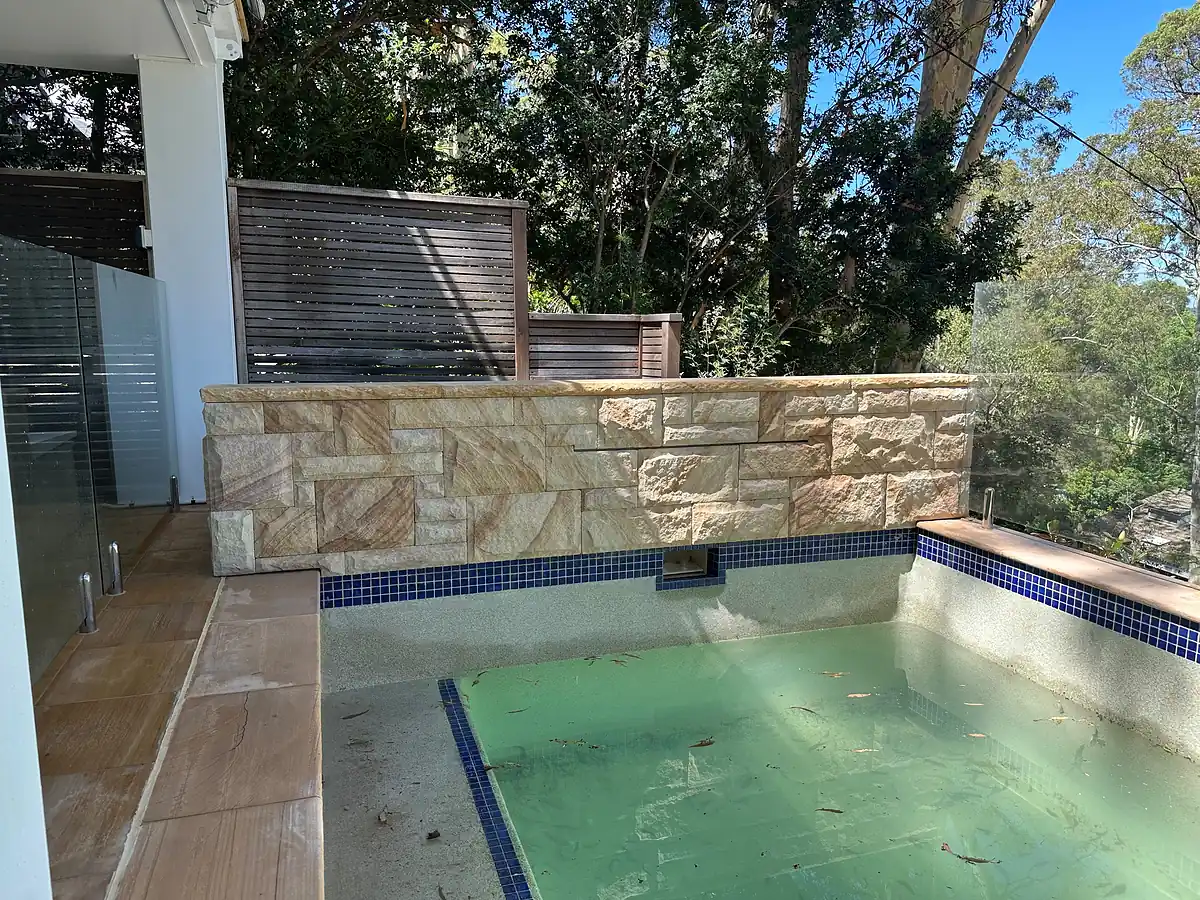
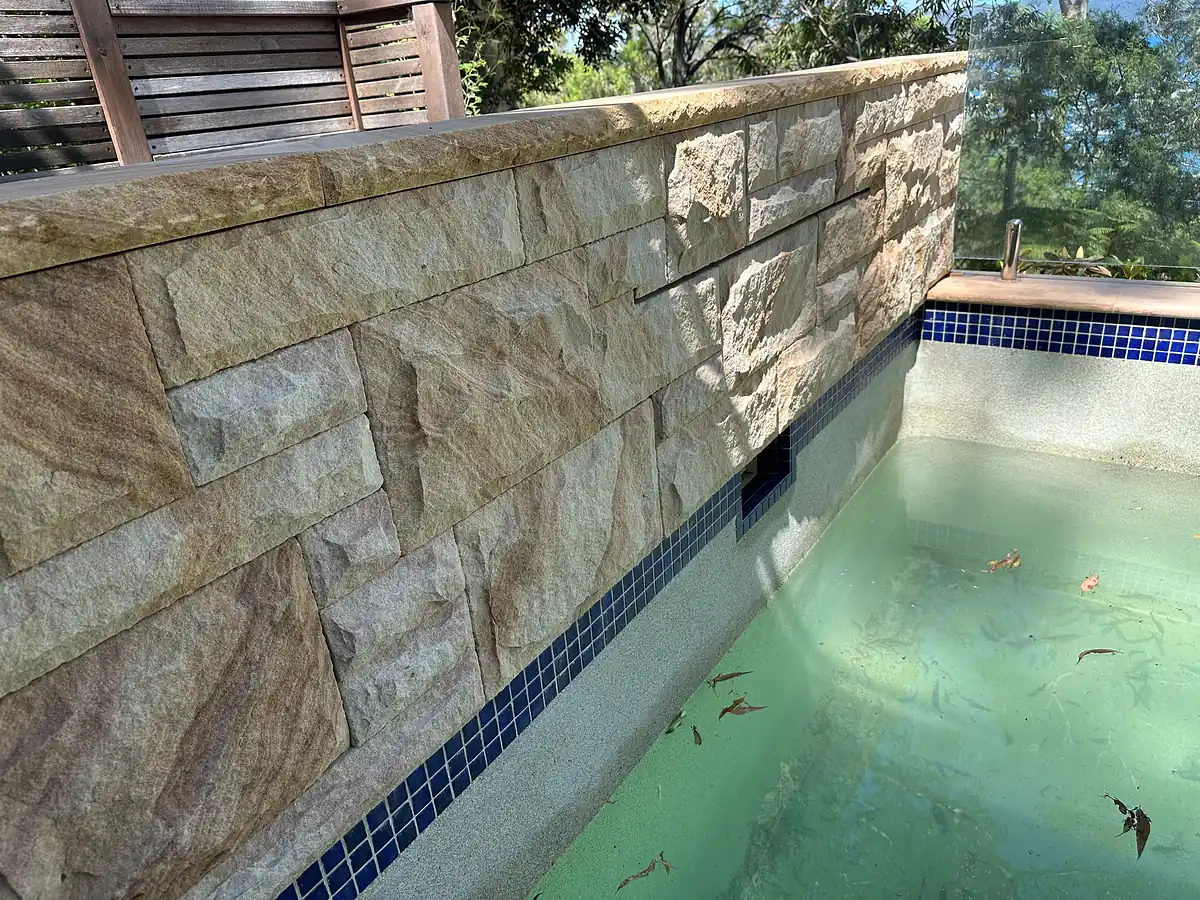
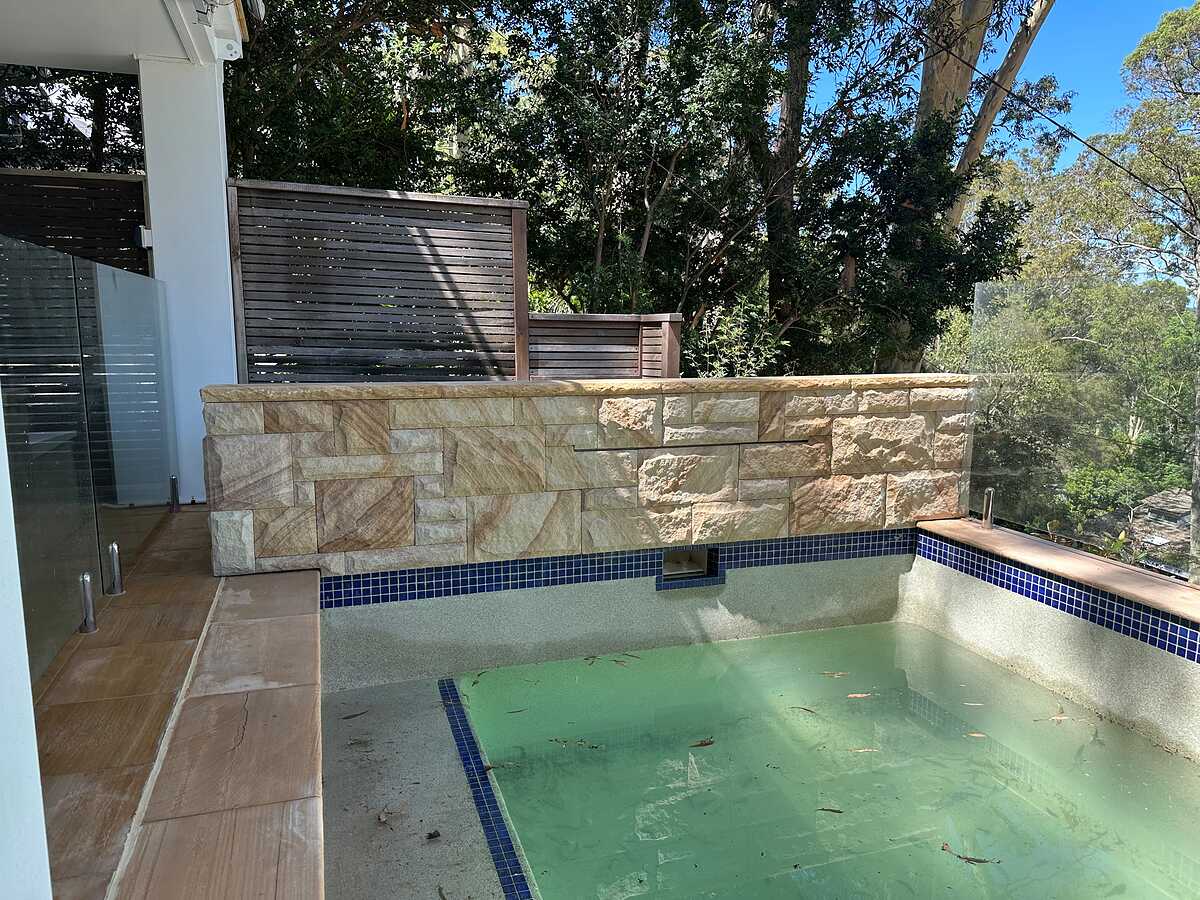
Plunge pool with a split-face sandstone wall
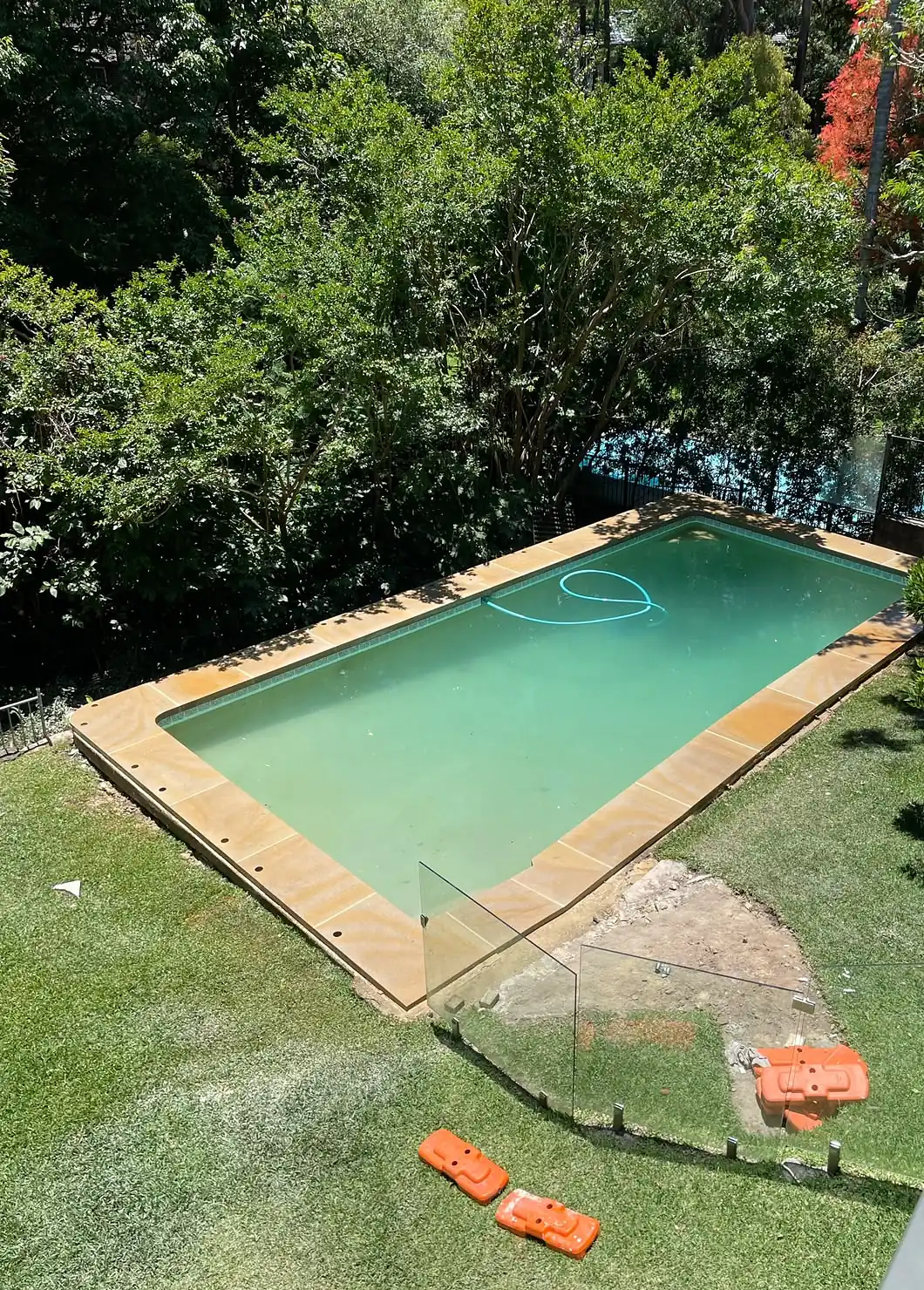
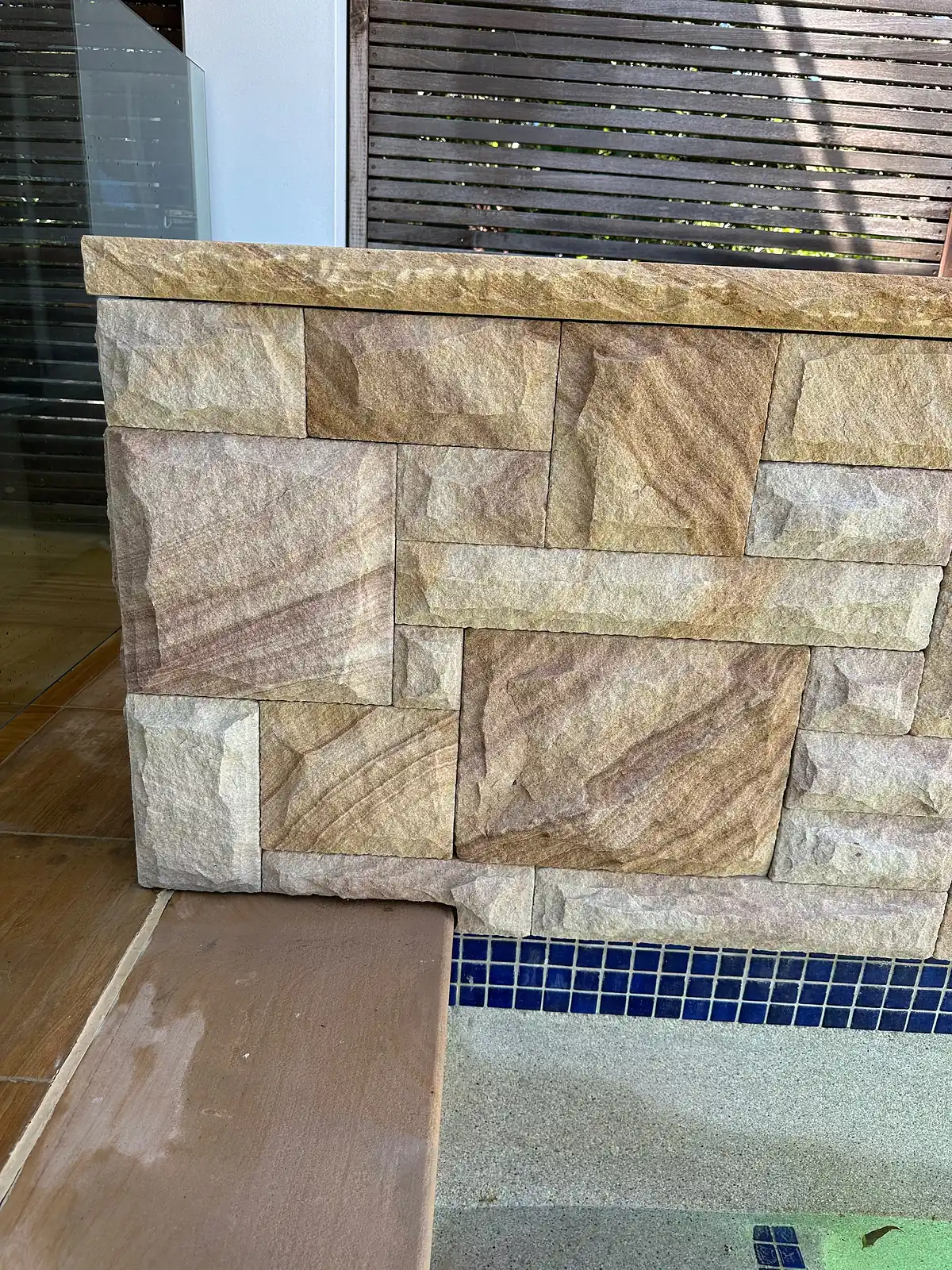
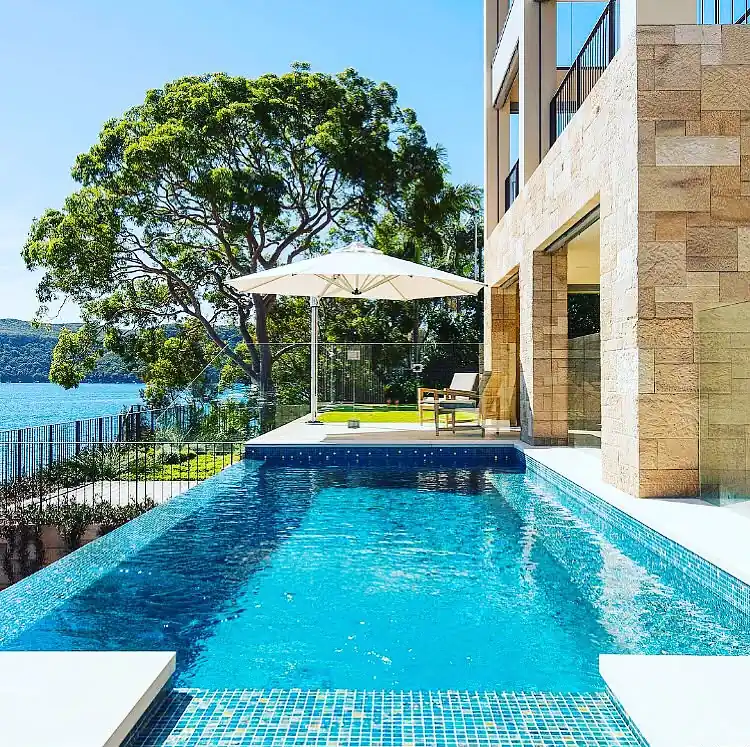
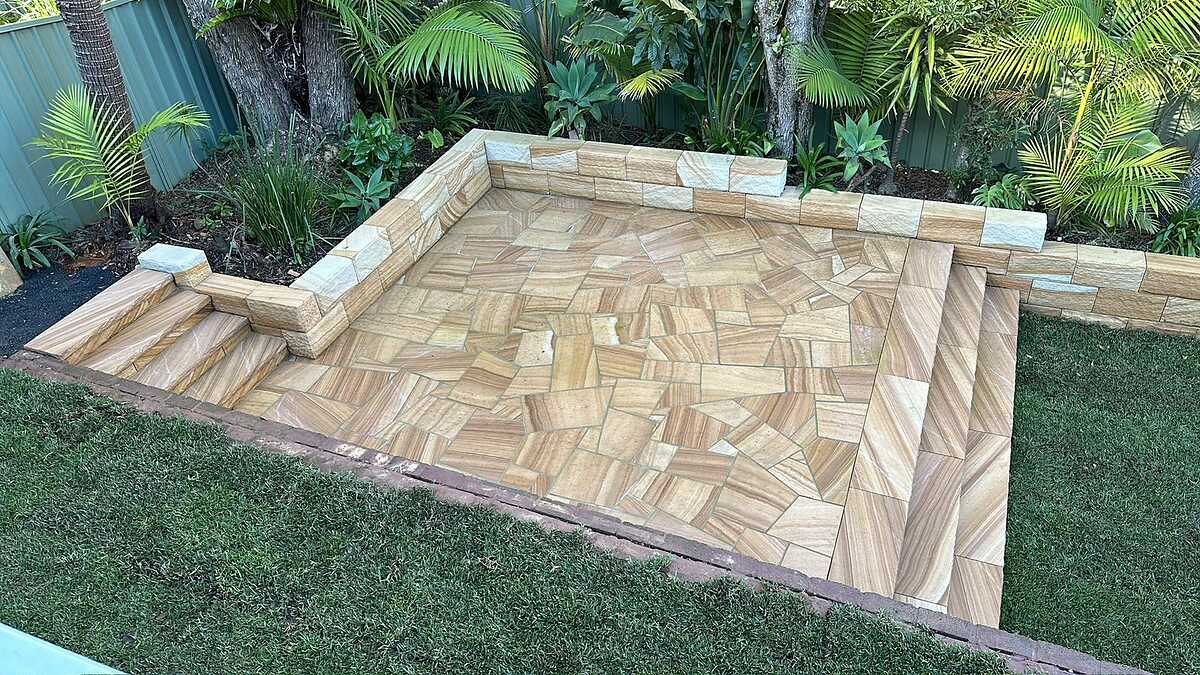
An elevated plunge pool among the trees, finished with a split-face sandstone feature wall, sandstone coping and sawn sandstone paving.
View projectSandstone Pool Coping
Pool coping takes more punishment than almost any other stone around the house. We help you choose a stone that suits your pool, then lay it so it looks good and keeps performing.
In short
Pool coping is the bullnose or drop-face stone, in sandstone, travertine or bluestone, that caps the edge of the pool shell, usually with matching paving around it. Around a saltwater pool, sandstone needs a dense grade, a breathable penetrating sealer and regular freshwater rinsing, or travertine or bluestone may suit better.
Northern Beaches Stone lays sandstone pool coping, pool paving and split-face sandstone feature walls for new pools and renovations. We also work in travertine and bluestone, and we will tell you plainly which stone suits your pool, your sun and your maintenance habits.
We work alongside your pool builder, landscaper and fencing contractor so the coping, paving and walls fit the pool shell, the drainage and the safety barrier. Dense limestone is another pale option for coping, sealed for the pool.
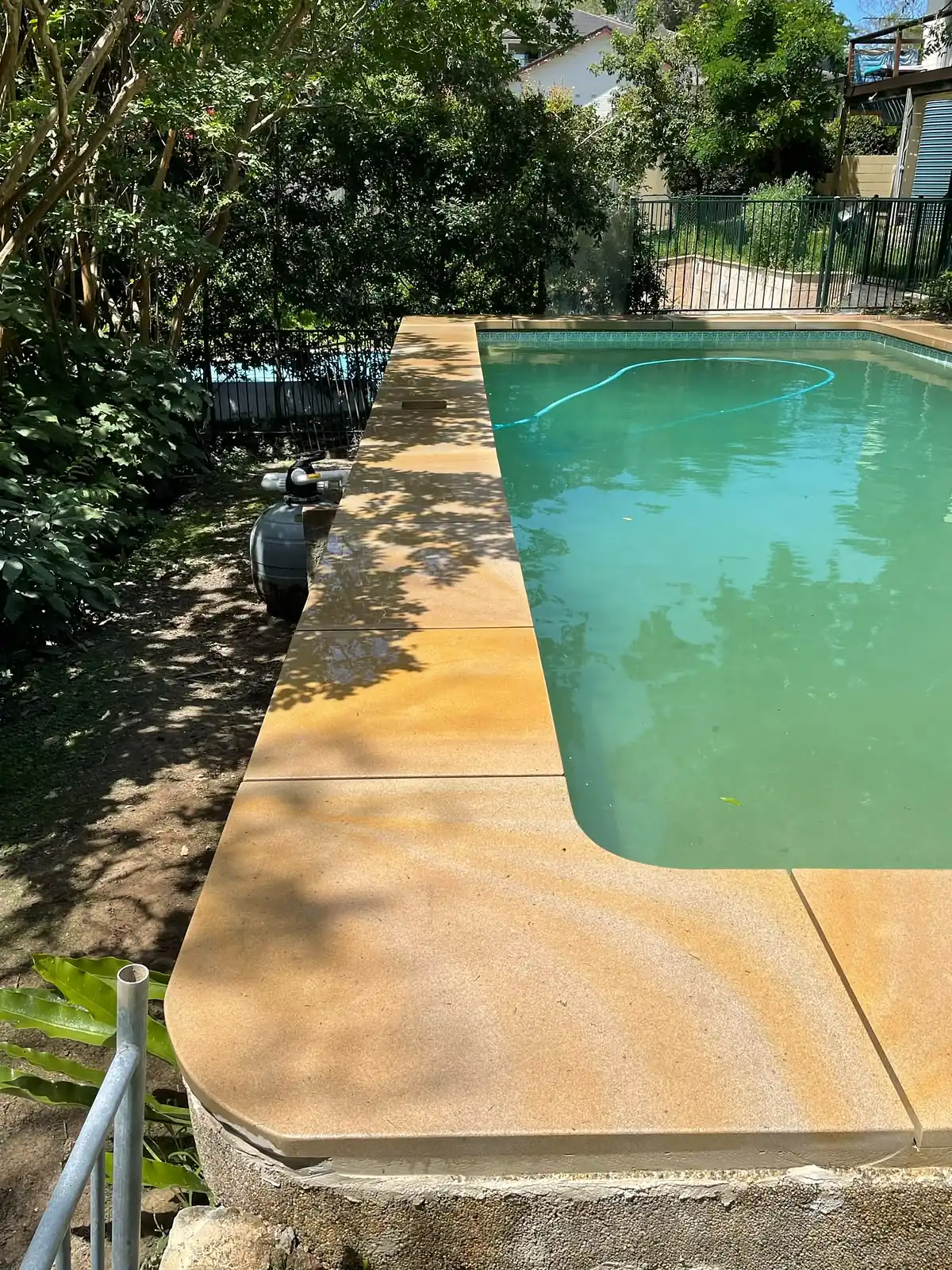
Sawn sandstone coping with a rounded edge, comfortable to sit on and kind on wet feet and hands.
Coping with a thicker front face that gives a crisp, modern edge to the waterline.
Sawn sandstone, travertine or bluestone paving around the pool, laid with falls that carry water away from the shell.
Raised walls clad in split-face sandstone along one side of the pool, finished with sawn coping.
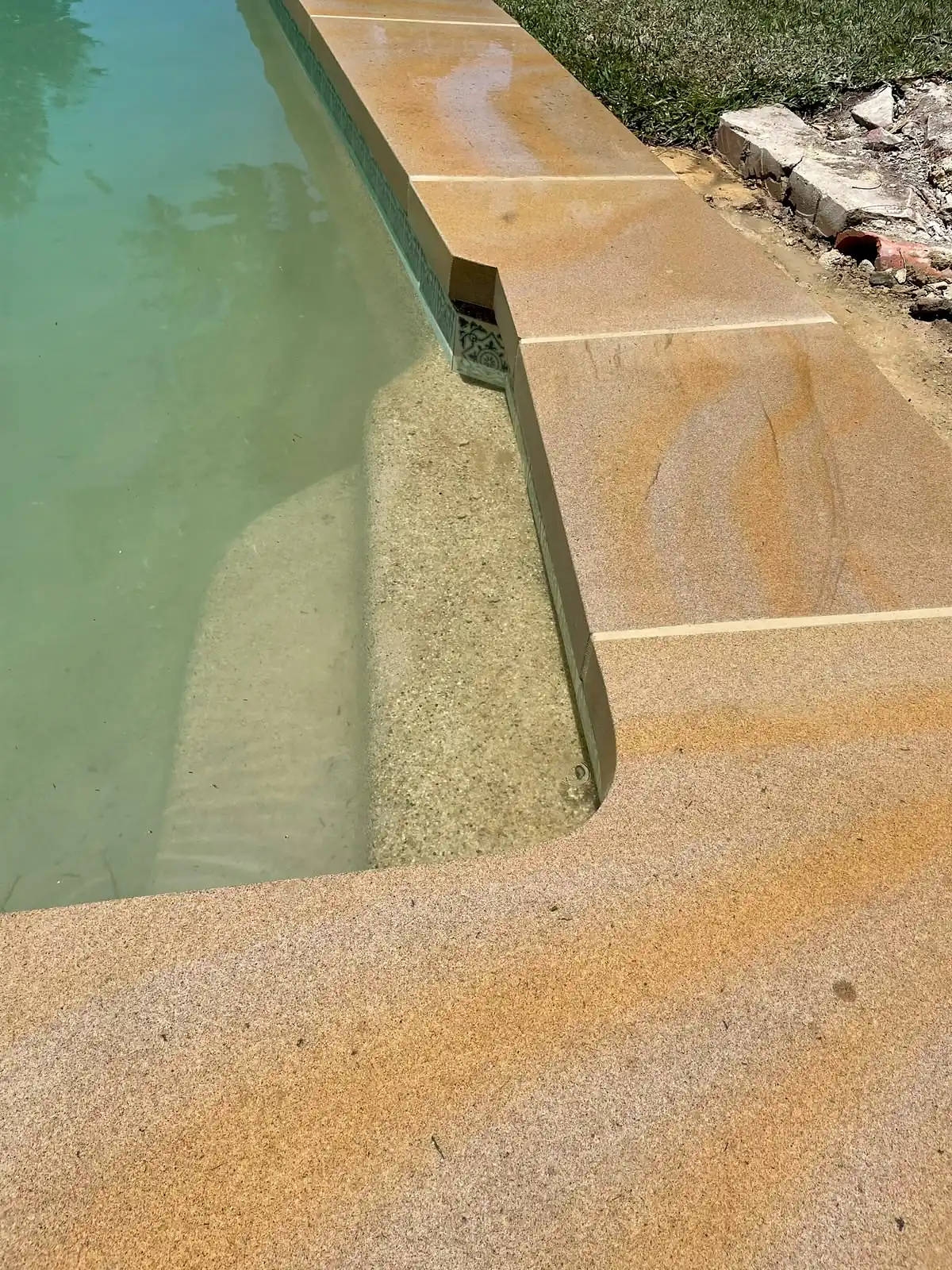
Coping cut around pool steps, ledges and corners, with mitred or rounded joins.
Sandstone is porous. Salt water soaks into the stone, and as it dries the salt crystallises in the pores, which can lead to flaking and surface loss over time. That is why some suppliers say never to use sandstone near a salt pool. Our view is that it can work well, but only if the stone and the care are right. Read the full answer on sandstone around saltwater pools.
We select a dense, good-grade sandstone for coping, seal it with a breathable penetrating sealer suited to pools, and ask you to rinse splash zones with fresh water regularly. A sealer reduces water and salt uptake but does not make stone salt-proof, so it needs re-applying as the manufacturer recommends. If you would rather have less maintenance, travertine or bluestone may suit your pool better, and we are happy to lay those instead.
Stone colour matters in a Sydney summer. Light sandstone and light travertine stay noticeably cooler underfoot than dark stone, while dark bluestone can get hot in full sun. If the pool is in full sun all afternoon, we will usually steer you toward a lighter stone.
Wet stone also needs grip. Sawn sandstone has a naturally textured surface, and we avoid polished finishes on coping and pool paving.
Recent sandstone pool coping by our team. Tap a photo to see it larger.
How we work
We look at the pool shell, sun, drainage and existing surfaces, and discuss stone, edge profile and sealing.
We source coping and paving in a suitable grade and finish, with matched colour across the job.
We check the bond beam and the slab or base for the paving, and set falls away from the pool.
Coping is bedded in mortar, cut around steps and corners and set to an even overhang and level.
We lay the surrounding paving and build any feature walls, with joints kept tight and clean.
We clean and seal the stone where agreed and explain how to look after it.
We quote pool coping and surrounds after a site visit. These are the main things that affect the price.
In NSW, pool barriers must comply with the Swimming Pools Act and the Australian Standard for pool fencing, which includes keeping a non-climbable zone clear around the fence. Feature walls, planters, steps and retaining walls near a pool fence can become climbable objects, so we plan their position and height with your fencing contractor or certifier before we build. We do not install pool fencing ourselves.
Sandstone can work around a saltwater pool if you choose a dense, good grade of stone, seal it with a breathable penetrating sealer and rinse it with fresh water regularly. Salt crystallising in the pores is what causes flaking, and sealing reduces it but does not stop it entirely. If you want less maintenance, travertine or bluestone coping may suit a Northern Beaches salt pool better.
Sandstone pool coping should be sealed with a breathable, penetrating (impregnating) sealer made for pool areas and salt exposure. Film-forming coatings trap moisture in the stone and can peel or go cloudy. A sealer reduces water, salt and stain uptake but does not make sandstone salt-proof, so re-apply it at the interval the manufacturer recommends, as pool coping wears faster than paving elsewhere.
Light-coloured travertine and light sandstone stay the coolest underfoot around a pool. Dark stone such as bluestone absorbs more heat and can get hot in full summer sun. For Northern Beaches pools that get afternoon sun, we usually recommend a lighter stone for the coping and the surrounding paving.
Bullnose and drop-face pool coping are mostly a matter of style. Bullnose has a rounded edge that suits traditional pools and is comfortable to sit on. Drop-face coping has a thicker front face for a sharper, modern edge. Both can be cut from sandstone, travertine or bluestone, and we can show you samples on site.
The cost of sandstone pool coping depends on the pool's size and shape, the edge profile, the stone grade, the number of corners and steps, and any paving or feature walls around it. Curved pools take more cutting than rectangles. We quote each Northern Beaches pool after a site visit, so call 0414 319 536 for a free, no-obligation quote.
Clean sandstone pool coping by rinsing it with fresh water, scrubbing with a soft brush and using a pH-neutral stone cleaner for marks. Avoid acid cleaners and high-pressure washing close to the surface, as both damage sandstone. Regular rinsing removes salt and chlorine before they build up, which is the most useful habit for keeping pool coping in good condition.
Seal sandstone with a breathable penetrating (impregnating) sealer, not a film-forming coating, so moisture and salts can still escape. Clean the stone with a pH-neutral cleaner, let it dry fully, test a patch, then apply as the manufacturer directs. Do not seal walls with rising damp, salt problems or old lime-mortar heritage work.
Read the guideYes, sandstone can work around a saltwater pool, but only with a dense, good-grade stone, a breathable penetrating sealer suited to pools, regular fresh-water rinsing and joints softer than the stone. Salt crystallising in the pores is what causes flaking. If you want lower maintenance, travertine or bluestone may suit better.
Read the guideSawn sandstone flagging, pavers and random flagging, plus travertine and bluestone, for terraces, courtyards and paths.
Learn more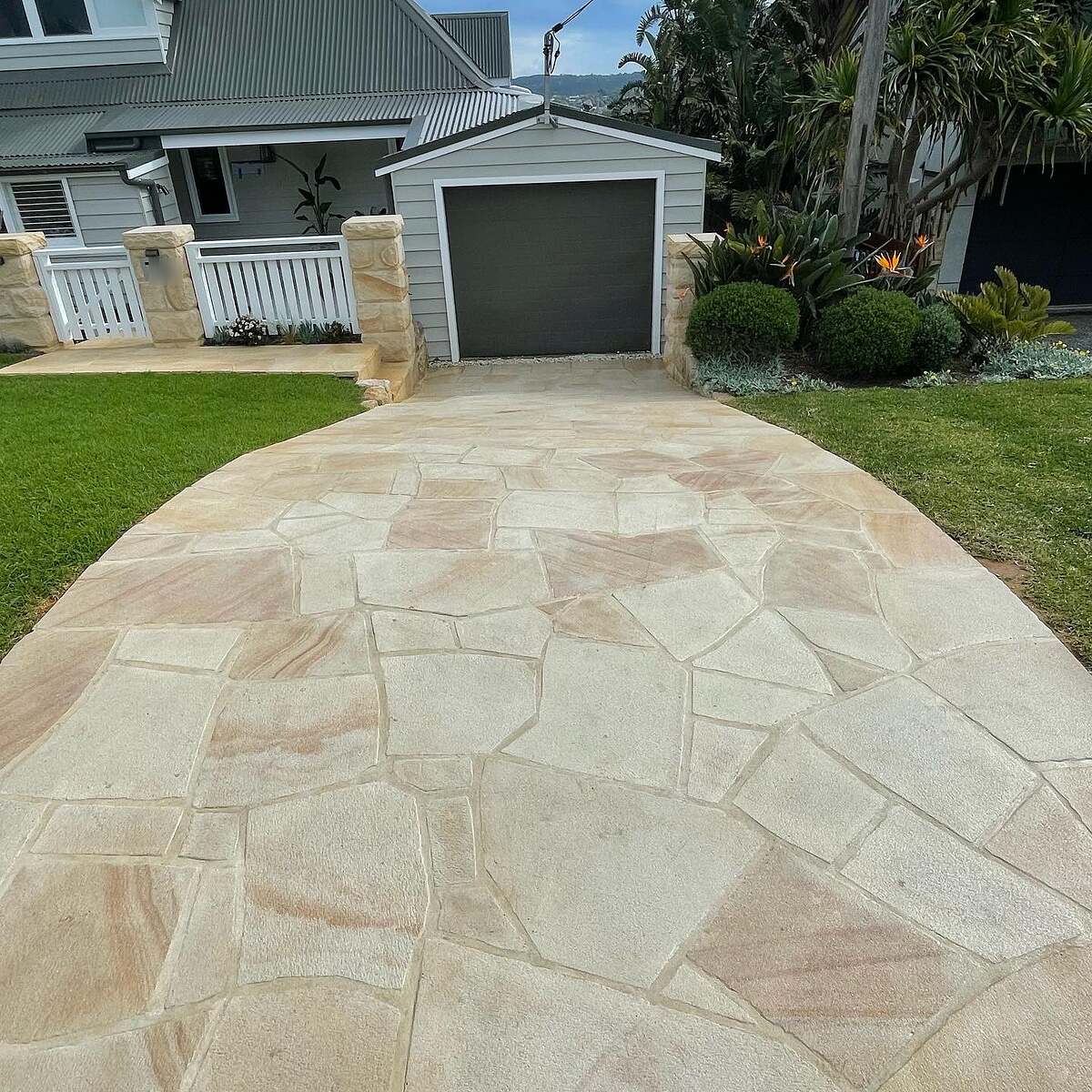
Hand-fitted sandstone, bluestone and quartzite crazy paving for paths, driveways, patios and pool surrounds.
Learn more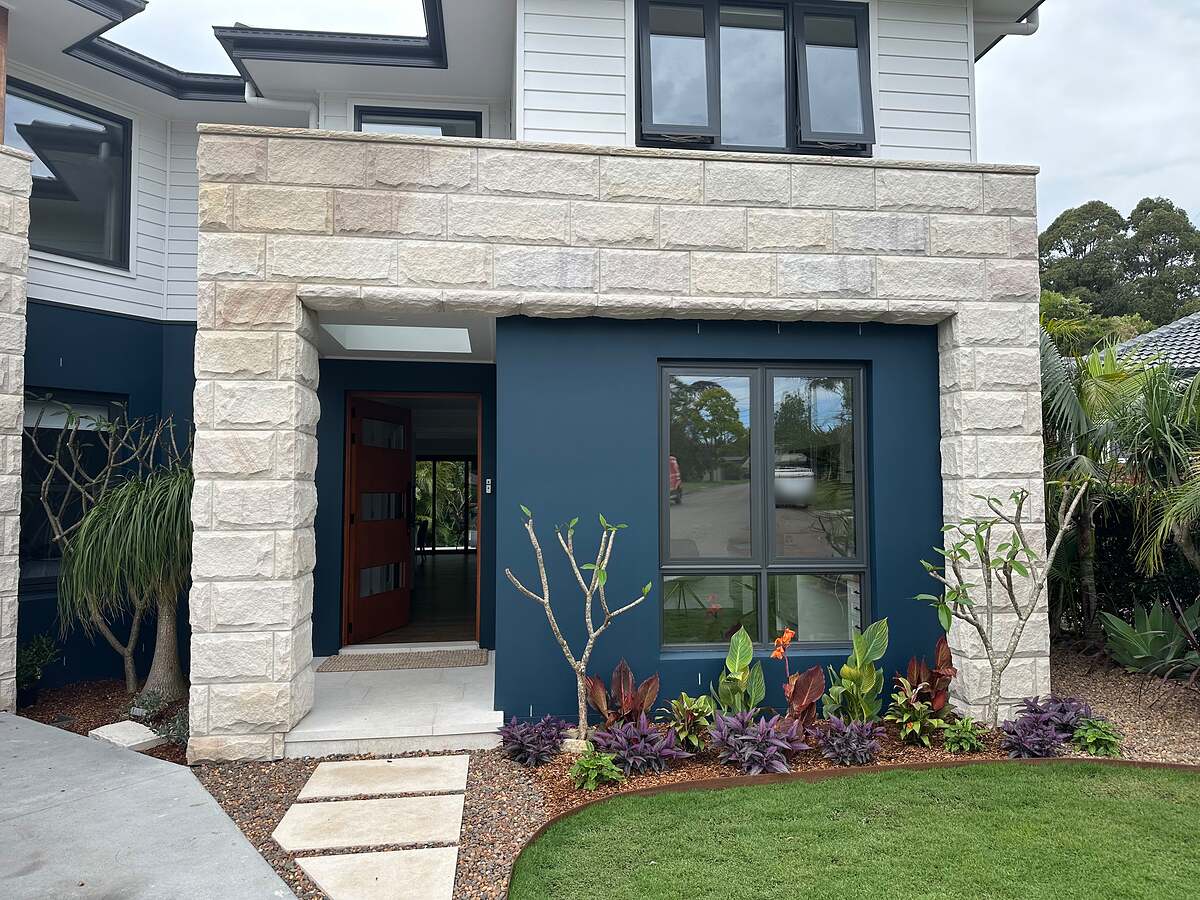
Natural sandstone cladding for facades, feature walls, columns, chimneys, window surrounds and subfloors, fixed for coastal weather.
Learn moreWe work across the Northern Beaches and North Shore.
Tell us what you have in mind. Blake will talk it through, visit the site and give you a clear written quote.