Short answer
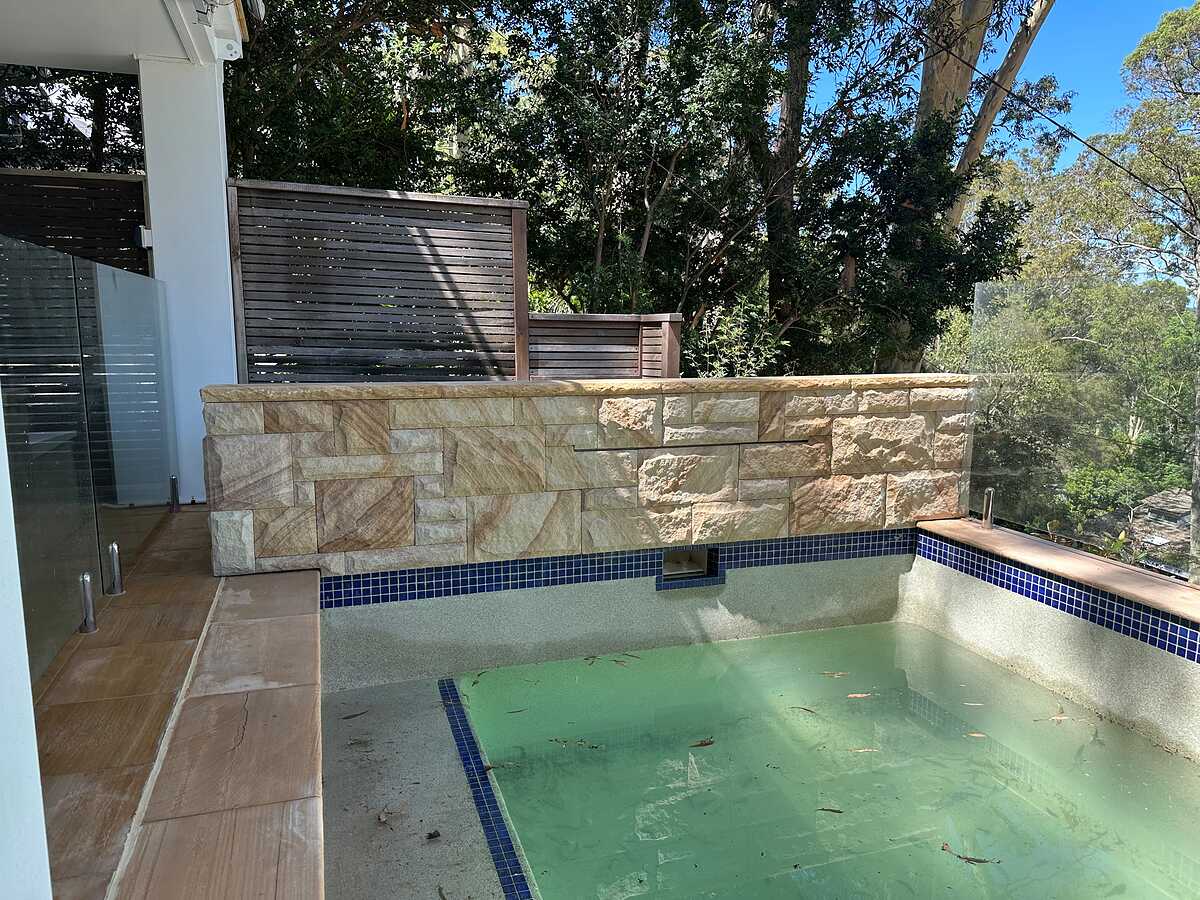
Yes, sandstone can work around a saltwater pool, but only with a dense, good-grade stone, a breathable penetrating sealer suited to pools, regular fresh-water rinsing and joints softer than the stone. Salt crystallising in the pores is what causes flaking. If you want lower maintenance, travertine or bluestone may suit better.
The honest answer
Some suppliers say never to put sandstone near a salt pool, and some installers say it is fine with no caveats. Neither is the full story. Sandstone has been used around Sydney pools for decades, and plenty of it still looks good. Plenty has also flaked, pitted or gone patchy within a few years.
The difference usually comes down to four things: the grade of the stone, how it is sealed, how it is laid and jointed, and how it is looked after. Get those right and sandstone is a reasonable choice. Skip them and a salt pool will find the weak spots.
How salt damages sandstone
Sandstone is porous. Splash and wet feet carry salty pool water into the stone, and when the water evaporates the dissolved salt is left behind as crystals in the pores. As those crystals grow through repeated wetting and drying, they press on the grains around them. Over time that shows up as powdering, flaking, small pits and a lifted surface, often worst along the coping edge and where water pools.
This is the same salt weathering that carves honeycomb patterns into coastal sandstone cliffs. A salt pool simply concentrates it in your backyard. Chlorine pools are less aggressive in this respect, but splash, pool chemicals and wet-dry cycles still affect porous stone, so the same care applies to a lesser degree.
What makes sandstone work around a salt pool
Not all sandstone is the same. Denser, more uniform stone with lower water absorption resists salt far better than soft, open-grained stone. Ask your supplier or mason for the stone's test data (water absorption, porosity and durability) and avoid soft or crumbly pieces for coping and the first metre or two of paving.
- Stone grade: a dense, consistent grade for coping and splash zones, chosen for exposure rather than price.
- Sealing: a breathable penetrating sealer rated for pool surrounds, on clean, fully dry stone, applied before the pool is filled where possible and re-applied as the manufacturer recommends.
- Falls and drainage: paving that sheds water away from the pool and off the stone, so salty water does not sit in low spots.
- Bedding: a full mortar bed with no voids under the stone, so water cannot collect underneath and wick up.
- Finish: a sawn, honed or lightly textured finish for grip, not a polished face.
- Rinsing: hosing the coping and splash zone with fresh water regularly, especially after heavy use or a long dry spell.
Joints and mortar: let the joint take the hit
The state heritage councils' technical guide on mortars makes the principle clear: the mortar should be more permeable than the stone and should be sacrificial, failing before the masonry. Salt-laden moisture then crystallises mainly in the joints, which can be raked out and repointed, rather than in the stone, which is much harder to replace.
Very hard, dense cement grouts work the other way. They force moisture and salt to escape through the stone faces, which speeds up decay at the edges of each piece. Around a pool we match joint strength to the stone, keep joints tidy and sealed with the stone, and allow movement joints where coping meets the pool shell and large paved areas.
Heat underfoot
Colour matters more than anything for heat. Light sandstone and light travertine stay noticeably more comfortable in summer sun than dark stone. Darker bluestone absorbs more heat and can get uncomfortably hot on bare feet, which is worth weighing for a west-facing pool with no shade.
Sealer type affects this a little too: a film-forming coating can make a surface feel hotter and slipperier than a penetrating sealer. If heat is a big concern, choose the lightest stone that suits the house, add shade where you can, and keep a hose or shower handy to cool the deck.
Sandstone, travertine or bluestone?
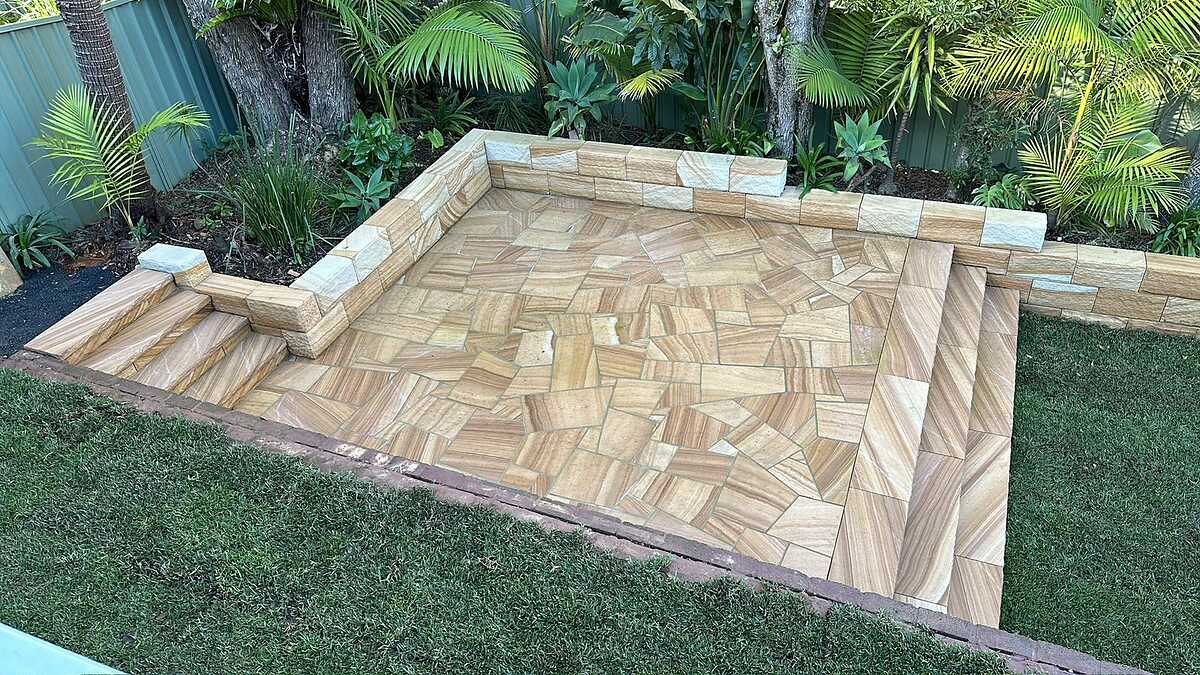
If you love the look of sandstone and are happy to look after it, it can be the right choice. If you want lower maintenance, travertine and bluestone are both worth a look, and we lay all three. The table is a general guide; individual stones vary, so compare samples and test data for the exact product.
| Sandstone | Travertine | Bluestone | |
|---|---|---|---|
| Salt tolerance | Fair to good with a dense grade and care | Good when sealed | Very good, dense stone |
| Heat underfoot | Cool to warm, depends on colour | Cool, light colours | Hot when dark |
| Grip when wet | Good with sawn or textured finish | Good when tumbled or honed | Good with sawn or textured finish |
| Sealing | Needed, re-apply regularly | Needed, re-apply regularly | Recommended |
| Look | Warm golds, creams and bands | Creams and beiges, natural holes | Grey to charcoal |
| Upkeep near salt | Highest | Moderate | Lowest |
If your sandstone coping is already flaking
Early surface flaking can often be slowed. Rinse the area thoroughly with fresh water over several days to draw out salt, let it dry, then check the joints and bedding. Rake out and repoint failed joints, fix any spots where water ponds, and re-seal once the stone is clean and dry.
Pieces that have lost a lot of surface, or that sound hollow when tapped, are usually best replaced with a better grade of stone. The worst damage usually shows on the pool-side edge of the coping and on steps into the water, so those are the first places to check each summer.
Checklist
- Rinse coping and splash zones with fresh water regularly, and after parties or heavy use.
- Keep pool chemistry and salt levels within the pool equipment maker's range.
- Sweep off leaves and debris, which stain and hold moisture.
- Check for ponding water after rain and fix low spots early.
- Do a water-drop test on the coping each spring; re-seal when water soaks in instead of beading.
- Inspect joints for cracking or loss and repoint before water gets under the stone.
- Look for powdering, flaking or hollow-sounding pieces on the pool edge and steps.
- Clean with pH-neutral products; avoid acids and close high-pressure jets.
Common questions
Should sandstone pool coping be sealed before or after it is laid?
Sandstone pool coping is best sealed after it is laid, the mortar has cured and the stone is fully dry, and ideally before the pool is filled with salt water. Some masons also pre-seal the underside and edges to limit water wicking up from below. Sealing damp or freshly laid sandstone traps moisture and gives poor penetration.
How often should I rinse sandstone around a saltwater pool?
Rinse sandstone around a saltwater pool with fresh water regularly, more often in summer when the pool is used heavily and the stone dries quickly. Washing off splash before it dries means less salt is left in the pores to crystallise. On exposed Northern Beaches properties, also rinse after strong onshore winds bring salt spray.
Can flaking sandstone pool coping be repaired?
Mildly flaking sandstone pool coping can often be stabilised by flushing out salt with fresh water, repairing joints and drainage, and re-sealing once dry. Pieces with heavy surface loss or that sound hollow are usually replaced with a denser grade. A Sydney stonemason can match replacement stone to the existing coping as closely as possible.
Sources
- Heritage Council of NSW and others: Mortars, materials, mixes and methods (technical guide)
- Wikipedia: Haloclasty (salt weathering)
- Wikipedia: Sydney sandstone
- Dry-Treat: penetrating sealers and protection from efflorescence and salt spalling
This guide is general information, not legal or engineering advice. Rules change and every site is different: check with Northern Beaches Council or a certifier for your property.