Sandstone Cladding
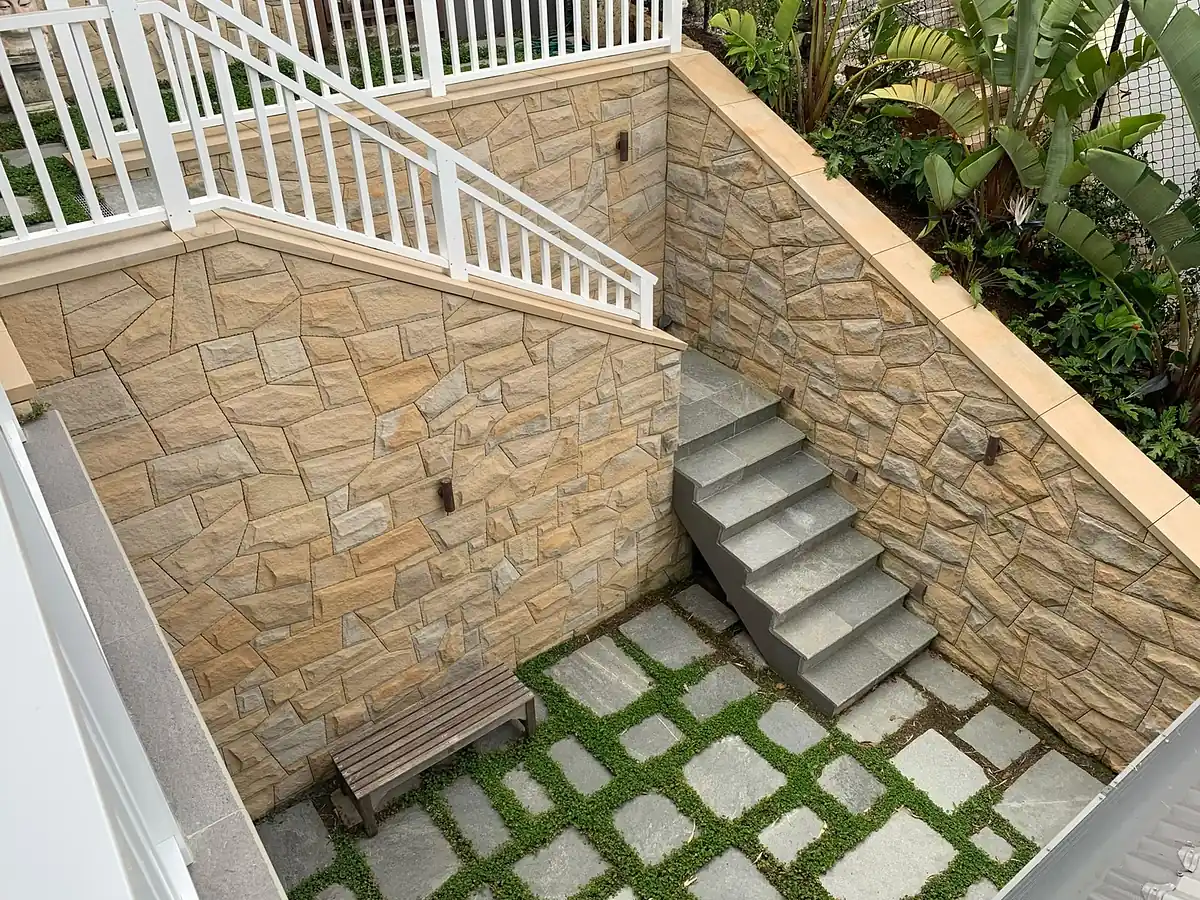
Sandstone-clad sunken courtyard
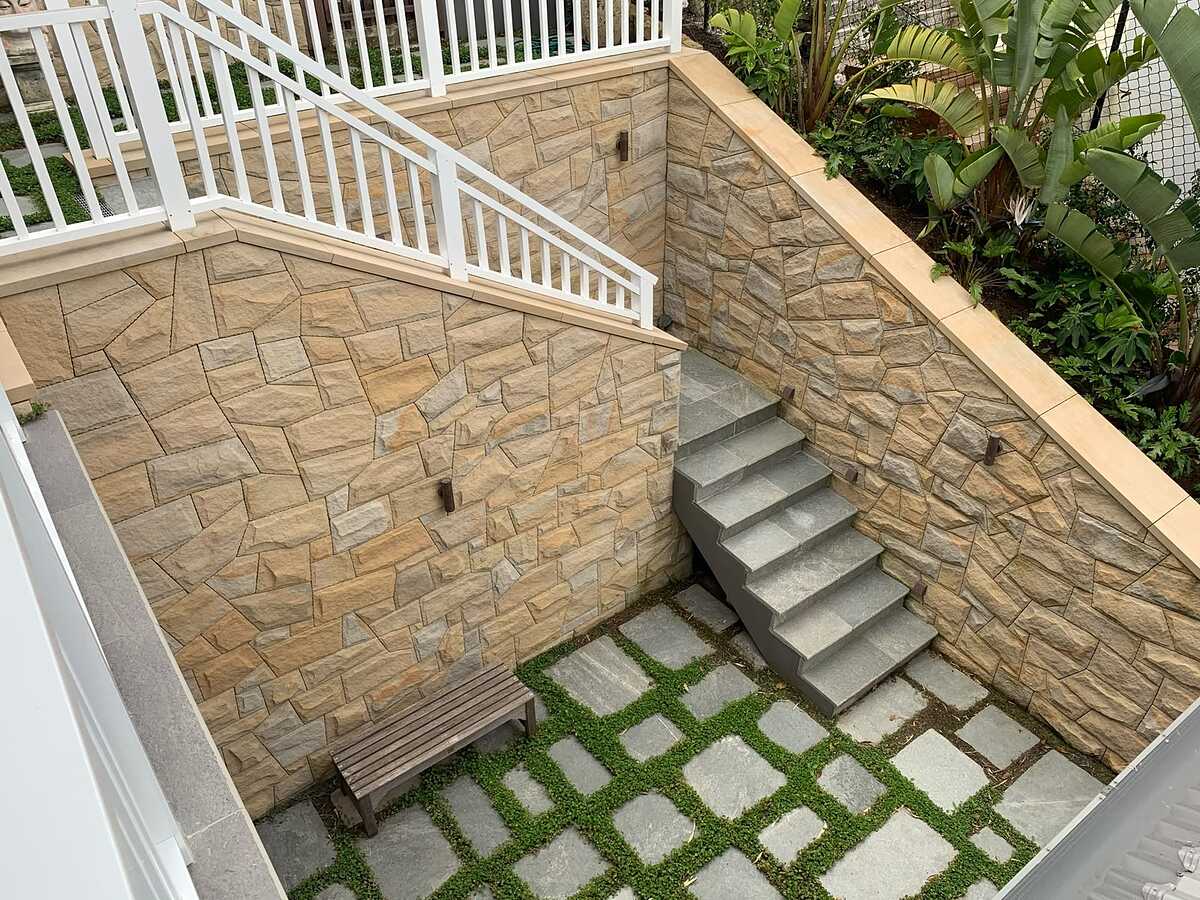
A sunken courtyard enclosed by sandstone-clad walls, with bluestone stairs dropping in from the level above and stepping pavers set in groundcover.
View projectSandstone Cladding
Natural sandstone cladding gives a home the solid, weathered character of Sydney stone without building in solid block. We clad facades, feature walls, columns, chimneys and subfloors across the Northern Beaches and North Shore.
In short
Sandstone cladding is a layer of real split-face, rock-face, sawn or ashlar sandstone fixed to a brick, block, concrete or suitable fibre-cement wall so it reads as solid stone. Natural stone commonly weighs 60 kg per square metre or more, so it needs adhesive and mechanical fixings and must never be fixed to plasterboard.
Cladding is a layer of real stone fixed to an existing or new wall. Done well, it reads as solid masonry: tight joints, properly returned corners and pieces that are dressed to fit rather than forced. Done badly, it cracks, stains or comes loose, which is why fixing and substrate matter as much as the stone. Building or designing a project? See how we work with builders and architects.
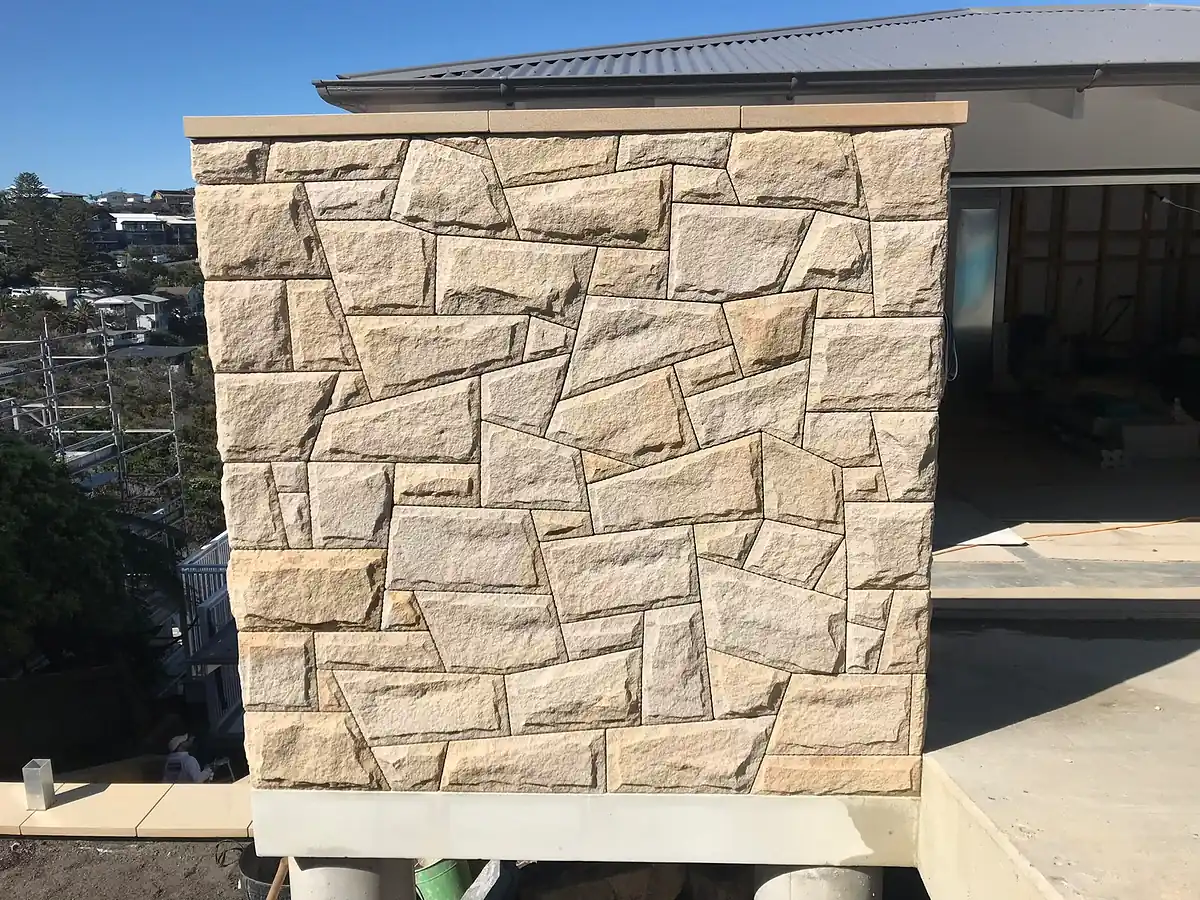
We work in split-face, rock-face, sawn and random ashlar sandstone, as well as recycled stone when you need to match an older wall. Every job is set out by hand, with each course planned so cut pieces sit where you won't notice them. We also clad in limestone where a lighter, more even finish suits the architecture.
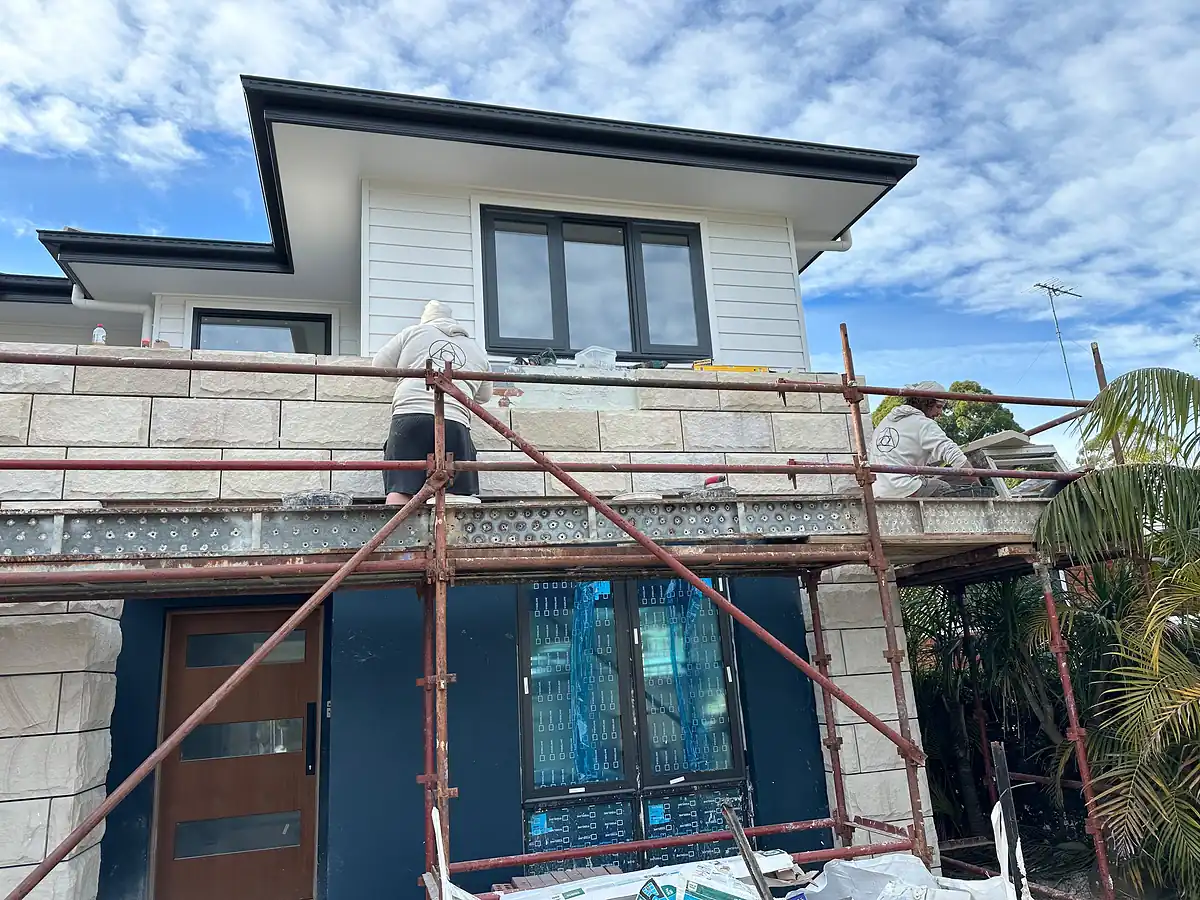
Full or partial sandstone facades on new builds and renovations, including upper storeys from scaffold.
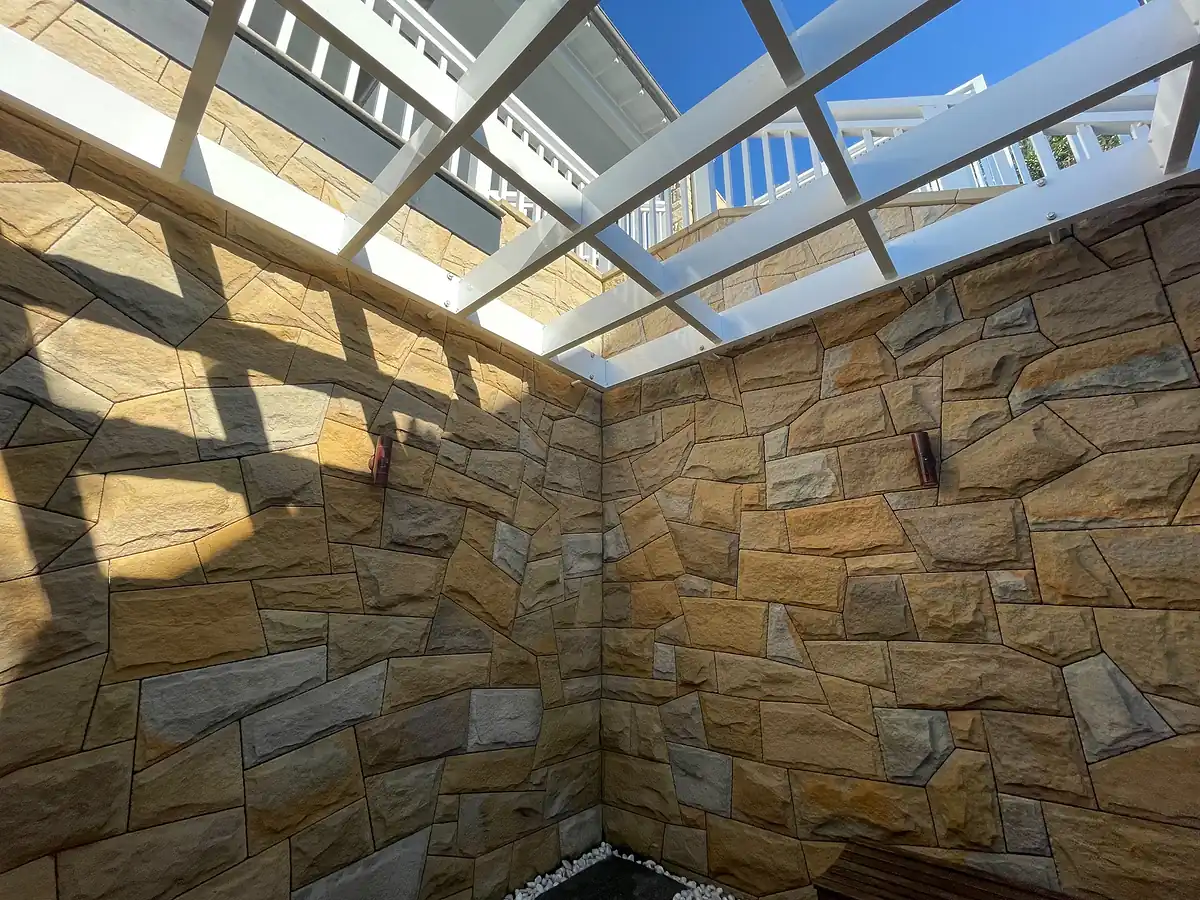
Indoor and outdoor sandstone feature walls for courtyards, entries, outdoor showers and living areas. For indoor feature and TV walls, see sandstone fireplaces and feature walls.
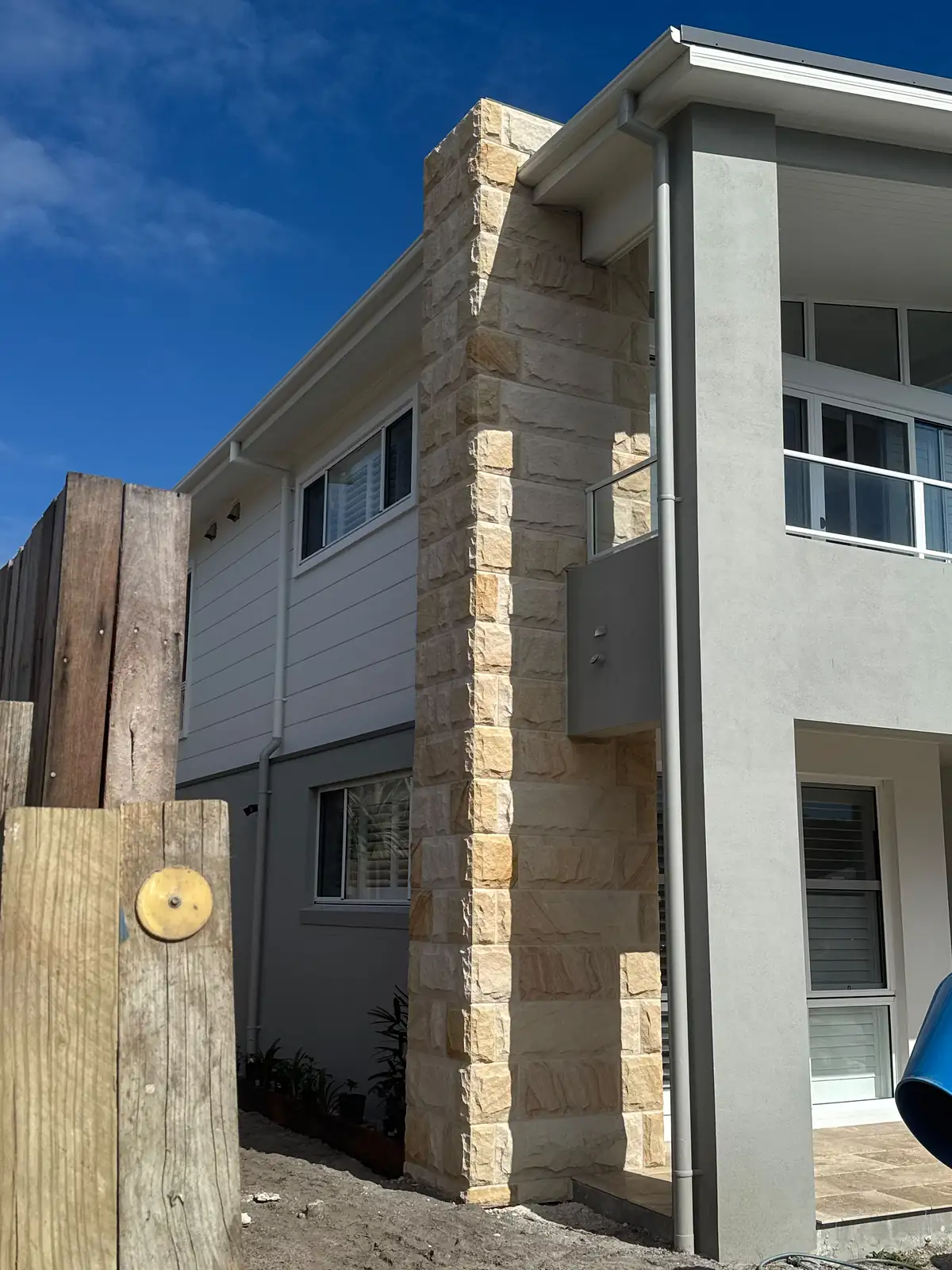
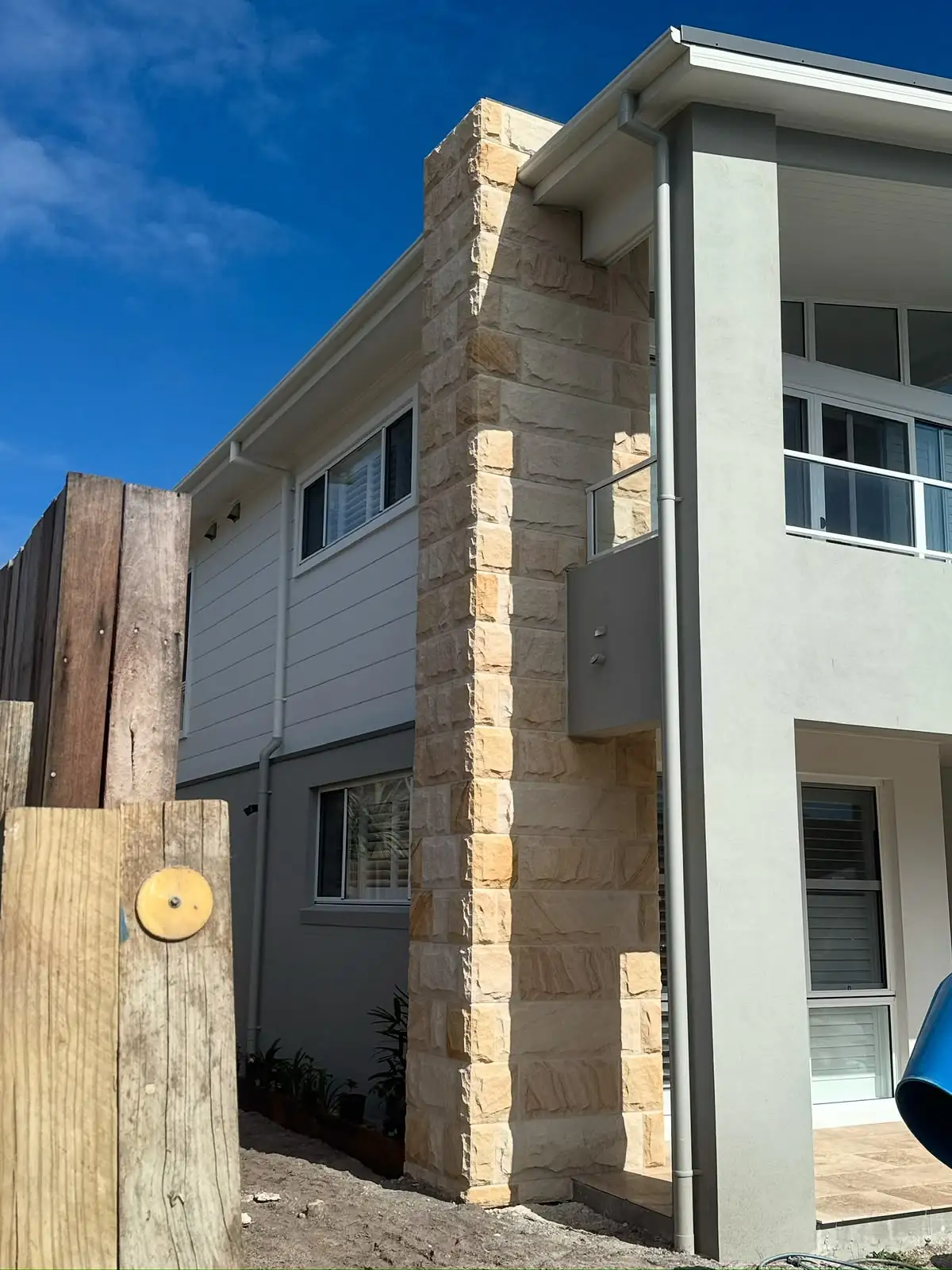
Sandstone-clad entry piers, verandah columns and full-height pillars on modern two-storey homes.
Cladding on new or existing chimneys, inside and out.
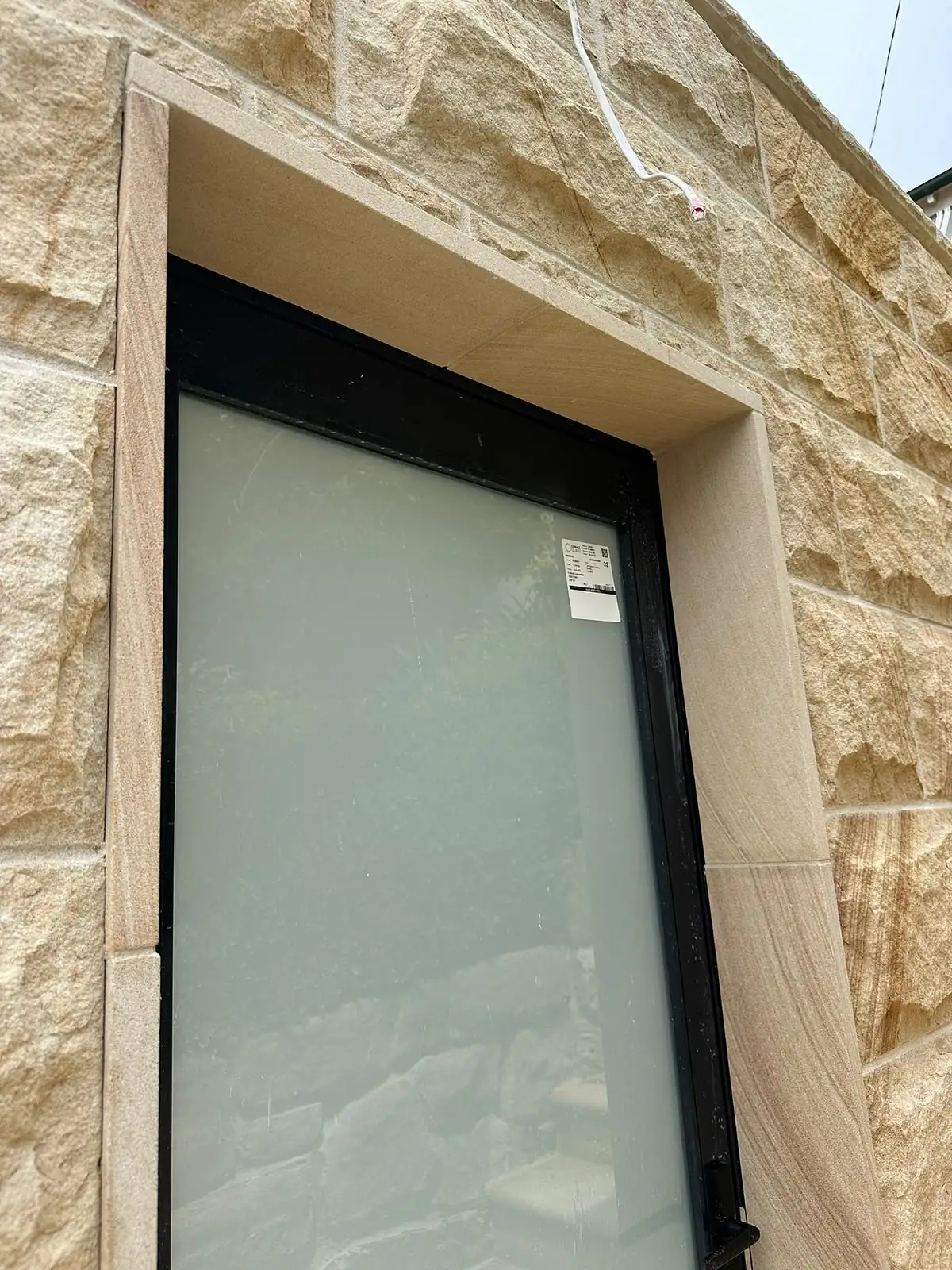
Sawn sandstone reveals, sills and heads set into split-face or ashlar cladding.
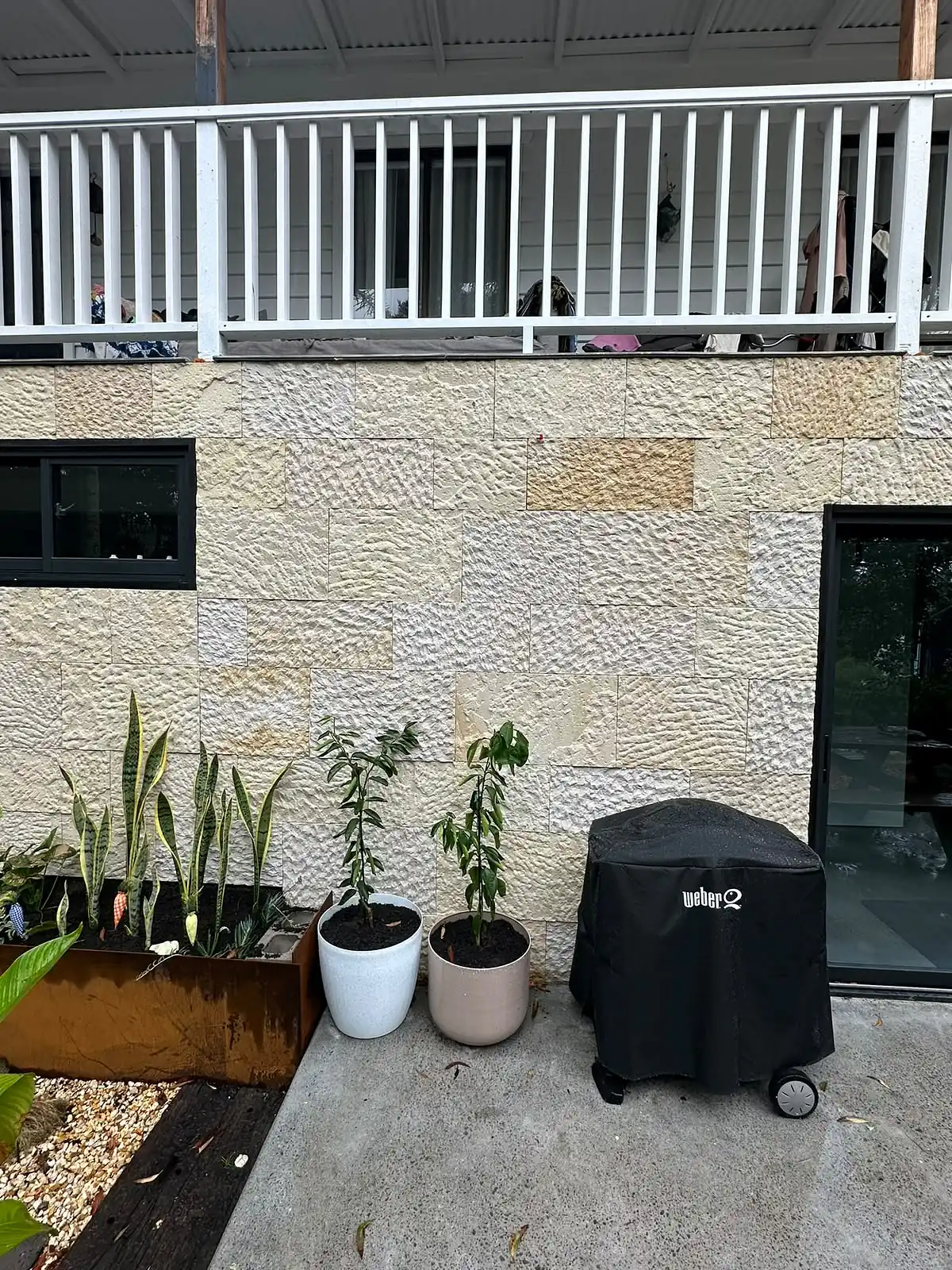
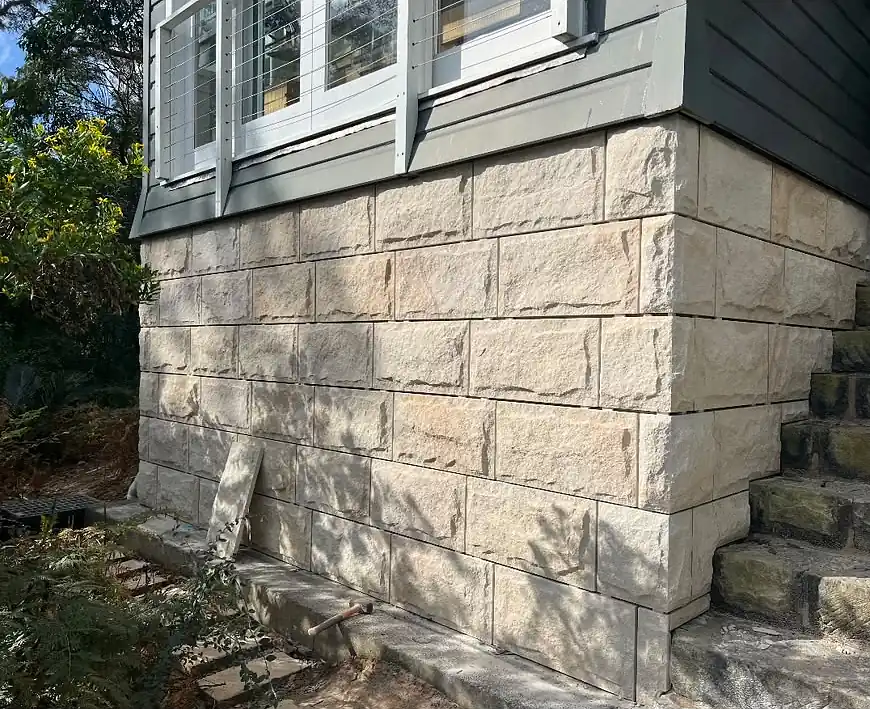
Split-face or rock-face cladding around the base of weatherboard homes and under timber decks.
Natural stone cladding commonly weighs 60 kg per square metre or more, so it needs a wall that can carry it. We fix sandstone to brick, block, concrete or a suitable fibre-cement cladding system, using a stone adhesive and mechanical fixings matched to the height and exposure. Stone does not go on plasterboard.
Around the base of the wall we keep the stone clear of garden soil and paving levels where possible, and we allow for flashings, weep holes and control joints in the existing wall. Getting these details right is what stops water sitting behind the stone.
Salt air, wind-driven rain and shade all work on porous stone. Salts carried in moisture can crystallise at the surface, showing as white efflorescence and, over time, flaking. On exposed coastal homes we pick stone by grade and exposure and recommend a breathable penetrating sealer.
A penetrating sealer soaks into the stone and lets moisture escape, unlike a film-forming coating that can trap it. It reduces water uptake, staining and salt damage, though no sealer makes sandstone fully salt-proof.
Many Northern Beaches extensions need new cladding that sits beside an older sandstone wall. We match by colour, grain, face texture and coursing, and use recycled sandstone where new stone would look too clean. Recycled supply varies, so we source it for each project.
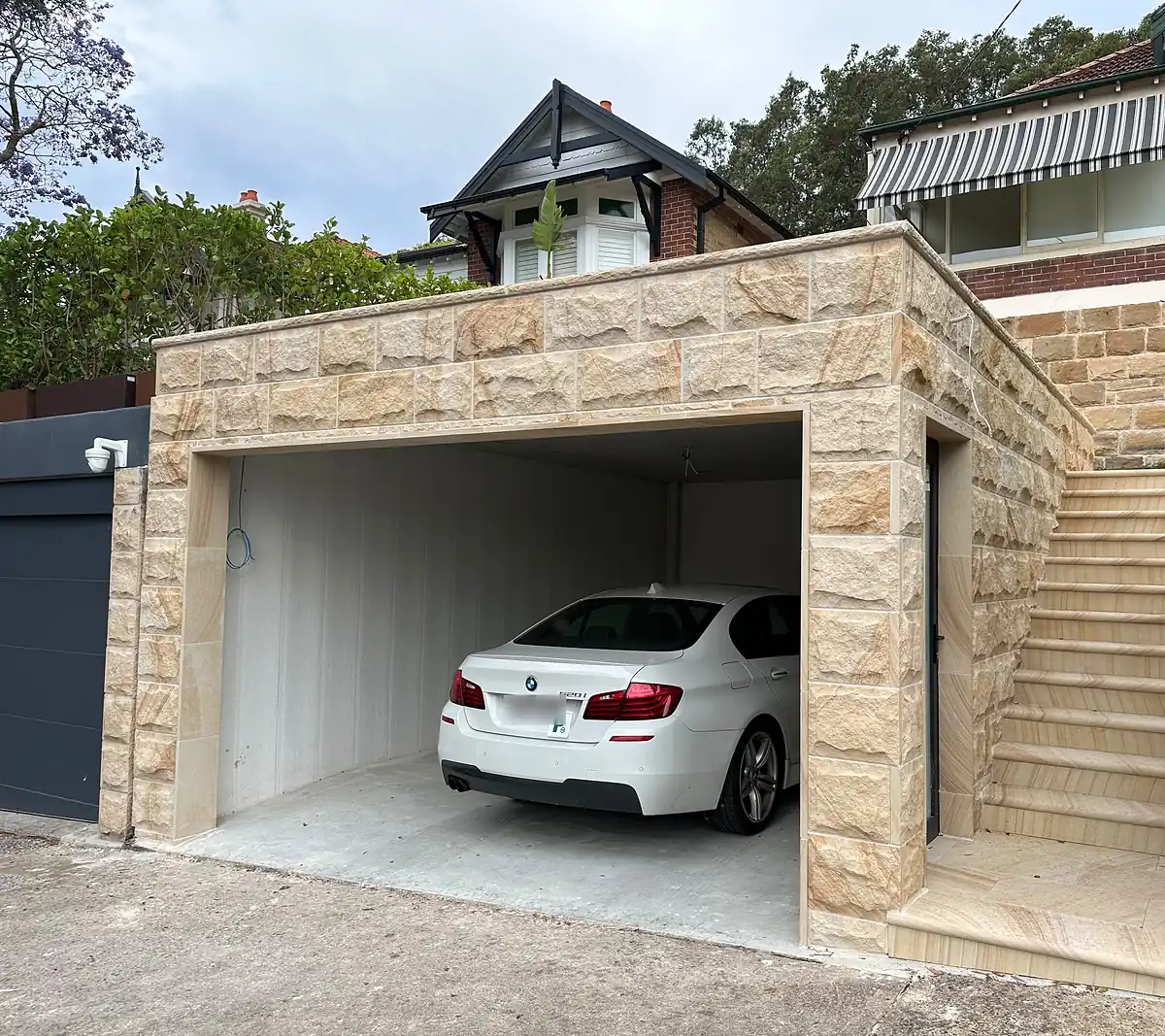
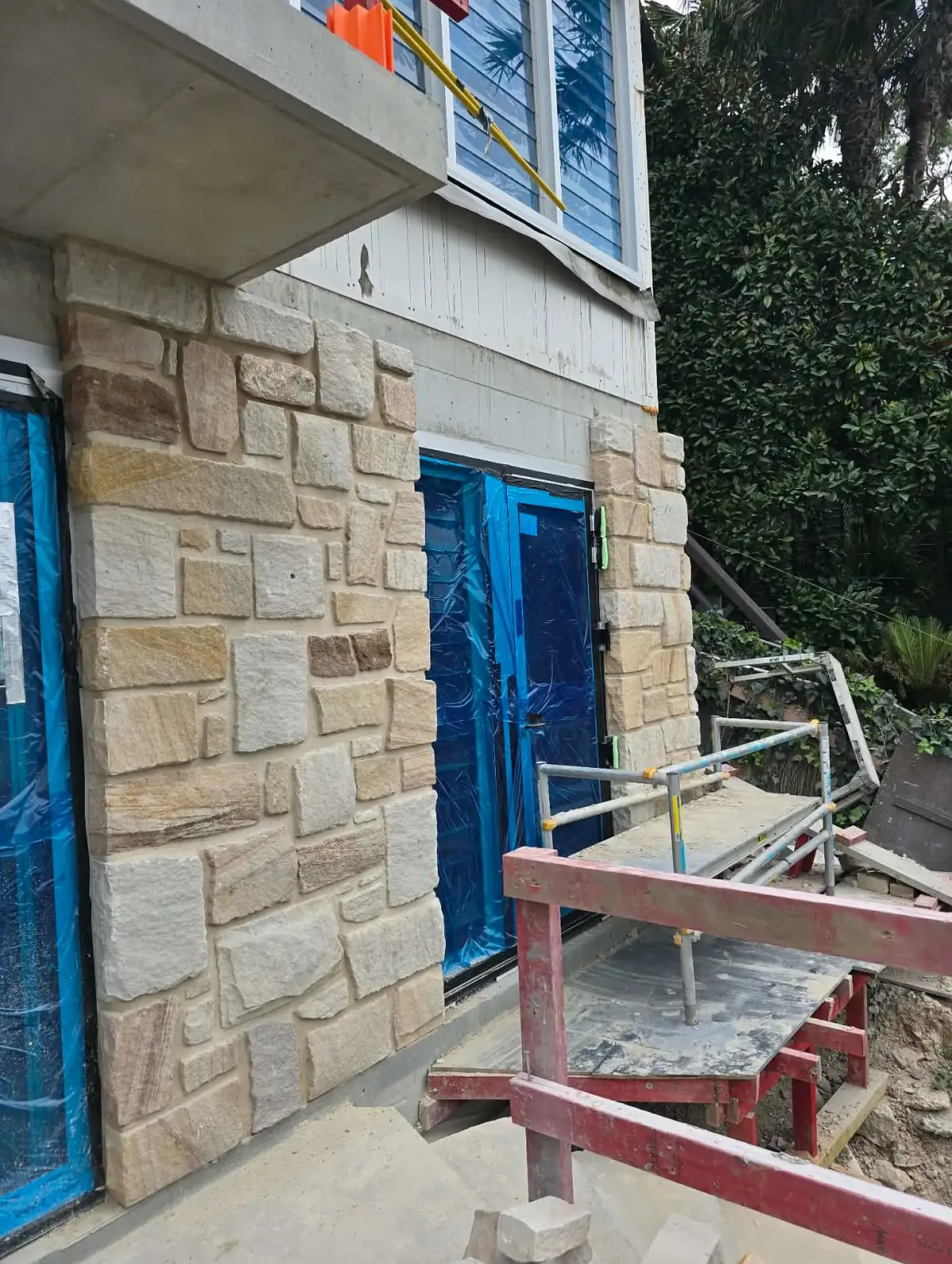
Recent sandstone cladding by our team. Tap a photo to see it larger.
How we work
We check the wall, access, scaffold needs and the look you want, and show you stone samples.
We confirm the wall can take the weight and plan fixings, flashings and control joints.
We plan coursing, corners and openings so cuts fall in the right places.
Each piece is dressed and fixed with adhesive and mechanical fixings, working up from a level base.
We finish the joints, clean off residue and seal where the exposure calls for it.
Sandstone cladding is quoted per job because walls differ so much. These factors make the biggest difference.
Recladding a house usually does not need approval when it is a like-for-like change of finish, but heritage items, heritage conservation areas and some development consent conditions can restrict changes to a facade. Check with Northern Beaches Council or your certifier first. Blake Cooper holds NSW contractor licence 328680C in the Stonemason class, which covers stone veneer facing.
A sunken courtyard enclosed by sandstone-clad walls, with bluestone stairs dropping in from the level above and stepping pavers set in groundcover.
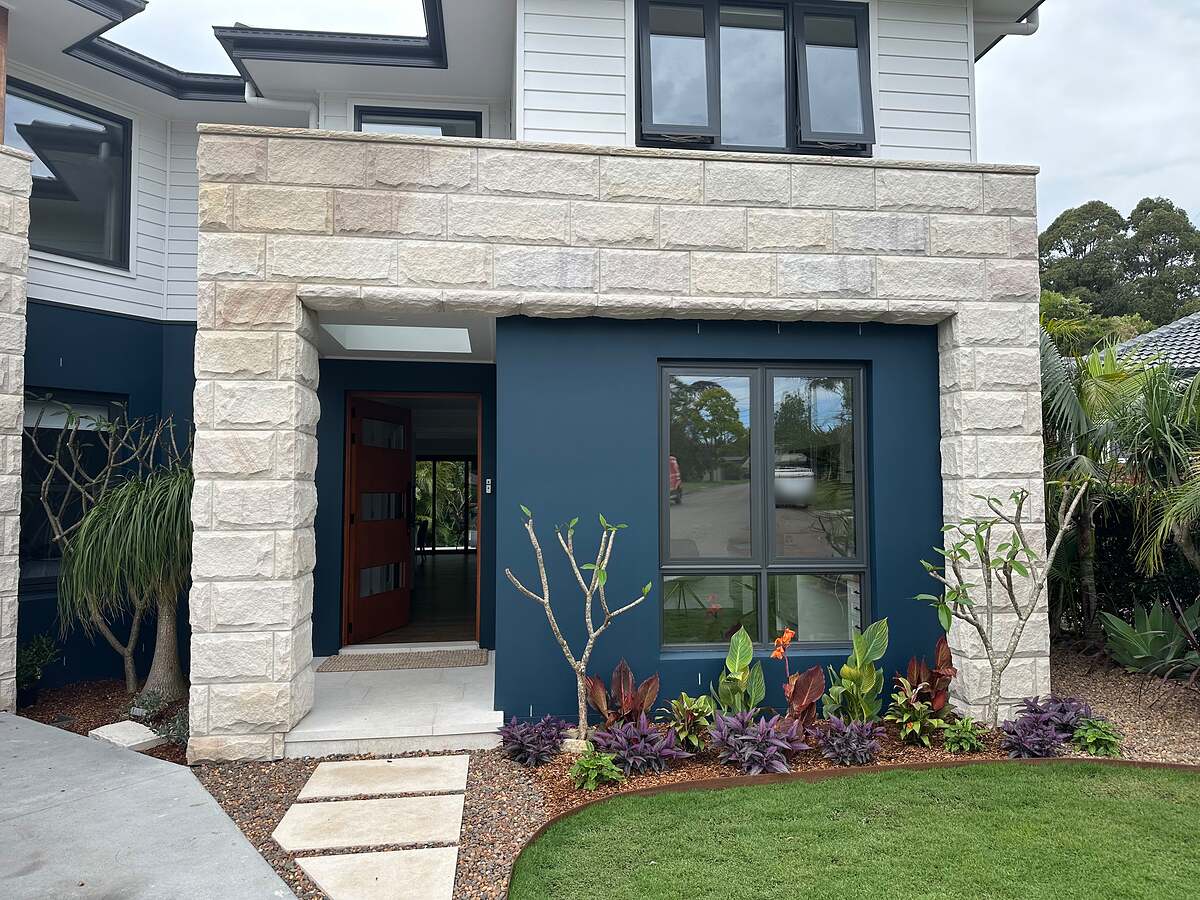
View projectLight split-face sandstone cladding framing the navy-blue entry of a new two-storey home, from scaffold to finished facade.
View project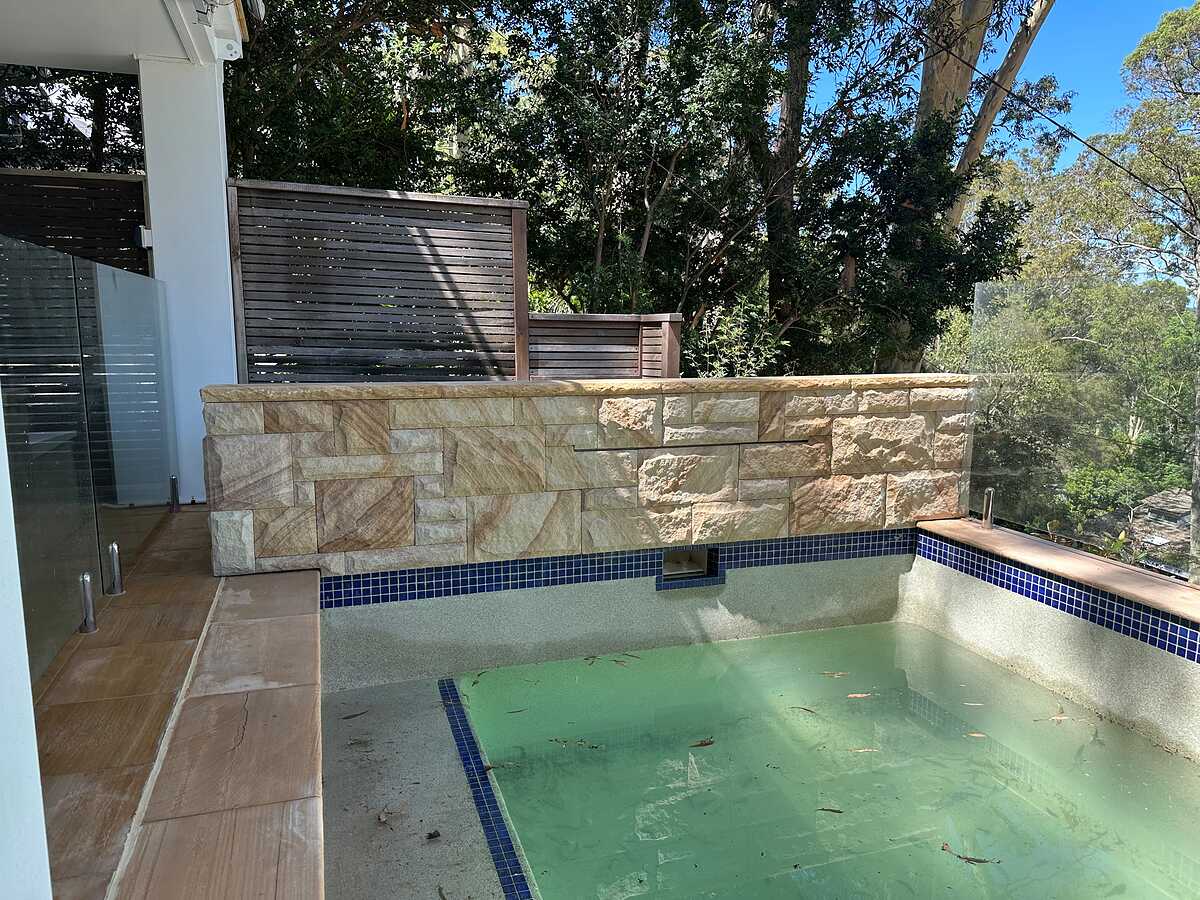
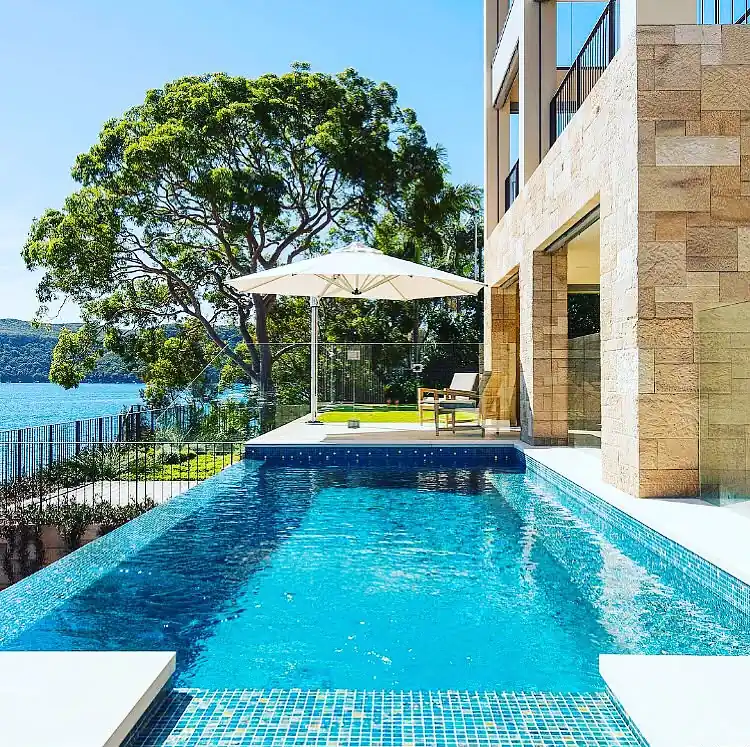
An elevated plunge pool among the trees, finished with a split-face sandstone feature wall, sandstone coping and sawn sandstone paving.
View projectNatural sandstone cladding is real stone, so every piece is different and it weathers in over time rather than wearing out. Stone-look panels are manufactured to imitate stone and repeat their pattern, and they can fade or show their edges. On Northern Beaches homes, natural sandstone also sits comfortably beside existing sandstone walls and the local landscape.
Sandstone cladding can be fixed to brick, concrete block, concrete or a suitable fibre-cement cladding system, using stone adhesive and mechanical fixings matched to the wall height and exposure. Natural stone commonly weighs 60 kg per square metre or more, so it should never be fixed to plasterboard. We check the substrate on every Sydney job before quoting.
Sandstone cladding near the beach benefits from a breathable penetrating sealer. Salt air and wind-driven rain carry salts into porous stone, which can cause white efflorescence and eventually flaking. A penetrating sealer reduces water uptake and staining while still letting moisture escape. It cannot make sandstone fully salt-proof, so exposed Northern Beaches walls also need occasional cleaning.
Sandstone cladding is priced on the wall area, then adjusted for the stone type, the number of corners and openings, scaffolding, substrate preparation and access. A flat feature wall costs far less per square metre than a two-storey facade with window reveals. We measure up and give you a free, no-obligation quote for your Northern Beaches or North Shore home.
Yes. When new sandstone cladding has to sit beside an existing wall, we match the stone by colour, grain, face texture and coursing. Recycled sandstone is often the best match for older Northern Beaches homes because it has already weathered. Supply of recycled stone varies, so we source it for each project and show you samples first.
Cladding a house in sandstone often does not need approval when it simply changes the wall finish, but heritage items, heritage conservation areas and conditions on an existing development consent can restrict facade changes. If your home is on the Northern Beaches, check with Northern Beaches Council or your certifier before work starts, and we can work with them on the details.
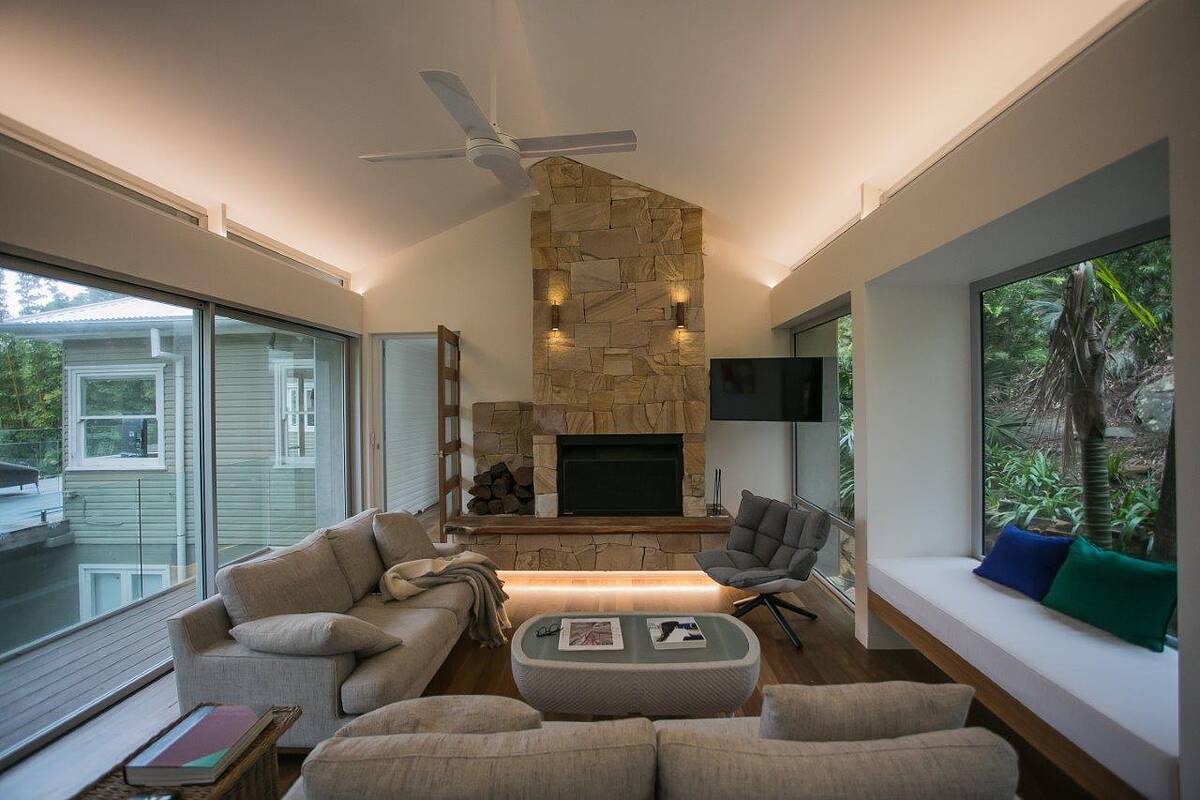
Sandstone fireplaces, hearths, chimney breasts and TV feature walls for gas, wood and electric fires, built inside your home.
Learn more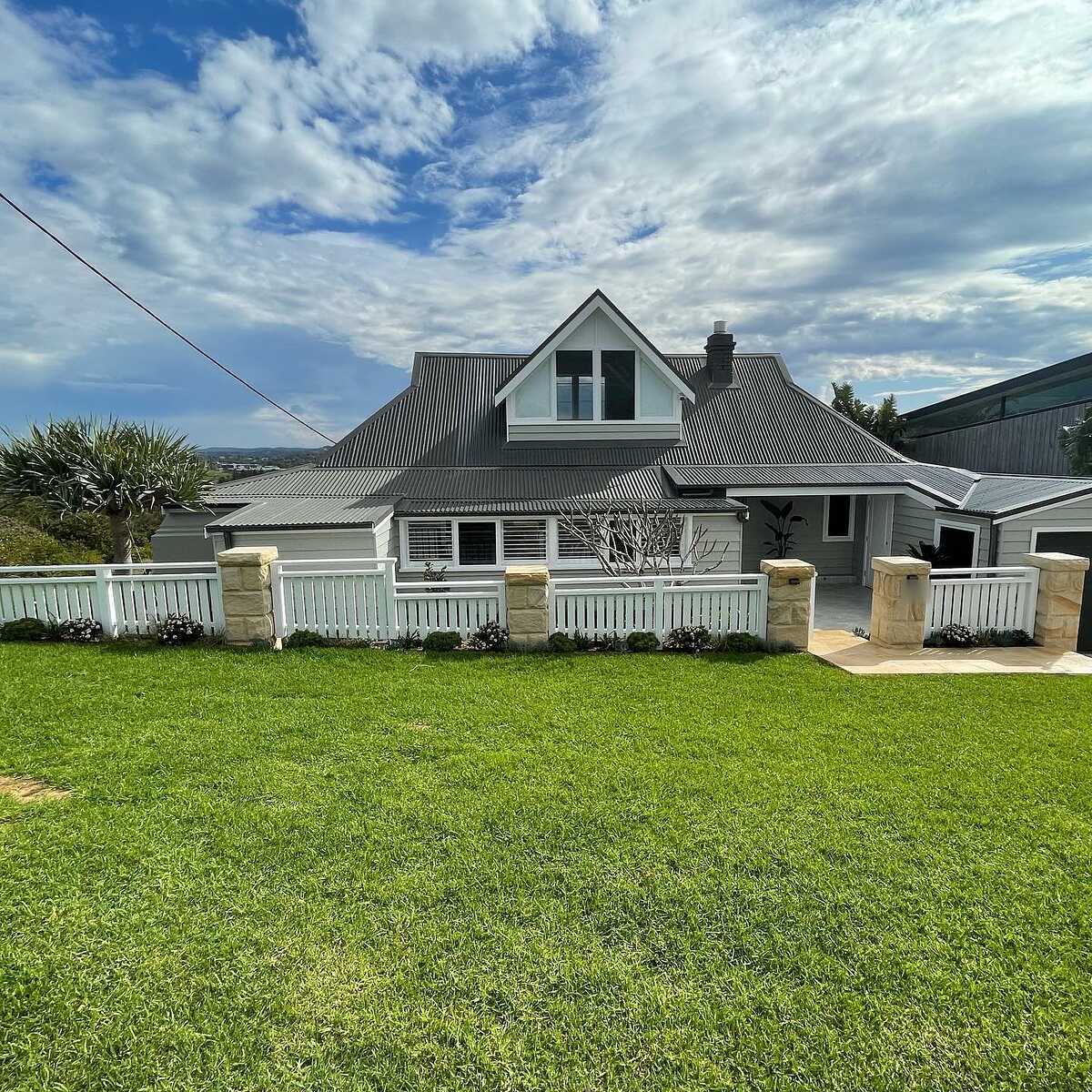
Sandstone letterboxes, front walls, gate pillars and fence piers, with house numbers, lighting and parcel boxes built in.
Learn more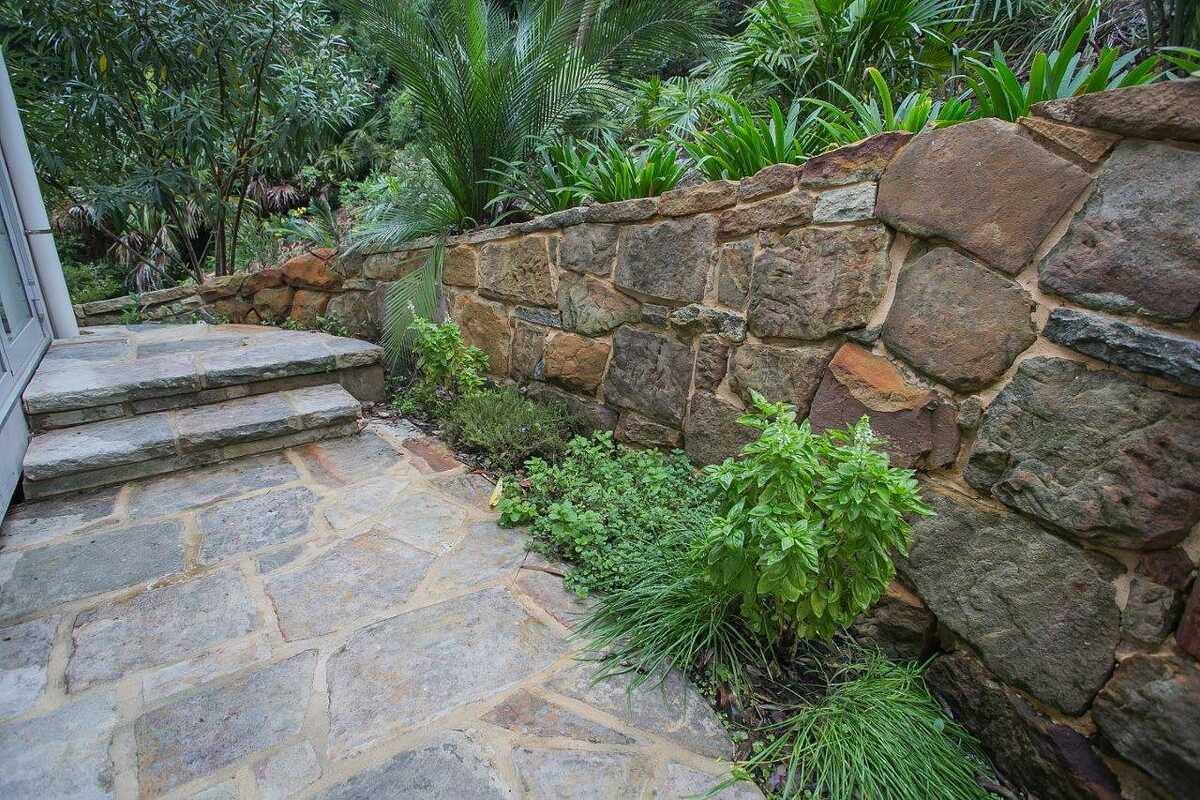
Sandstone repairs, lime mortar repointing, careful cleaning, sealing and stone replacement for old walls, steps and heritage stonework.
Learn moreWe work across the Northern Beaches and North Shore.
Tell us what you have in mind. Blake will talk it through, visit the site and give you a clear written quote.