Sandstone Steps
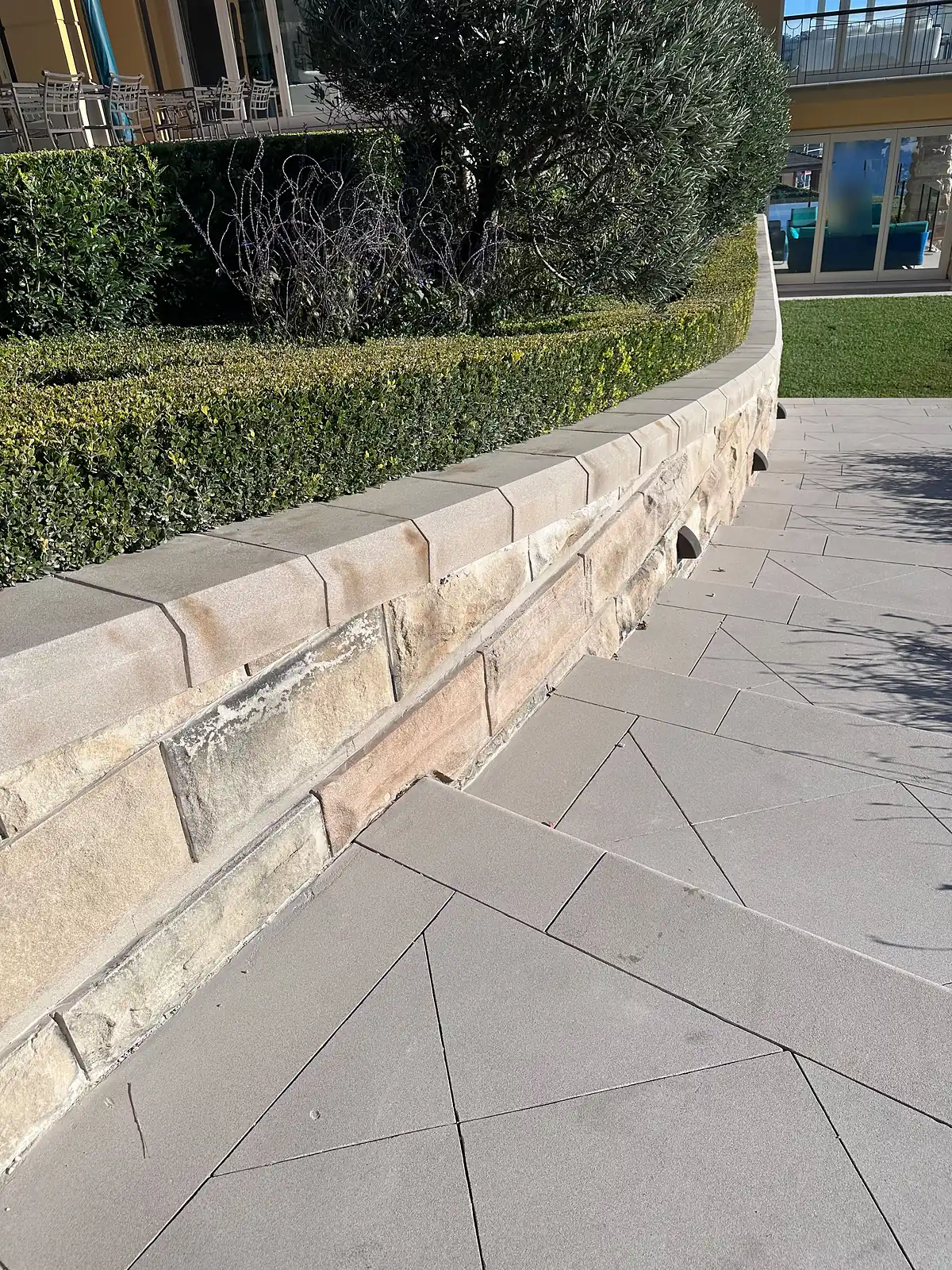
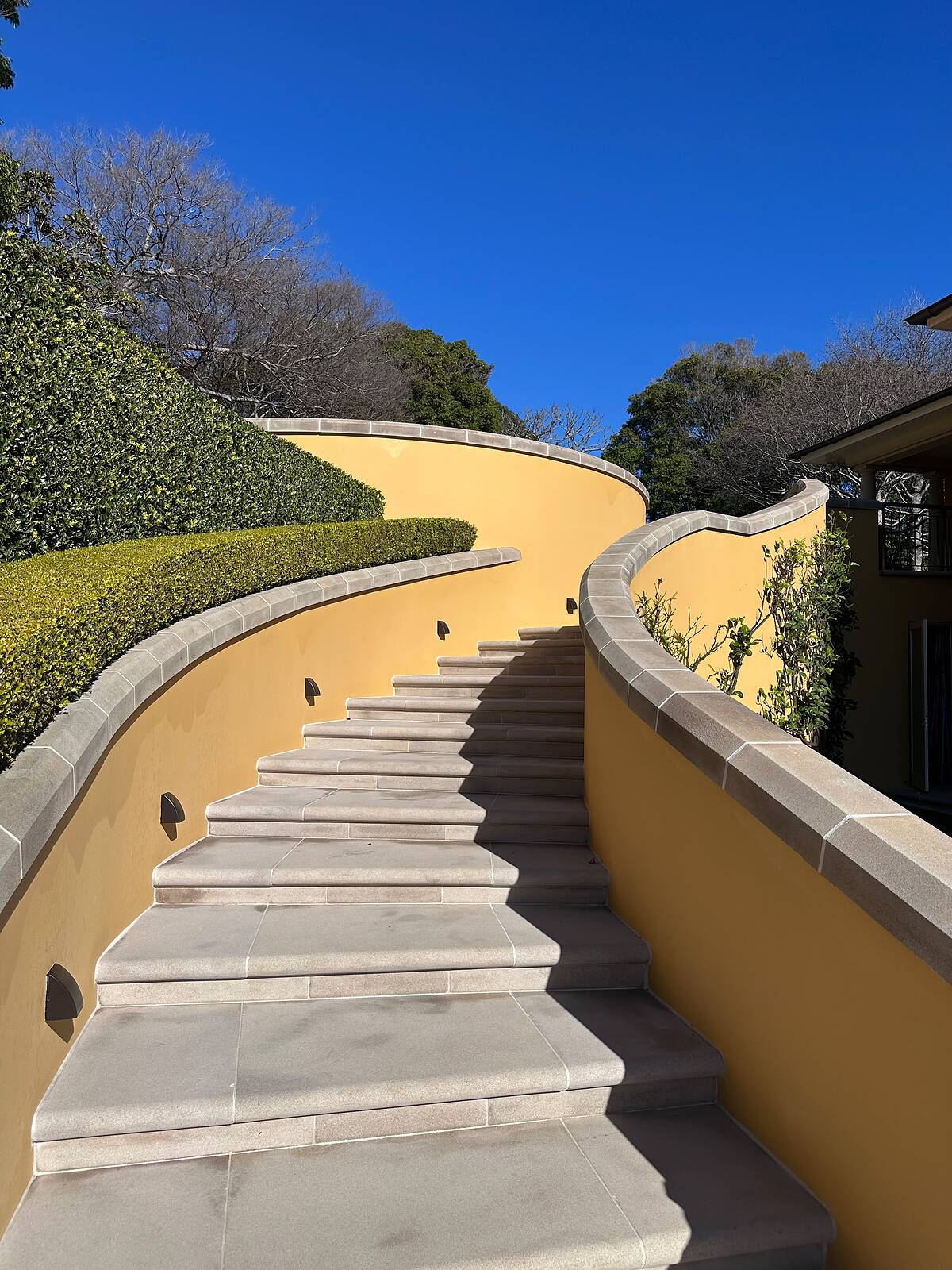
Curved sandstone stairs and garden walls
A sweeping staircase of sawn sandstone treads between curved rendered walls, with curved sandstone garden walls and large-format paving in a harbourside garden.
View projectSandstone Paving
Sawn sandstone flagging and natural stone pavers for terraces, courtyards, paths and entertaining areas. Laid flat, drained properly and sealed for Northern Beaches weather.
In short
Sandstone paving is sawn sandstone flagging, uniform pavers or random flagging laid with falls for terraces, courtyards, paths and entertaining areas. Because sandstone is porous, it should be sealed with a breathable penetrating sealer rather than a film-forming coating, and resealed more often around pools and busy paths.
Natural stone paving is where a garden meets the house, so it has to look right against your walls and steps and hold up to daily use. We lay sawn sandstone flagging, sandstone pavers and random flagging, as well as travertine and bluestone pavers, for homes across the Northern Beaches and North Shore. We can also source recycled sandstone flagging to match older paving: compare sandstone, bluestone and travertine.
Because we also build retaining walls, steps, coping and seating walls, we can carry the same stone through a whole outdoor area, so edges, steps and paving finish cleanly together. Limestone pavers are another option for a pale, even finish.
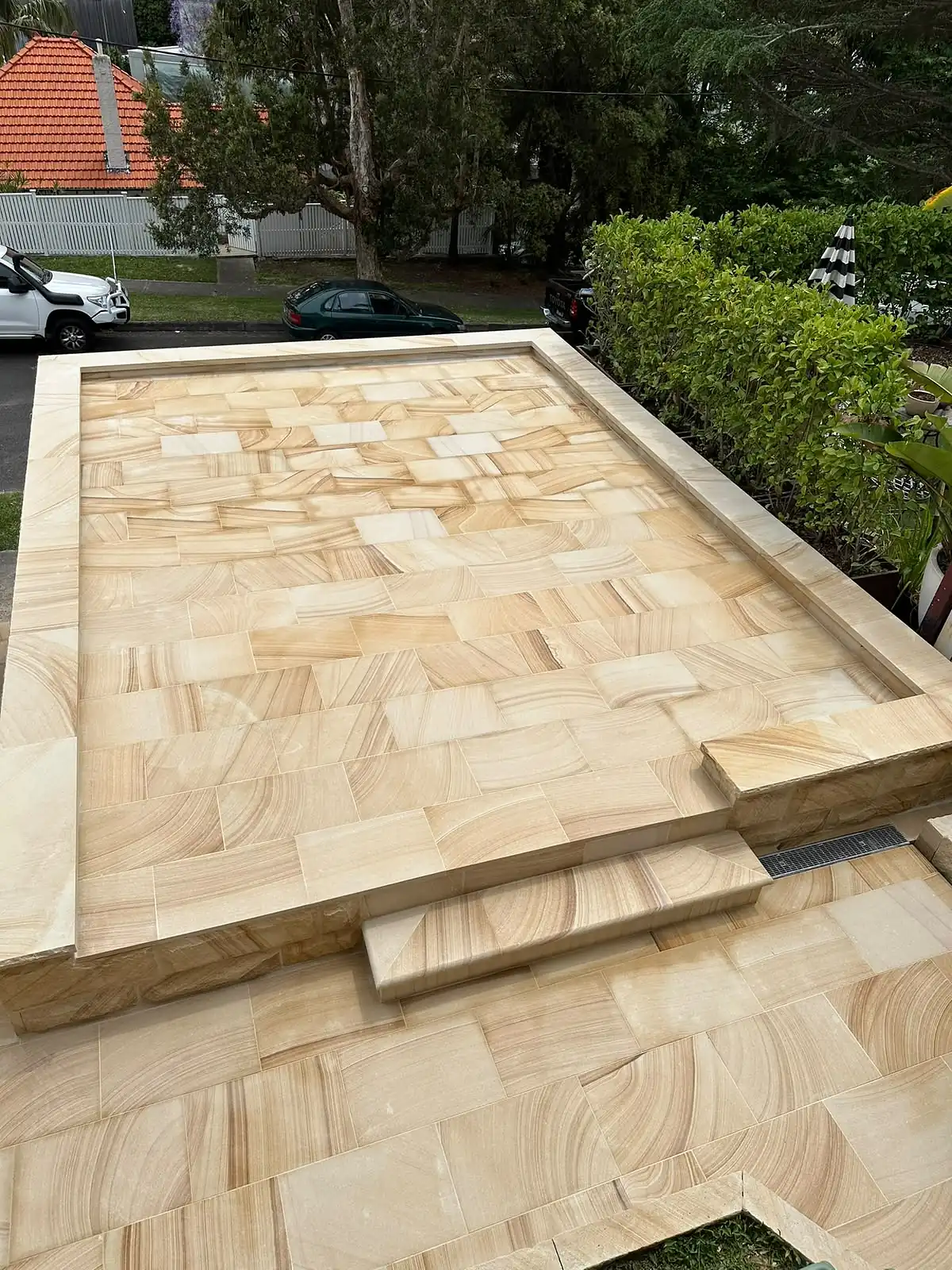
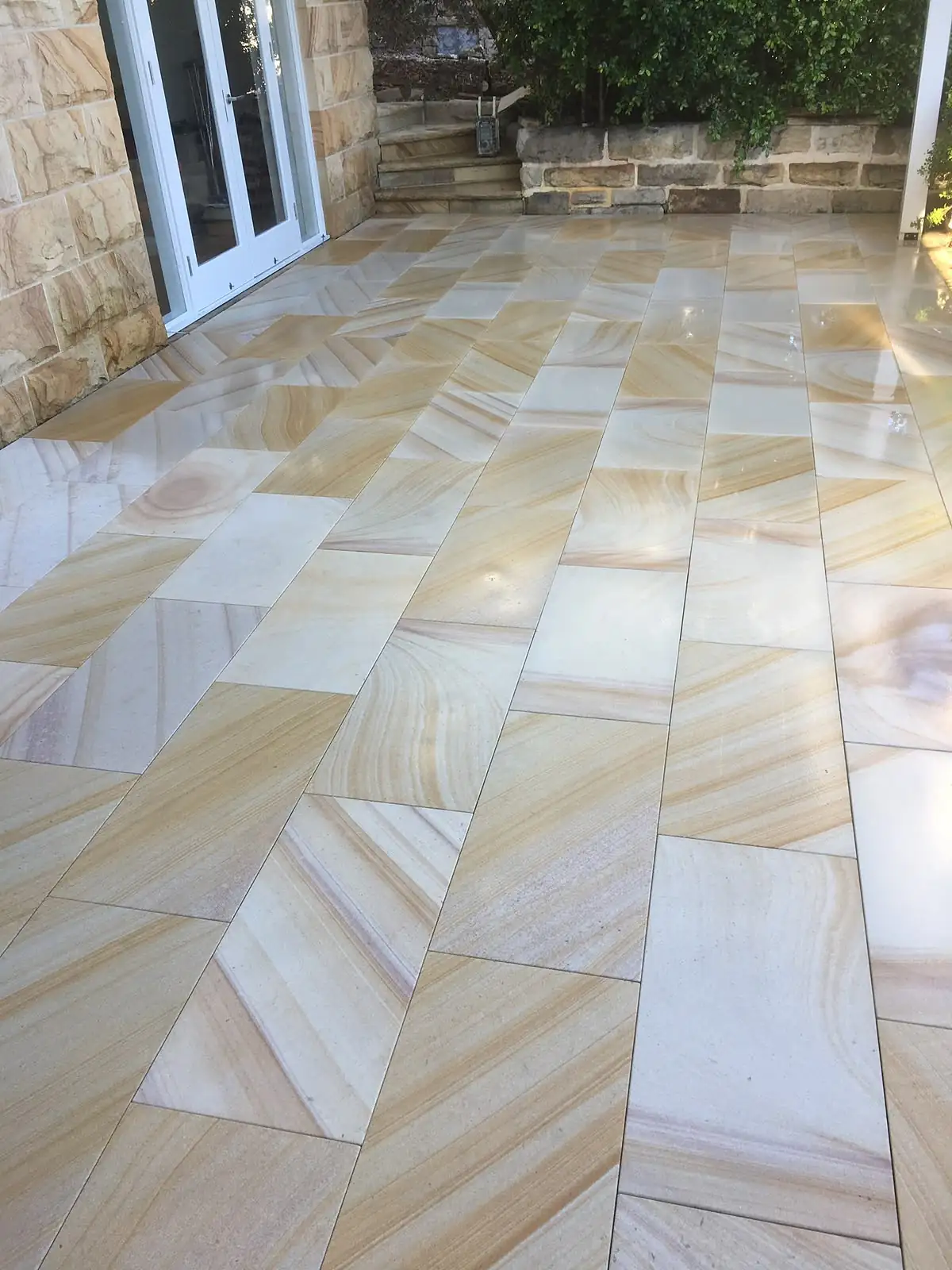
Flags sawn top and bottom for an even surface, laid in banded or random sizes.
Uniform sandstone pavers for patios, paths and side passages.
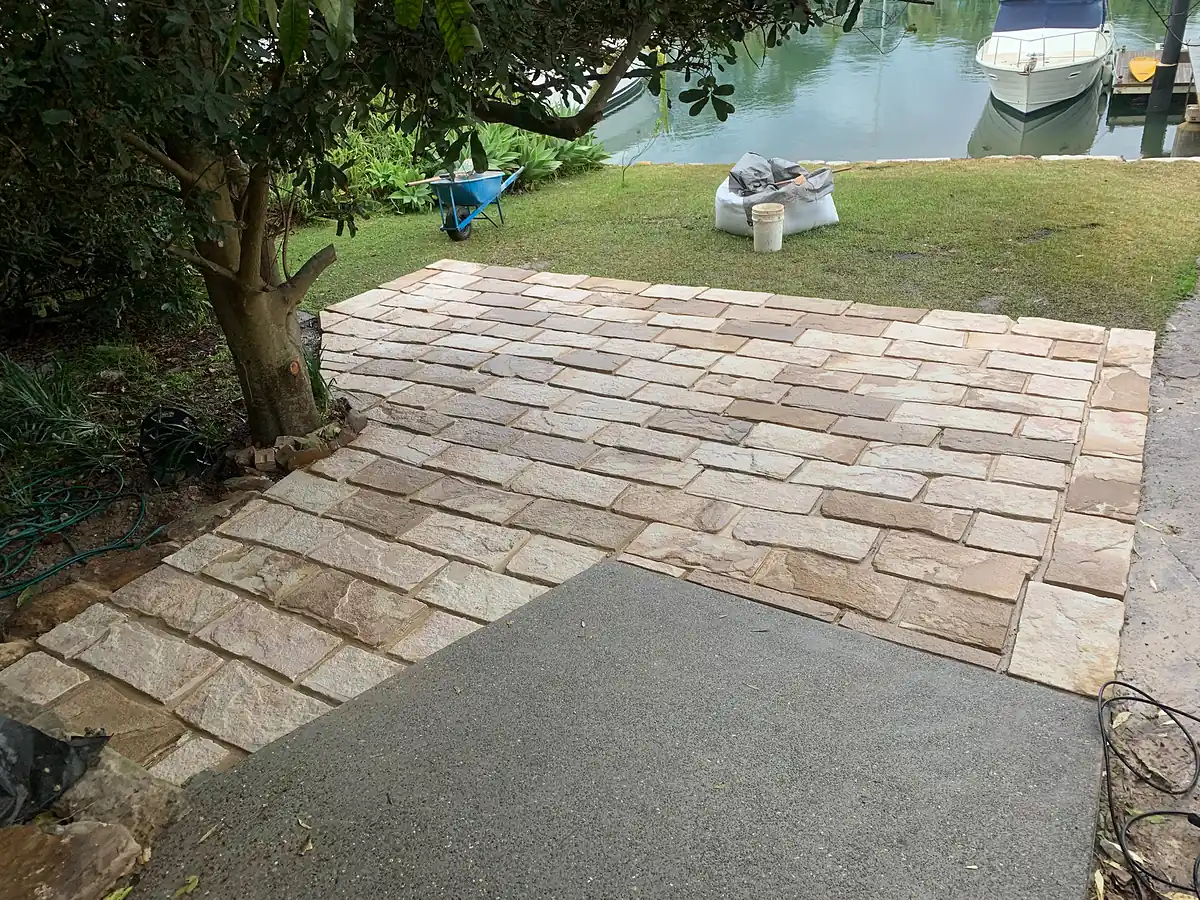
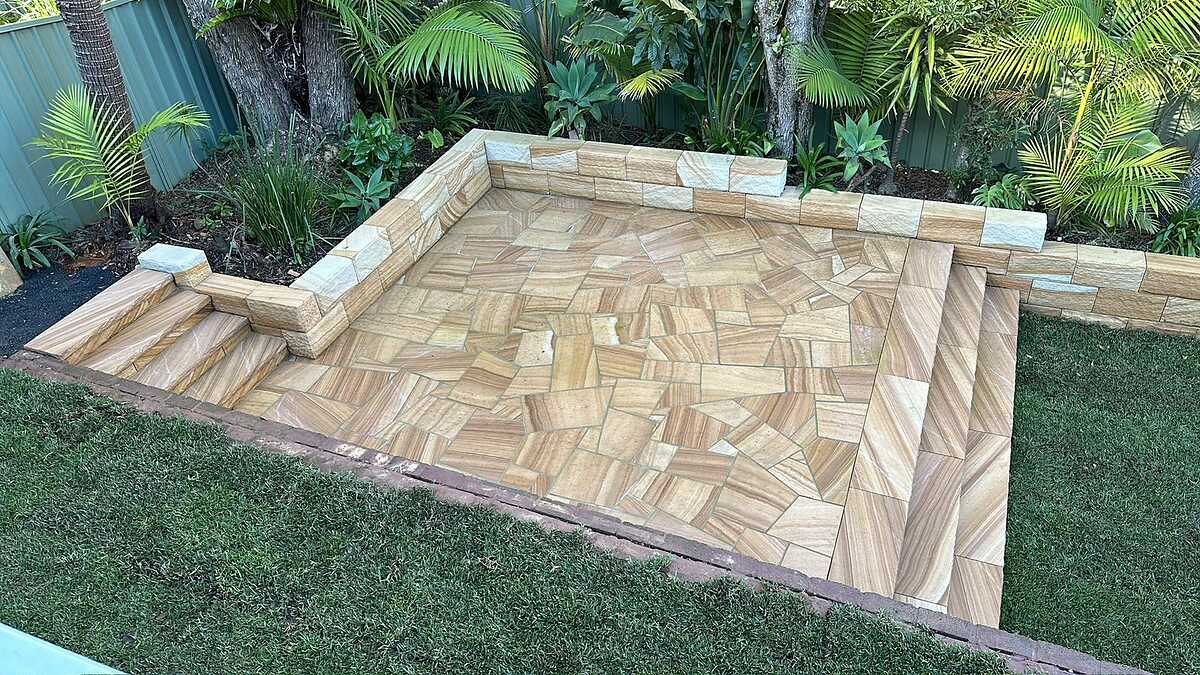
Random-cut sandstone flagging for a relaxed backyard look, often with block seating walls.
Raised terraces with sawn coping edges and steps down to the garden.
Cooler travertine or dense, hard-wearing bluestone where they suit the design better.
Sandstone gives warm, natural colour and a gripping surface, and it suits Northern Beaches homes and gardens. It is porous, so it needs sealing. Travertine stays relatively cool underfoot and is popular around pools, but it has natural holes (filled or unfilled) and also needs sealing.
Bluestone is dense, hard-wearing and slip-resistant with a sawn or honed finish, though darker stone gets hot in full sun. We bring samples to site so you can see each stone in your light.
White powder on new or old pavers is usually efflorescence: salts carried up by moisture that crystallise as it dries. Black or green patches are usually mould, algae or lichen in shady, damp spots. Both can be cleaned, and good drainage, correct falls and the right sealer help keep them away.
We use breathable penetrating sealers rather than film-forming coatings, so moisture can still escape from the stone. A quality penetrating sealer can last many years in low-traffic areas, while pool surrounds and busy paths need attention more often.
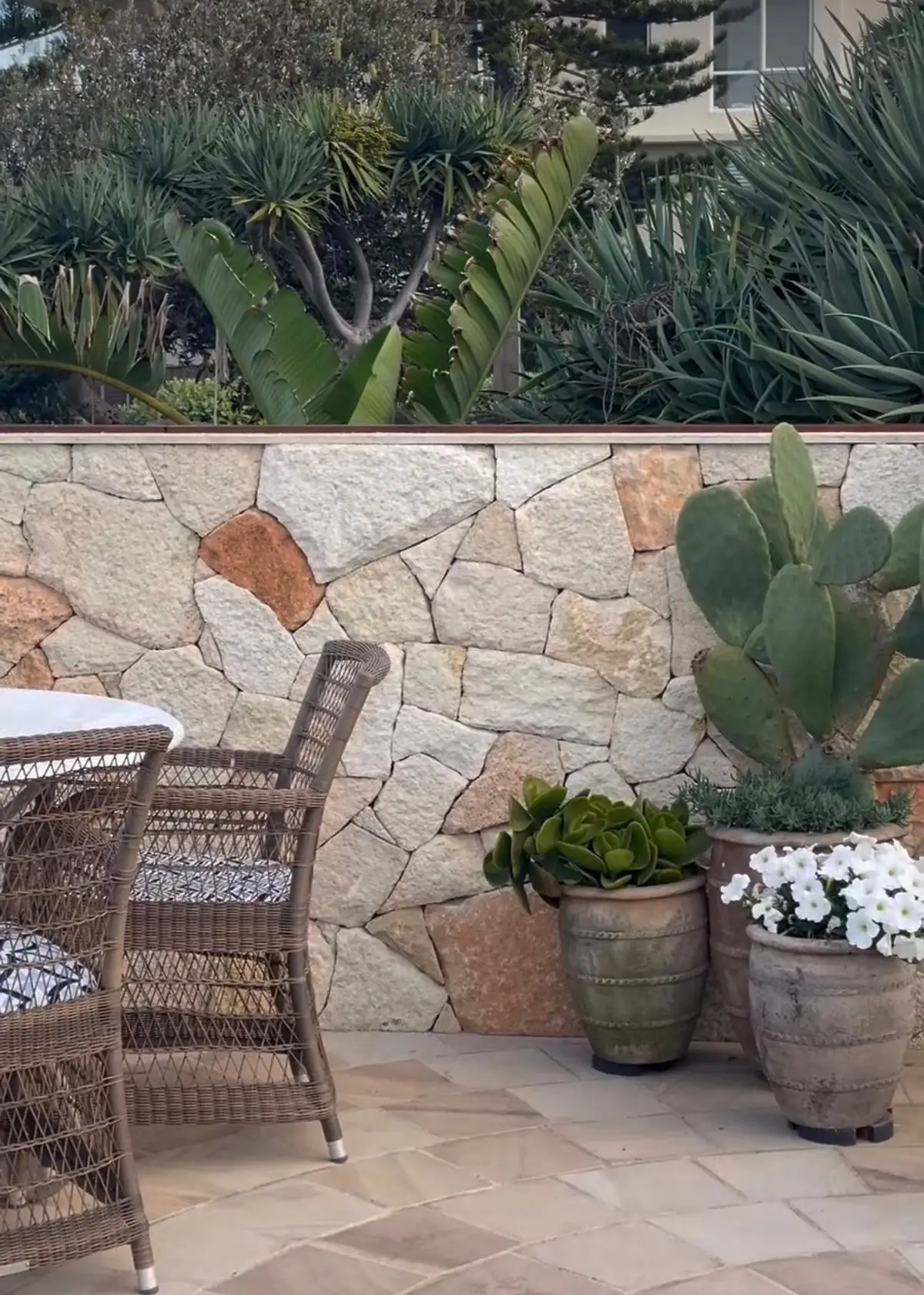
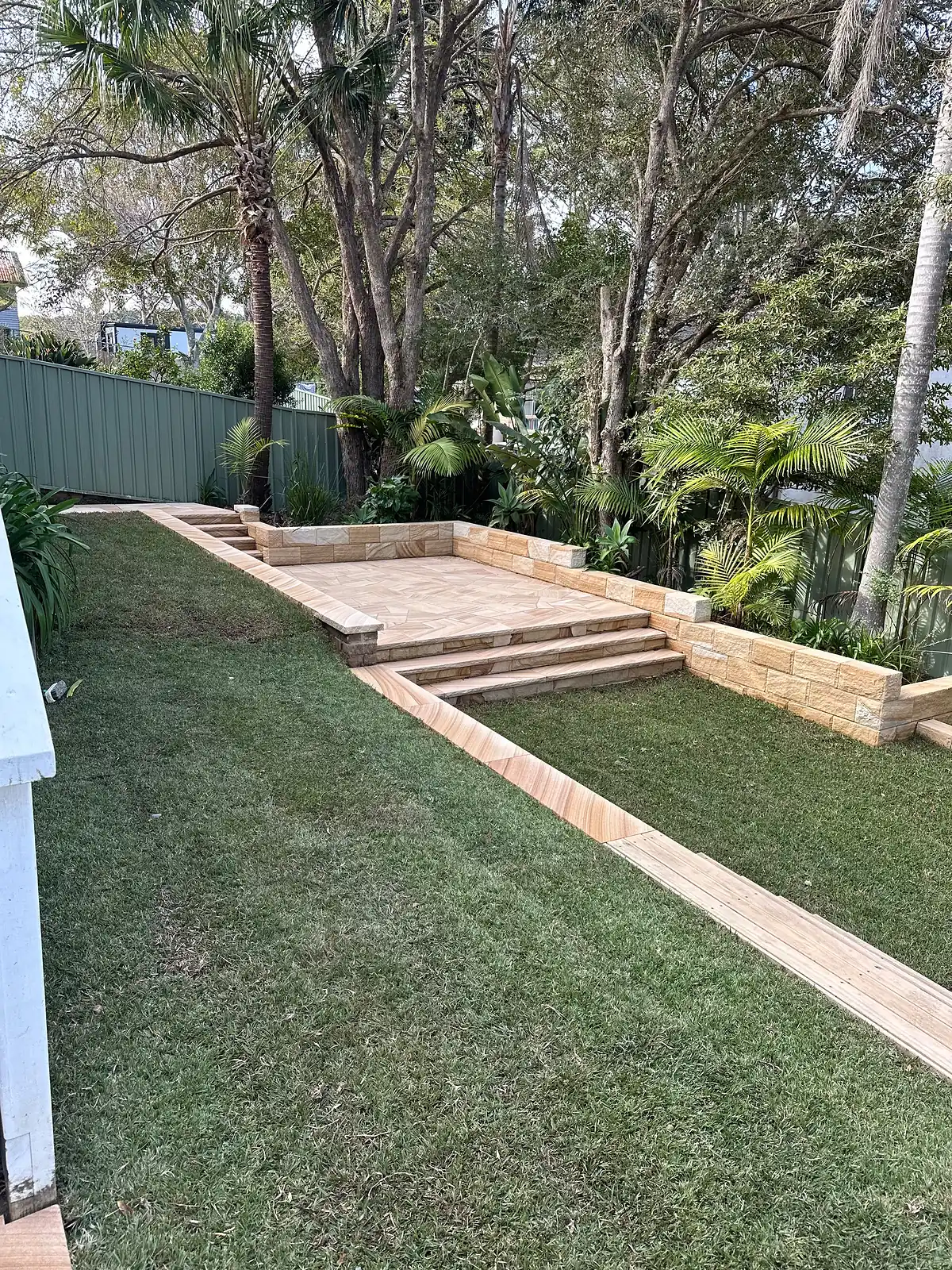
Recent sandstone paving by our team. Tap a photo to see it larger.
How we work
We look at levels, drainage, existing paving and access, and show you stone samples.
We remove old surfaces, excavate and prepare a compacted or concrete base with falls set away from the house.
We plan the pattern from the main sightlines so cuts sit at edges, not in the middle of the area.
Each flag or paver is bedded, levelled and checked so the surface is flat and safe.
We fill the joints, clean the surface and apply a penetrating sealer when the stone is ready.
We quote every paving job on site. These are the main things that affect the price of sandstone paving.
A sweeping staircase of sawn sandstone treads between curved rendered walls, with curved sandstone garden walls and large-format paving in a harbourside garden.
View project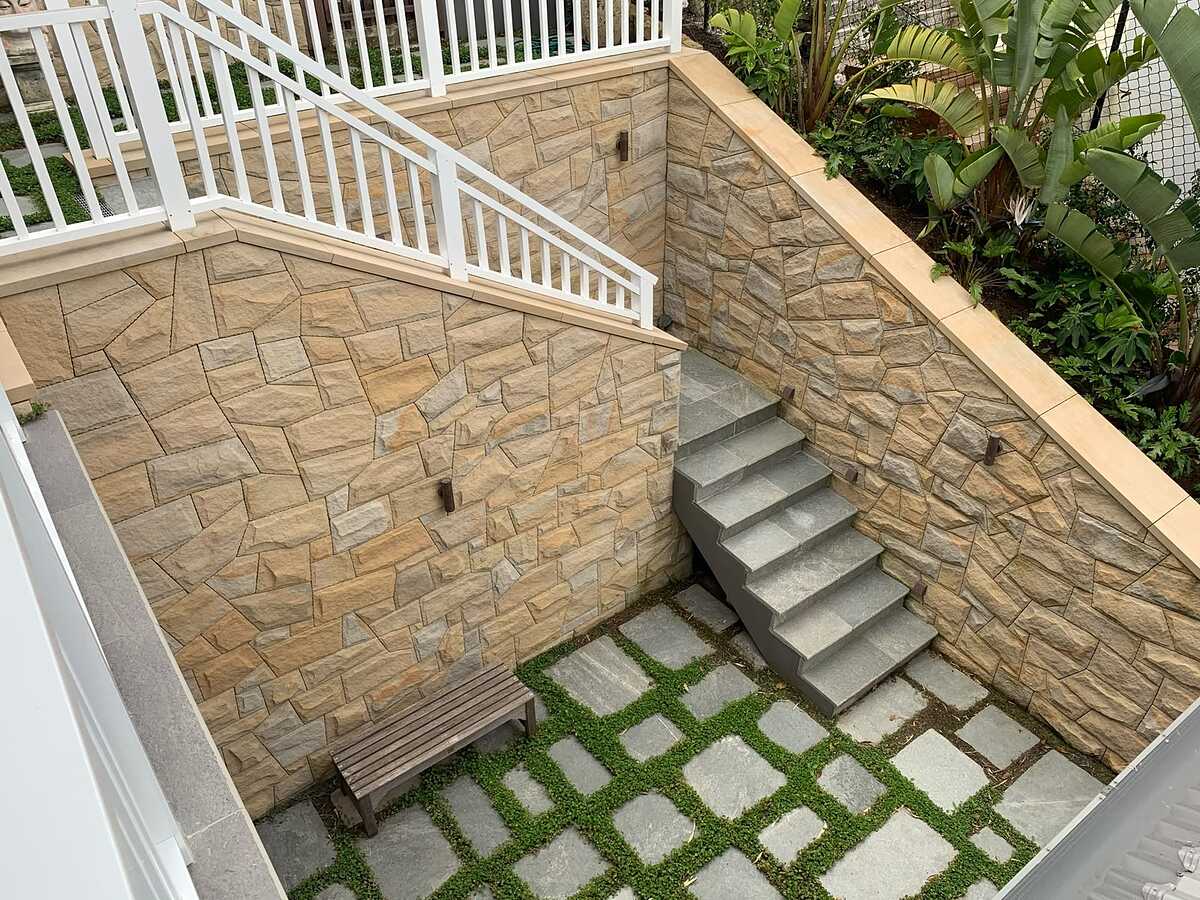
A sunken courtyard enclosed by sandstone-clad walls, with bluestone stairs dropping in from the level above and stepping pavers set in groundcover.
View project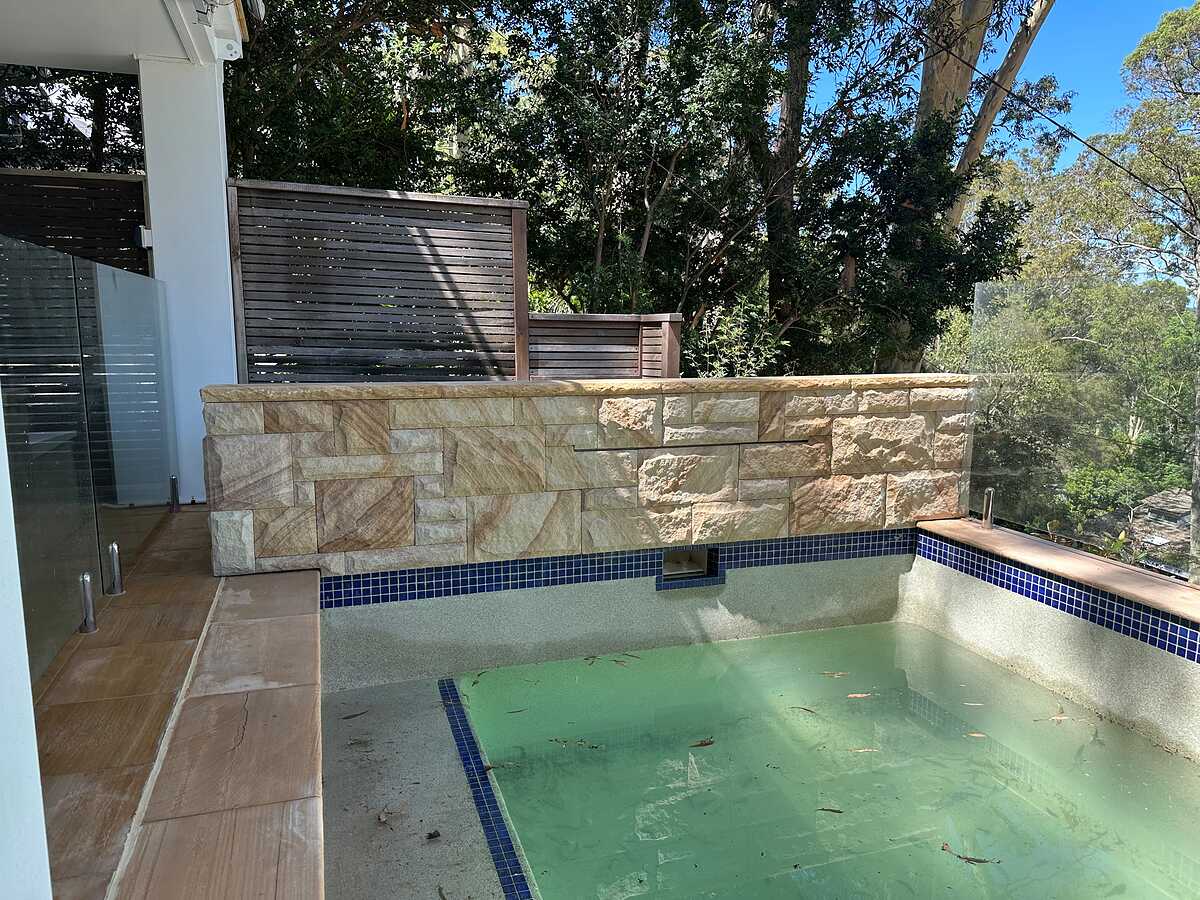
An elevated plunge pool among the trees, finished with a split-face sandstone feature wall, sandstone coping and sawn sandstone paving.
View projectSandstone flagging is usually sawn top and bottom, comes in larger or random sizes, and gives an even, natural stone surface for terraces and courtyards. Sandstone pavers are generally uniform in size and thickness, which makes them quicker to lay in regular patterns. Both suit Northern Beaches homes; the choice comes down to look, thickness and budget.
Sandstone can work for a driveway, but only as thicker stone laid on a reinforced concrete slab designed for vehicle loads. Thin sandstone pavers on sand will crack and move under cars. Sandstone is also porous, so oil and tyre marks need prompt cleaning and the surface should be sealed. We advise on stone thickness for each Sydney driveway.
How often sandstone pavers need resealing depends on the sealer, sun, foot traffic and whether they surround a pool. A quality breathable penetrating sealer can last many years in low-traffic areas, while pool surrounds and busy paths on the Northern Beaches need attention more often. If water stops beading on the surface, it is time to reseal.
White deposits on sandstone pavers are usually efflorescence, which is salt carried up by moisture that crystallises as the stone dries. Black or green marks are usually mould, algae or lichen in shady, damp areas. Both are common on the Northern Beaches and can be cleaned. Better drainage and a breathable penetrating sealer help stop them coming back.
Sandstone pavers have warm colour, good grip and suit Sydney sandstone homes and gardens. Travertine pavers have a smoother, more formal look, stay relatively cool underfoot and are popular around pools, but they have natural holes that may be filled or left open. Both are porous and need sealing. We can show you both side by side on site.
Seal sandstone with a breathable penetrating (impregnating) sealer, not a film-forming coating, so moisture and salts can still escape. Clean the stone with a pH-neutral cleaner, let it dry fully, test a patch, then apply as the manufacturer directs. Do not seal walls with rising damp, salt problems or old lime-mortar heritage work.
Read the guideYes, sandstone can work around a saltwater pool, but only with a dense, good-grade stone, a breathable penetrating sealer suited to pools, regular fresh-water rinsing and joints softer than the stone. Salt crystallising in the pores is what causes flaking. If you want lower maintenance, travertine or bluestone may suit better.
Read the guide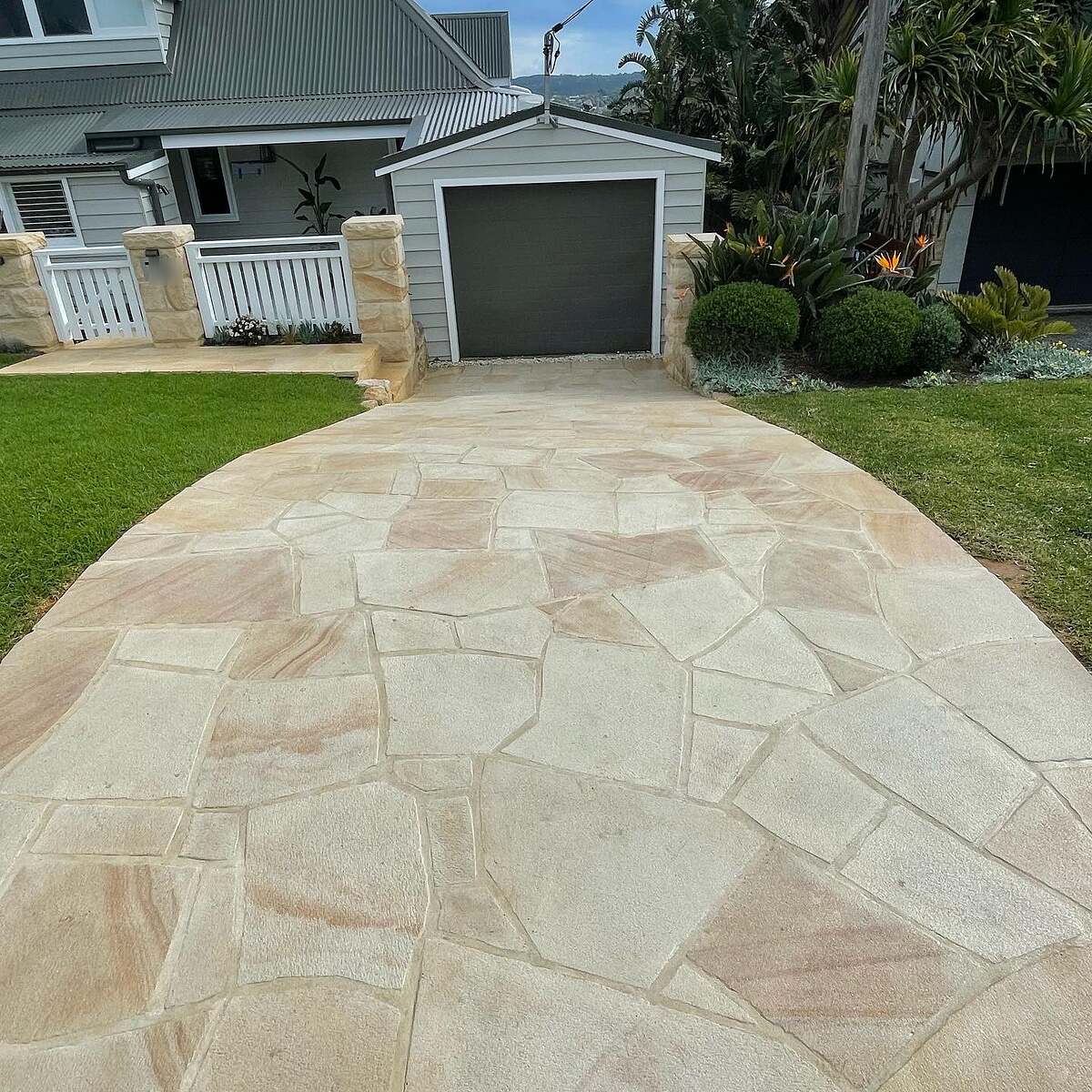
Hand-fitted sandstone, bluestone and quartzite crazy paving for paths, driveways, patios and pool surrounds.
Learn moreSandstone bullnose and drop-face coping, pool paving and split-face feature walls, with honest advice on stone for salt pools.
Learn moreSandstone entry steps, garden stairs, block steps and curved staircases, built with even rises and solid footings.
Learn moreWe work across the Northern Beaches and North Shore.
Tell us what you have in mind. Blake will talk it through, visit the site and give you a clear written quote.