Short answer
Seal sandstone with a breathable penetrating (impregnating) sealer, not a film-forming coating, so moisture and salts can still escape. Clean the stone with a pH-neutral cleaner, let it dry fully, test a patch, then apply as the manufacturer directs. Do not seal walls with rising damp, salt problems or old lime-mortar heritage work.
Why seal sandstone at all?
Sydney sandstone is mostly quartz grains held together by a clay matrix, and it is porous. Water, oil, wine, tannins from leaves and salt from the air or a pool all soak in. A good sealer slows that down, so spills wipe up, mould has less to feed on and salts are less likely to get deep into the stone.
Sealing does not make sandstone waterproof, stain-proof or salt-proof. It buys time and makes cleaning easier. Think of it as maintenance, like oiling a deck, rather than a one-off coating that lasts forever.
Penetrating sealers versus film-forming coatings
There are two broad families of sealer. Penetrating (impregnating) sealers, usually based on silanes, siloxanes or fluoropolymers, soak into the pores and line them so water beads off, while vapour can still pass through. Film-forming sealers, such as acrylics and polyurethanes, sit on top as a skin.
For outdoor sandstone, a penetrating sealer is almost always the right choice. A film traps moisture coming up from below, and when that moisture cannot escape it lifts the coating, turns it cloudy or pushes salts into the face of the stone. Films also wear unevenly on paths and steps and can make wet stone slippery.
| Penetrating (impregnating) | Film-forming (topical) | |
|---|---|---|
| Where it sits | Inside the pores | On the surface |
| Breathability | Lets vapour escape | Traps moisture |
| Look | Natural, or slightly richer with an enhancer | Glossy or wet look |
| Slip | Little change | Can be slippery when wet |
| Best for | Paving, walls, coping, steps, cladding | Some interior surfaces, by manufacturer advice |
| Failure mode | Slowly loses repellence | Peels, whitens or flakes |
When not to seal sandstone
Sealing the wrong stone can do more harm than leaving it bare. The state heritage councils' technical guide on mortars is blunt: "Don't even think about sealing older walls with water-repellent coatings: they can trap water and salts and disrupt the surface." Old walls are meant to dry out through their joints and faces.
- Walls or paving with rising damp, or moisture coming up from soil or a slab without a membrane.
- Stone that is already crumbling, flaking or showing salt crystals: fix the moisture source first.
- Older and heritage walls built with lime mortar, unless a conservation adviser says otherwise.
- Freshly laid stone whose mortar and bedding have not cured and dried.
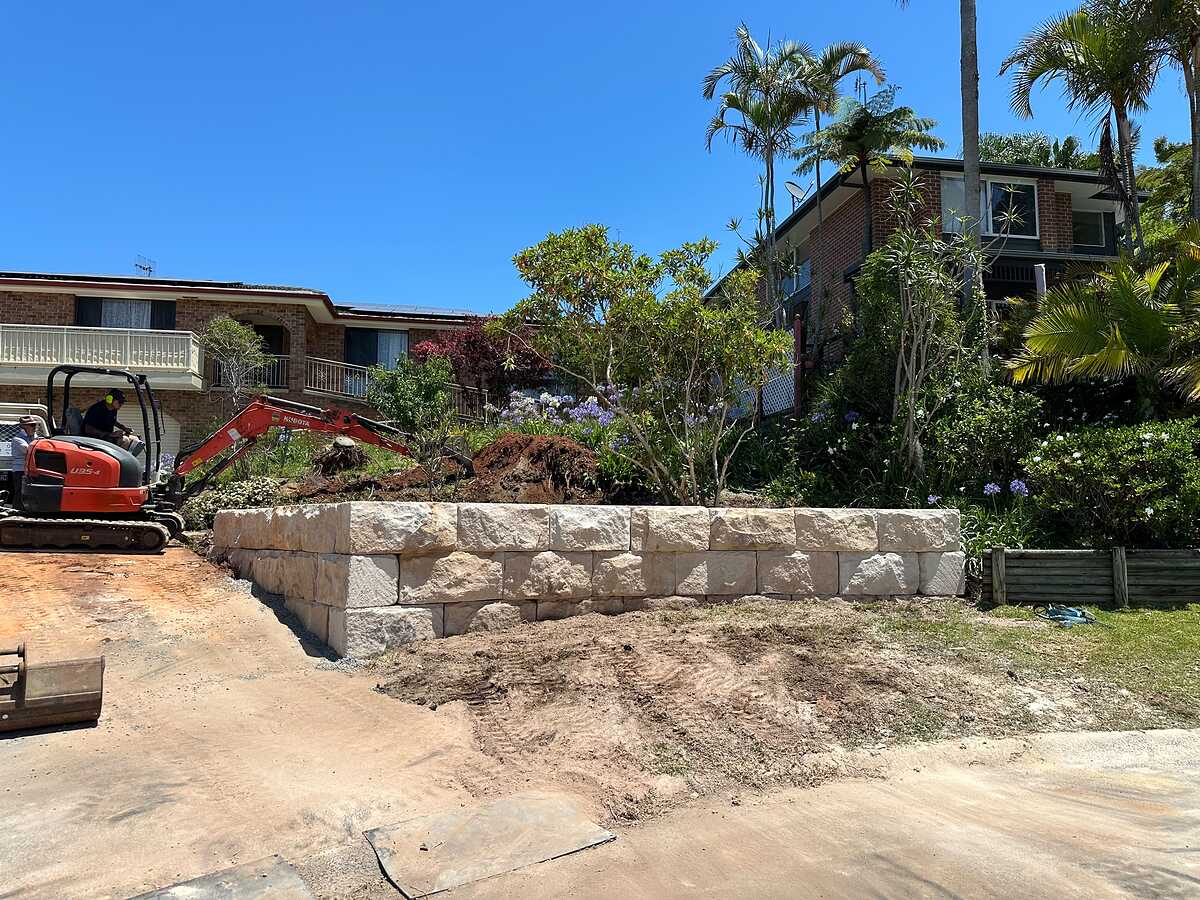
- Retaining walls with soil and water directly behind them: sealing the face does not stop water coming from the back.
Preparation: cleaning and drying
A sealer locks in whatever is on the surface, so clean first. Use a pH-neutral stone cleaner, a stiff brush and plenty of clean water. Avoid strong acids, which can attack the clay matrix and draw iron to the surface as brown staining, and keep high-pressure water at a safe distance, because a narrow jet can etch and roughen the face of soft sandstone.
The stone then needs to be dry right through, not just on top, which can take several dry days after cleaning or after new work is laid. Sealer applied to damp stone does not penetrate properly. Always test a small, out-of-the-way area first to check the colour and finish, and follow the product's coverage rate, number of coats and drying times.
Pavers, walls, coping and fireplaces
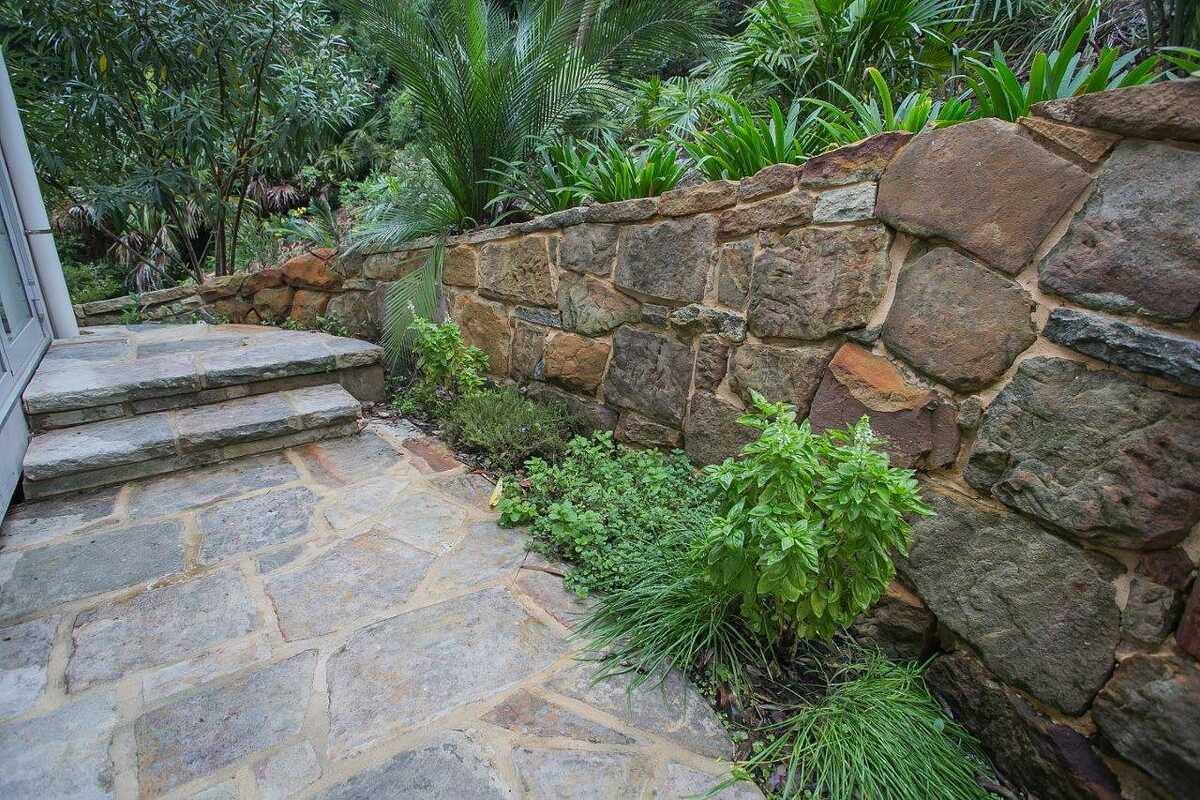
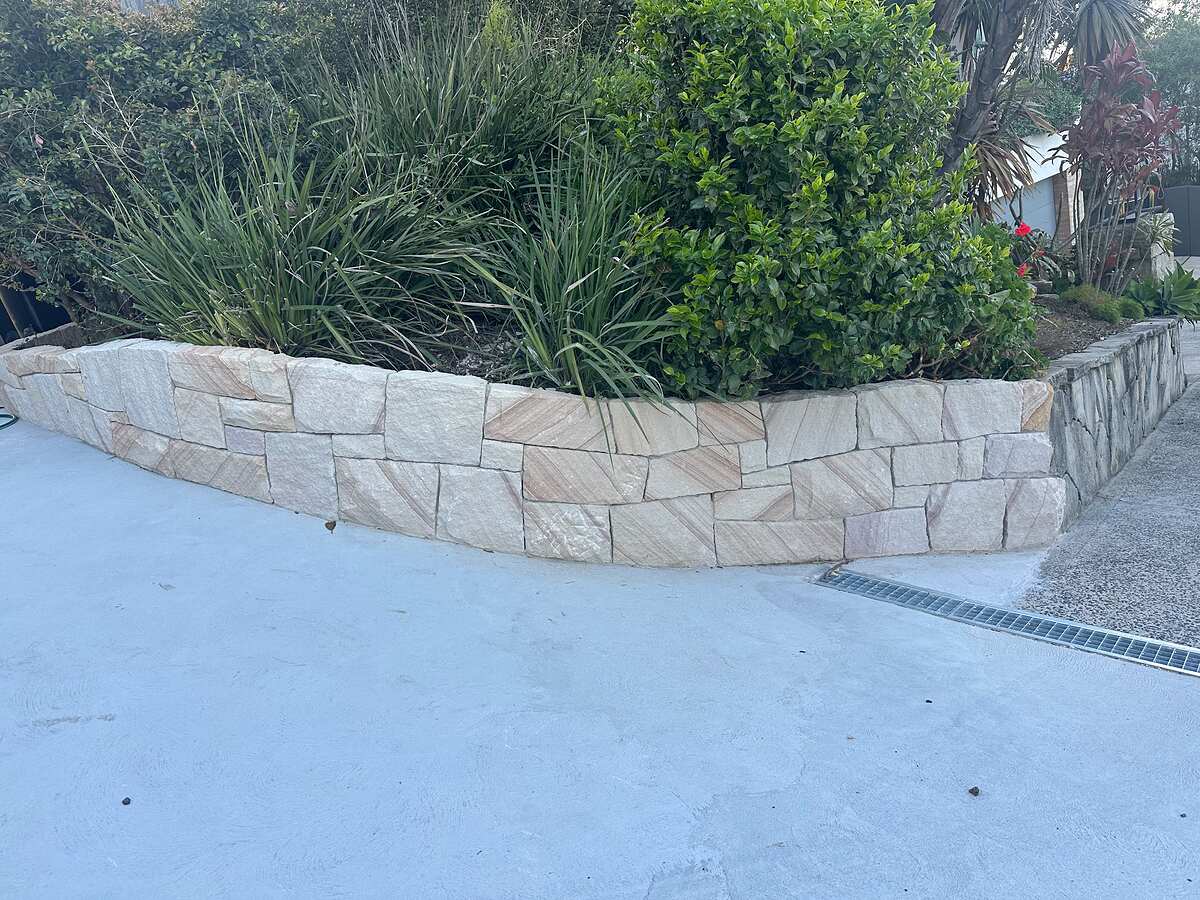
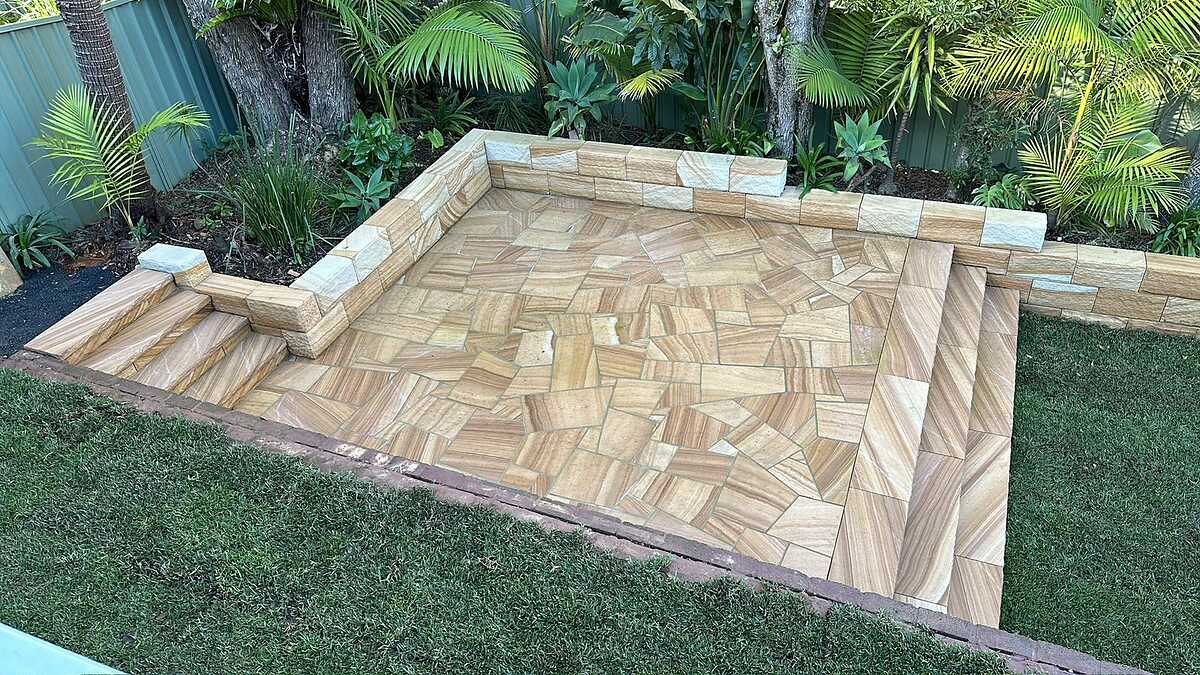
Pavers and flagging take the most wear, from foot traffic, furniture, leaf litter and barbecues. Seal the joints as well as the stone, and around outdoor kitchens choose a sealer that resists oil as well as water. Freestanding walls and cladding see less wear and mostly need protection from wind-driven rain, salt spray and run-off from capping.
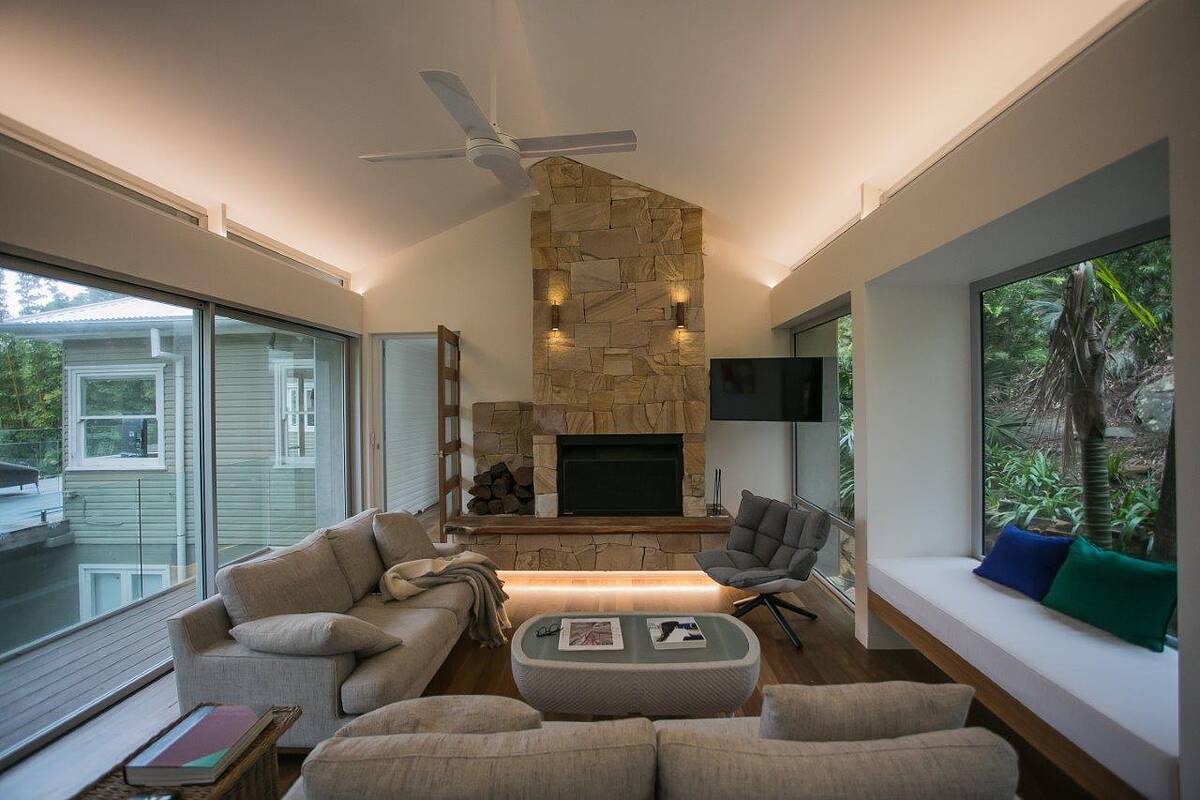
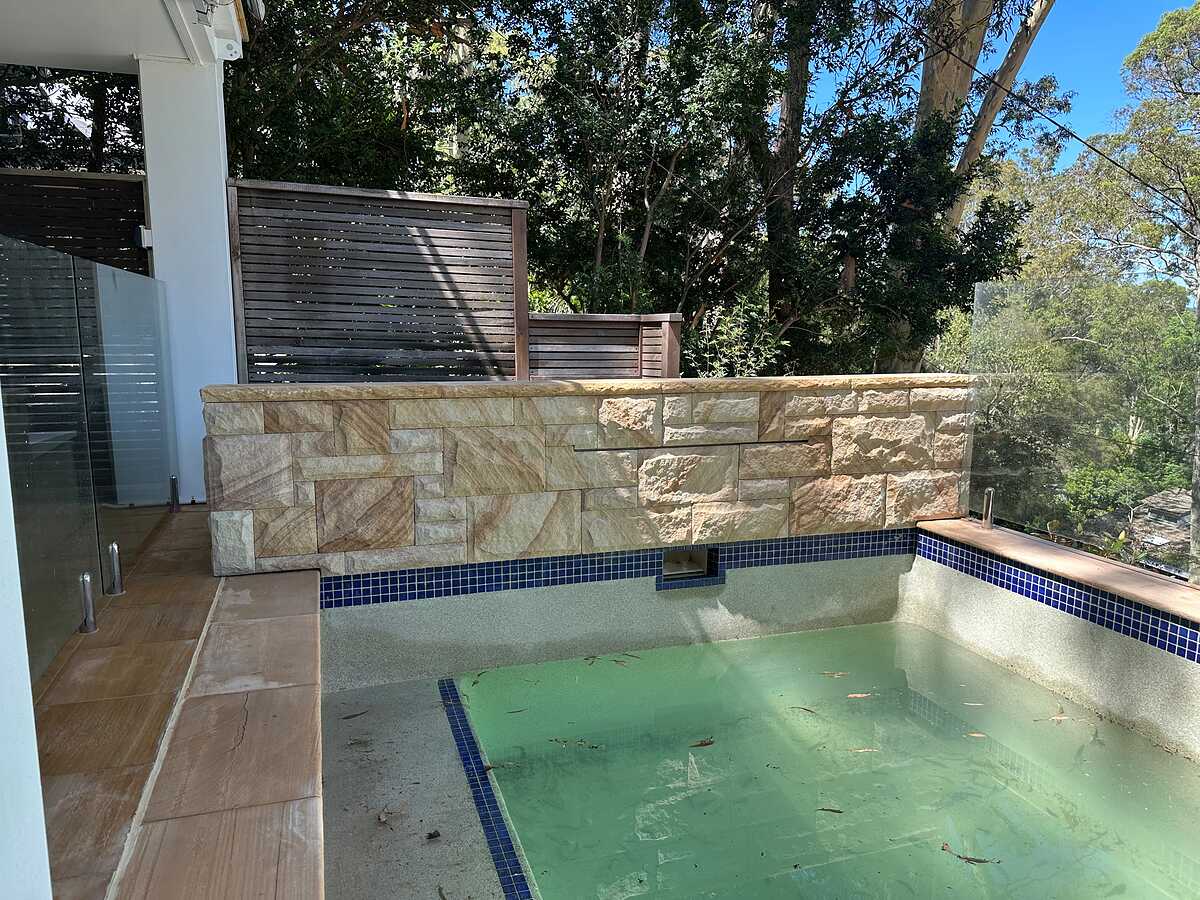
Pool coping is the hardest-working surface: wet, dry, chlorinated or salty, and in full sun. It needs a sealer rated for pools and more frequent checks. Indoor fireplaces and hearths are about soot, smoke and ash. Seal the hearth and surround once the stone is dry, keep sealer off parts the appliance manufacturer says must stay untreated, and clean soot with a pH-neutral product rather than harsh degreasers.
White powder, black spots and green growth
White powder or crust on new or damp sandstone is usually efflorescence: soluble salts carried to the surface by water and left behind when it evaporates. Dry-brush it off and avoid washing it back in. It normally fades as the stone dries out. If it keeps coming back, find the water source, such as a missing membrane, a leaking garden bed or poor falls. Seal only once it has stopped.
Black spots and green or grey patches in shaded, damp areas are usually mould, algae or lichen. Clean them with a biocide or mould remover labelled as safe for natural stone, rinse well and let the stone dry before sealing. Better sun, airflow and drainage help more than any product.
Coastal salt air on the Northern Beaches
Within a few streets of the ocean, salt spray settles on stone every day. When salty moisture evaporates, the salt crystallises in the pores, and over the years that can cause powdering and flaking. The honeycomb pitting on coastal sandstone headlands is the same process at work over centuries.
A penetrating sealer reduces how much salty water gets in, but it does not stop salt reaching the stone. Hosing exposed walls and paving with fresh water now and then, keeping drainage working and using joints that are softer than the stone all help. Where salts are already damaging old work, repair with breathable, often sacrificial, lime mortars so decay goes to the replaceable joint rather than the stone.
How often to re-seal
There is no single answer, because it depends on the sealer, the stone, the sun and the traffic. Quality penetrating sealers on vertical walls and low-traffic paving can last many years. Pool coping, steps, driveways and barbecue areas need attention sooner. Follow the manufacturer's recommendation and check the stone itself.
A simple check: sprinkle water on the stone. If it beads, the sealer is still working. If it darkens and soaks in within a minute or so, it is time to clean and re-seal that area. Spot-treating worn traffic lanes is fine with most penetrating sealers.
Checklist
- Confirm there is no rising damp, salt crystallisation or crumbling stone.
- Let new work cure and dry fully before sealing.
- Clean with a pH-neutral stone cleaner; no strong acids, no close high-pressure jets.
- Let the stone dry right through.
- Choose a breathable penetrating sealer suited to the use (paving, pool, oil resistance).
- Test a hidden patch for colour and finish.
- Apply at the stated coverage rate, wipe off excess, and keep people off it for the stated time.
- Do the water-drop test each year and re-seal worn areas as needed.
Common questions
Does sealing change the colour of sandstone?
A standard penetrating sealer leaves sandstone looking close to natural, sometimes very slightly richer. A colour-enhancing sealer deliberately darkens sandstone to a damp look, and film-forming coatings add gloss. Because every batch of Sydney sandstone takes sealer a little differently, always test a small hidden area first and look at it fully dry before sealing the whole job.
Can I seal sandstone pavers myself?
Many homeowners seal sandstone pavers themselves with a good penetrating sealer, a brush or low-pressure sprayer and a dry forecast. The keys are cleaning thoroughly, letting the stone dry right through, sticking to the coverage rate and wiping off excess before it dries. If the stone shows salt crystals, flaking or damp, get advice before sealing.
Will sealing make sandstone slippery?
A penetrating sealer sits inside the pores, so it changes the grip of sandstone very little. Film-forming coatings such as acrylics and polyurethanes can make sandstone slippery when wet, which is a real risk on Northern Beaches pool surrounds, steps and paths. Wet-area slip resistance comes mainly from the stone's finish, so pick a textured or sawn finish rather than relying on sealer.
Should old sandstone walls be sealed?
Most old sandstone walls, especially those built with lime mortar, should not be sealed. Heritage guidance warns that water-repellent coatings on older walls can trap water and salts and damage the surface. Old Sydney sandstone needs to breathe through its joints and faces. Repairing drainage and repointing with a compatible lime mortar usually does far more good.
Sources
- Heritage Council of NSW and others: Mortars, materials, mixes and methods (technical guide)
- Wikipedia: Sydney sandstone (composition)
- Wikipedia: Haloclasty (salt weathering)
- Dry-Treat: penetrating sealers and protection from efflorescence and salt spalling
This guide is general information, not legal or engineering advice. Rules change and every site is different: check with Northern Beaches Council or a certifier for your property.