Short answer
A sandstone retaining wall in Sydney is usually priced on the square metres of wall face, then adjusted for the block type, site access, rock in the footings, drainage, and any engineering and approval costs. Two quotes for the same wall can differ a lot because they include different things, so compare what each one covers before you compare the totals.
How retaining walls are measured
Most stonemasons price a sandstone retaining wall on the area of its face: the length of the wall multiplied by its height, in square metres (m²). Some builders quote per lineal metre instead, which only compares fairly between walls of the same height. Ask each builder how they measure the height, because the bottom course often sits partly below finished ground level.
A worked example: a wall 10 m long and 0.8 m high has 8 m² of face. Raise the same wall to 1.2 m and the face grows to 12 m², but the cost usually grows faster than the area. A taller wall needs more courses or bigger blocks, a deeper footing, more drainage aggregate and, from around 1 m, an engineer's design.
Block type: sawn, rock-face, rough-squared or boulders
The stone is a large share of the price, and the finish you choose sets most of it. Neither finish is stronger in a well-built wall, so the choice is mostly about the look you want and your budget.
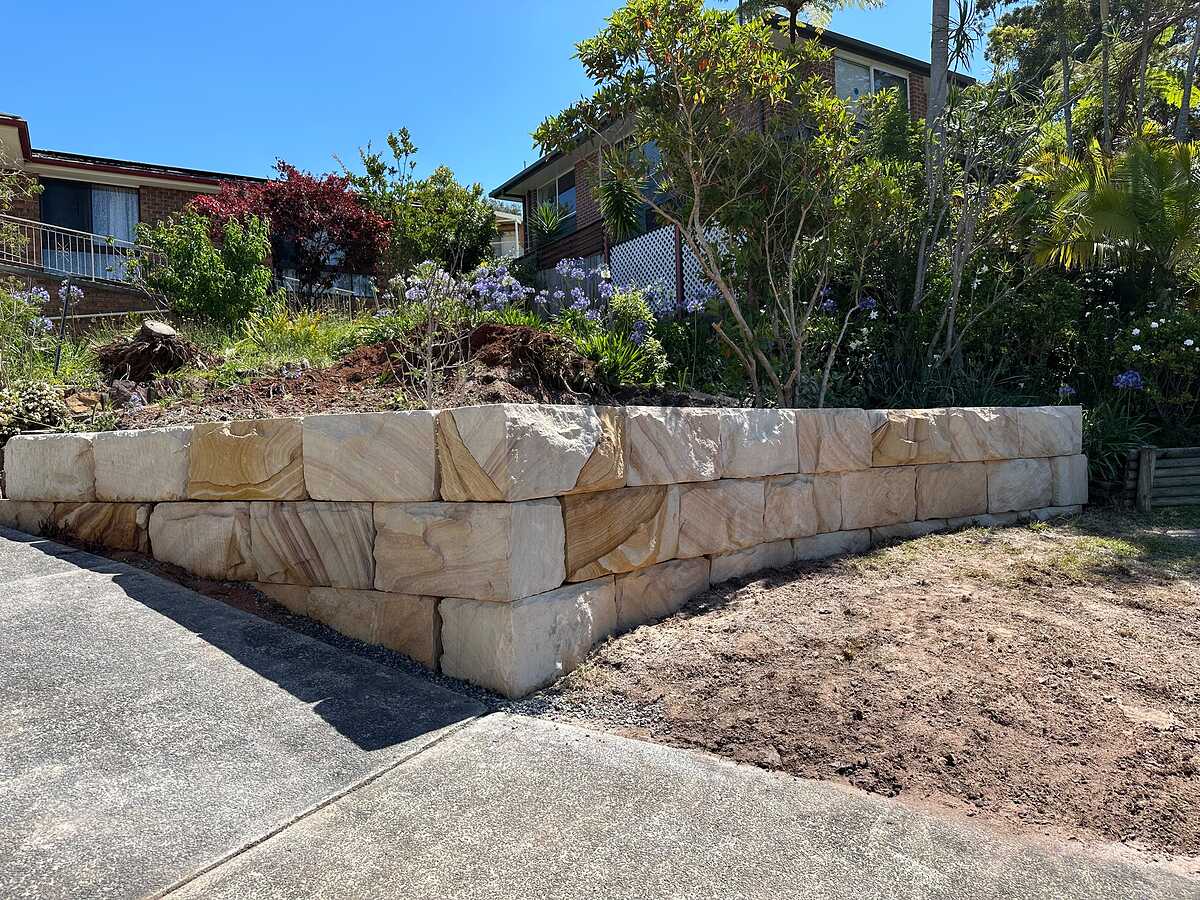
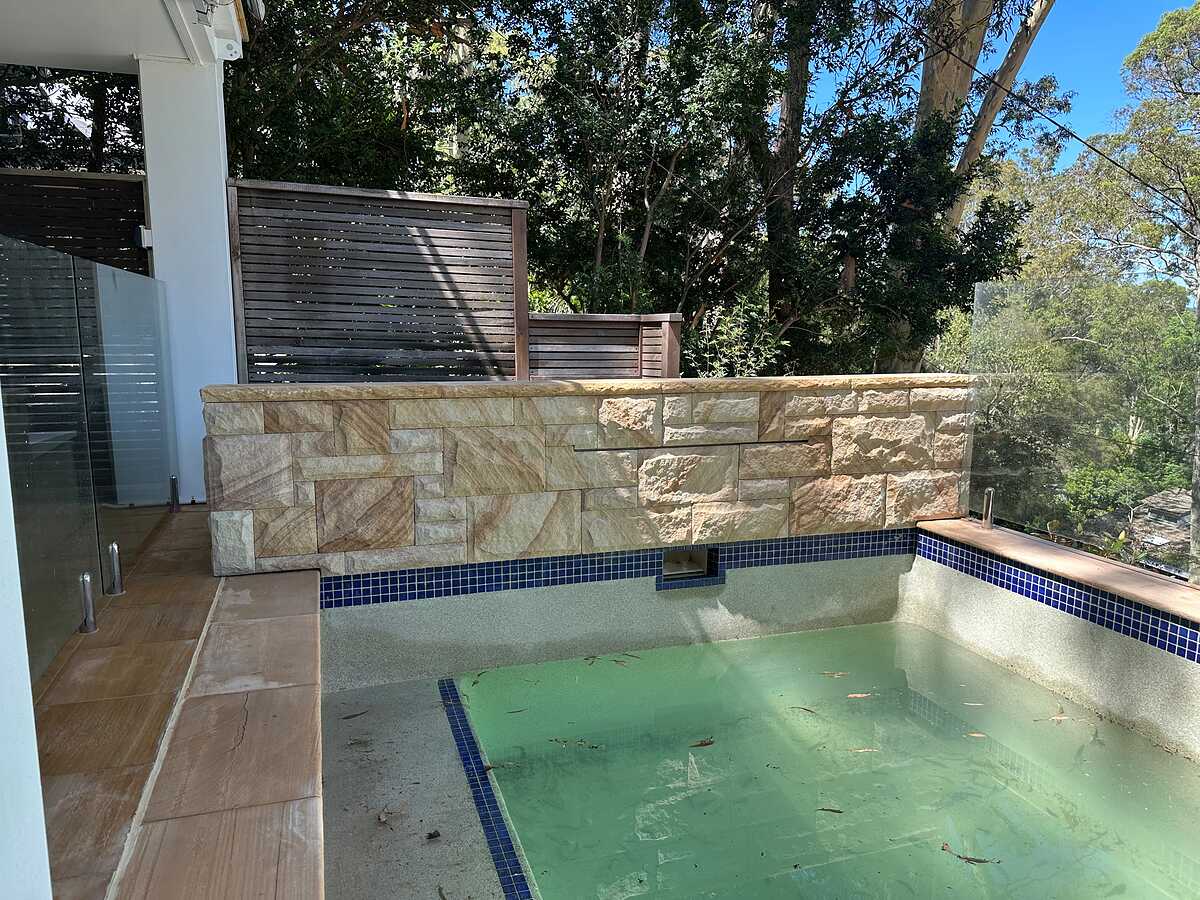
- Sawn blocks: cut square on every face for clean lines and tight joints. They suit modern homes, driveways and pools, and they cost the most.
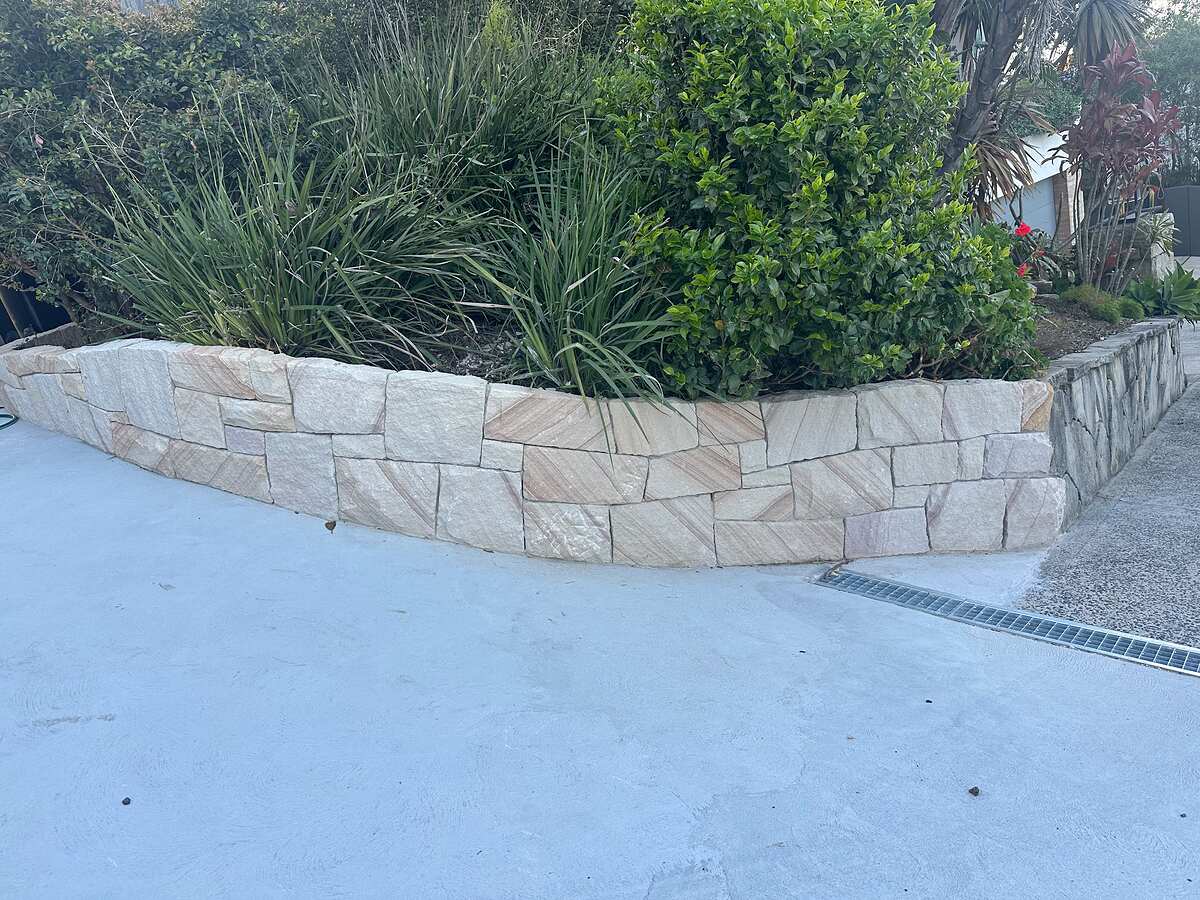
- Rock-face and split-face blocks: a textured, traditional face that suits older homes, bushland blocks and coastal gardens. They are usually laid on a mortar bed.
- Rough-squared blocks: roughly dressed and the cheapest cut option. They can often be dry-stacked for lower garden walls.
- Boulders and recycled sandstone: boulders give a natural, informal edge, and recycled blocks are the best match for older walls. Recycled supply varies, so it is sourced for each job.
Site factors: access, rock and spoil
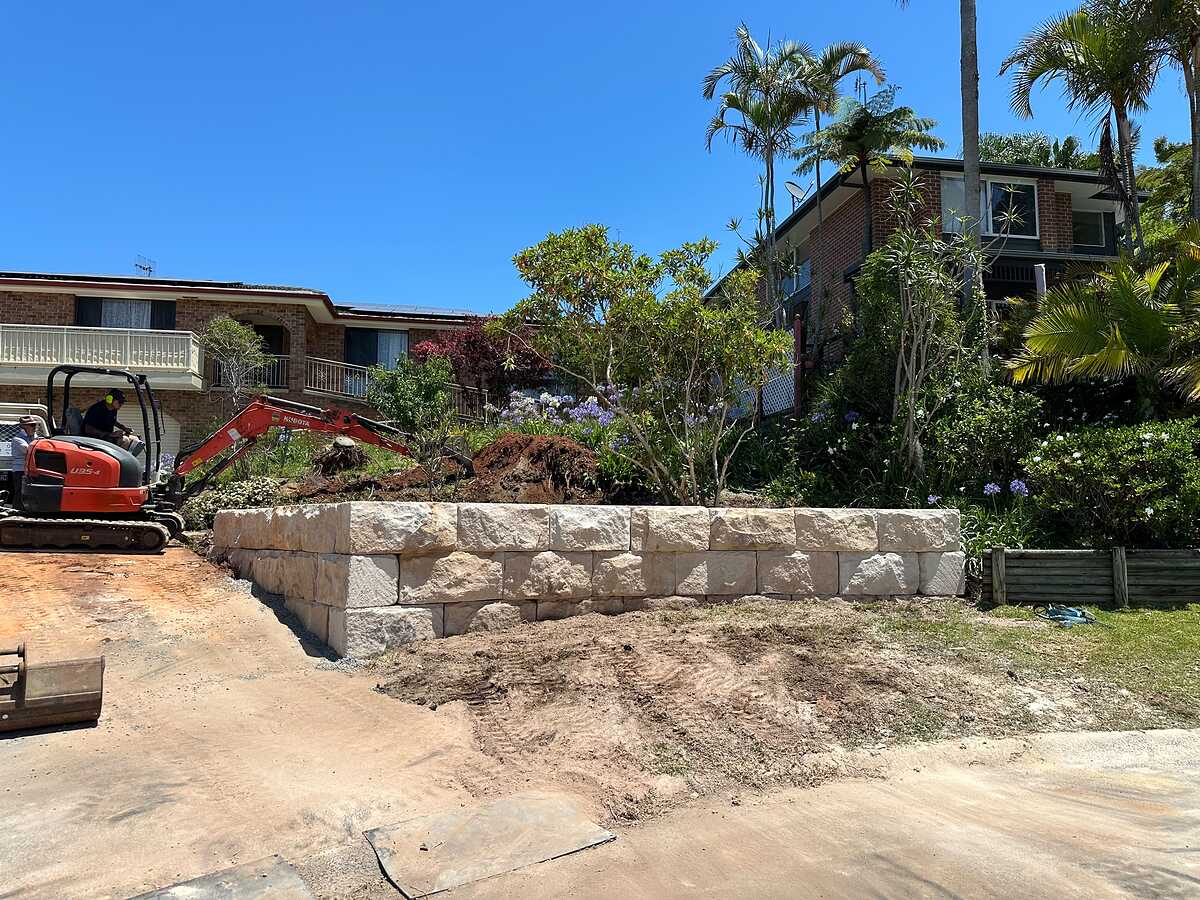
Common sawn block sizes include 300 x 300 x 1000 mm, 500 x 500 x 1000 mm and 500 x 500 x 2000 mm, and the larger ones are placed by machine. When a truck and a small excavator can get close to the wall, the work goes quickly. Narrow side passages, steep driveways, stairs and work under trees mean smaller machines, more handling and more time.
Rock is the biggest unknown on the Northern Beaches and the North Shore, where Hawkesbury sandstone often sits a short way below the topsoil. Footing trenches may need rock sawing or hammering. A good quote says how hidden rock will be handled, for example as a separate rate, rather than leaving it to an argument later.
Excavated soil and rock has to go somewhere. Some can be reused on site if it is suitable, but the rest is loaded, trucked and tipped, and disposal fees add up on a large cut. Backfill behind the wall must be clean material, not building rubble.
Drainage and stormwater
Water trapped behind a wall is the most common cause of retaining wall failure, so drainage is part of the wall, not an extra. A properly built wall has a zone of free-draining gravel or crushed sandstone behind it, geotextile fabric to keep soil out of that gravel, and a slotted agricultural pipe at the base. We explain how we build this on our sandstone retaining walls page.
The pipe has to fall to a legal point of discharge. Water must not be redirected onto a neighbour's land, and connecting the pipe to a stormwater system is drainage work for a licensed plumber or drainer. Check whether that connection is in the quote or priced separately.
Engineering, geotechnical and approval costs
A wall that retains no more than 600 mm and meets every other exempt standard in the NSW Codes SEPP needs no approval. A taller wall, or one within 1 m of a boundary, needs a complying development certificate (CDC) or a development application (DA), and each comes with fees. Our guide to council approval for retaining walls sets out the rules in full.
Walls around 1 m and higher, and walls of any height that carry a driveway, pool or building, are normally designed by a structural or civil engineer. On landslip-mapped land, common in the former Pittwater area, Council will usually want a geotechnical report before it approves a significant wall. These costs are paid to the engineer, certifier and Council, and they are often outside the builder's price.
Licensing matters too. The NSW Stonemasonry licence class covers stone retaining walls that do not need approval under the Local Government Act 1993. Where a wall needs approval or engineering, we build the stonework to the engineer's design and work with your engineer, certifier and Council, alongside the appropriately licensed contractor where the approval requires one.
What a fair quote includes
To compare quotes, put them on the same basis. A quote that is far below the others usually leaves something out, most often the drainage, the footing or the rock. A written quote for a sandstone retaining wall should set out:
- The stone: type, finish and block size, new or recycled.
- The measured wall: length, height and face area, and how height was measured.
- Excavation and footings, including how rock below the surface is handled.
- Drainage: aggregate, geotextile, ag pipe and where it discharges.
- Backfill and compaction behind the wall.
- Spoil removal and tipping fees.
- Engineering, geotechnical, certifier and Council fees, marked as included or excluded.
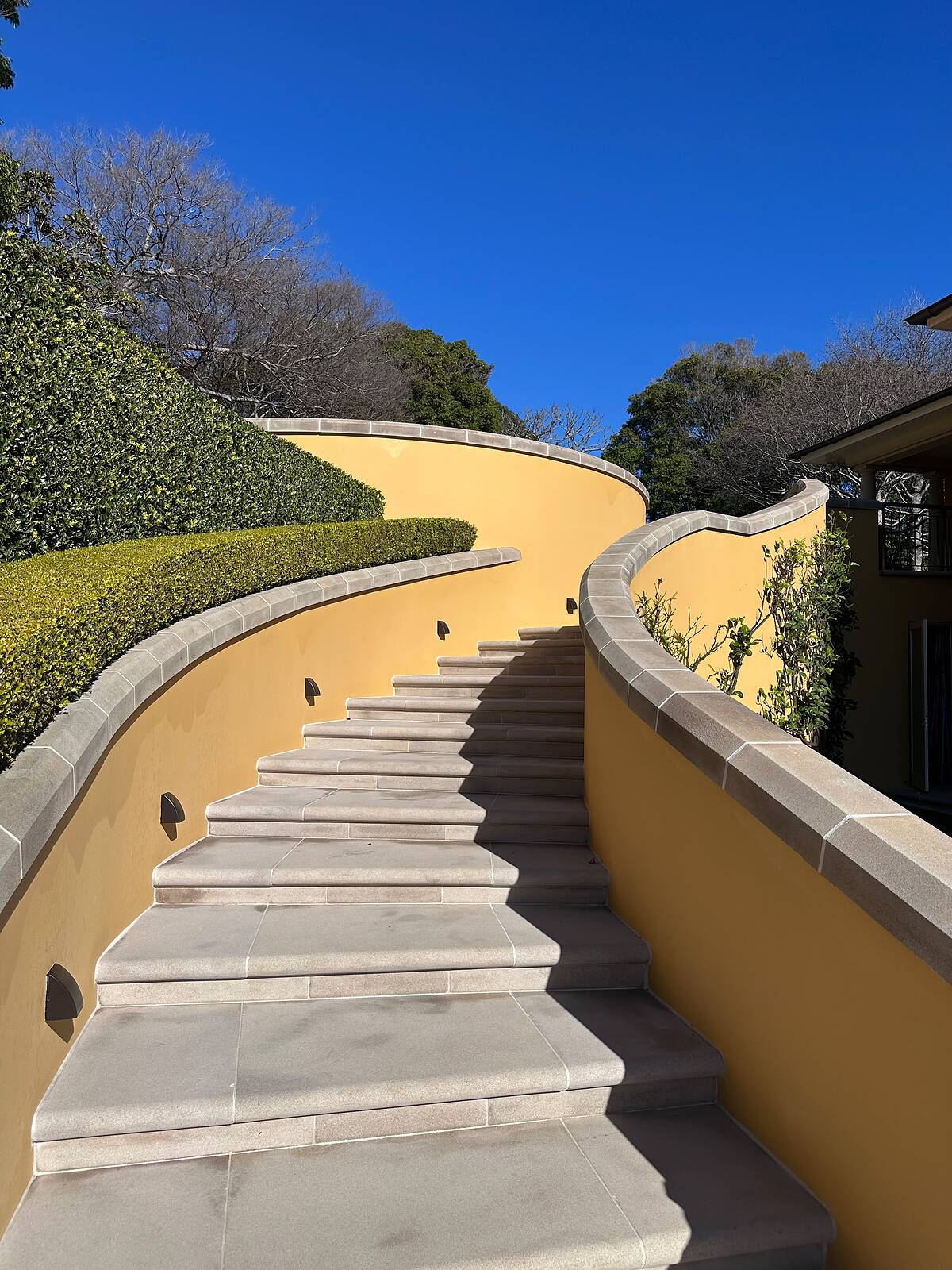
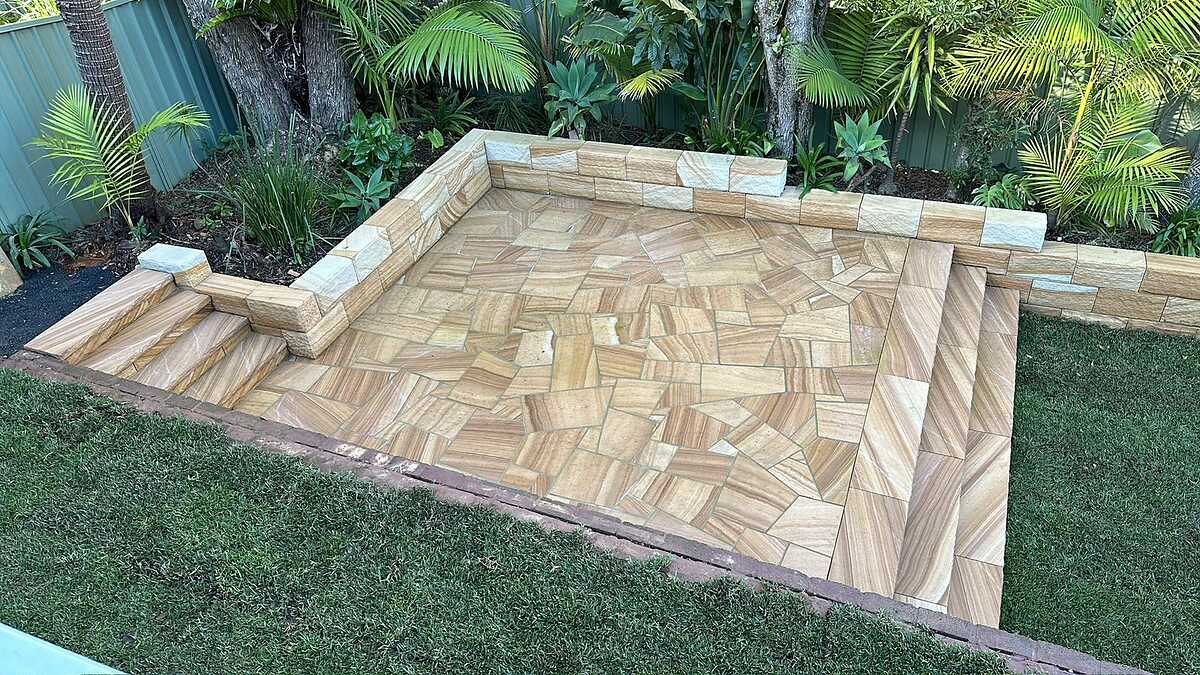
- Capping, coping or built-in steps, if you want them.
- Clean-up, and whether the price includes GST.
Deposits, contracts and insurance
Under the NSW Home Building Act, the deposit for residential building work is capped at 10% of the contract price. Any job over $5,000 needs a written contract, and the builder must give you the Consumer Building Guide before you sign.
In NSW, work valued at more than $5,000 in labour and materials also needs a contractor licence, which you can check on the Service NSW register. For any home building job over $20,000, home building compensation cover is required, and you should check it is in place before you pay a deposit. Contracts over $20,000 also carry a 5 business day cooling-off period. When you are ready, ask us for a written quote.
Checklist
- Measure the length of the wall and the height of ground it will hold back.
- Decide on the look: sawn, rock-face, rough-squared, boulders or recycled stone.
- Check access for a truck and a small excavator, and note any narrow or steep sections.
- Ask each builder how they will handle rock in the footings.
- Confirm where the drainage will discharge and who makes any stormwater connection.
- Check whether the wall needs approval, an engineer or a geotechnical report.
- Compare quotes line by line against the list above, not just the total.
- Check the contractor licence, the written contract, the deposit and, over $20,000, the home building compensation certificate.
Common questions
Why do quotes for a sandstone retaining wall vary so much?
Quotes for a sandstone retaining wall vary mainly because they include different things. One may allow for rock excavation, full drainage, spoil removal and engineering, while another leaves some of those out or covers them with a vague allowance. Block type and site access also change the price. In Sydney, compare quotes line by line on the same measured face area before comparing totals.
Is a sawn sandstone retaining wall more expensive than rock-face?
A sawn sandstone retaining wall usually costs more than a rock-face or split-face wall, because every block is cut square and laid with tight joints. Rough-squared blocks are generally the cheapest cut option. None of these is stronger than the others in a well-built wall, so the choice comes down to the look of your home and garden and the budget.
Are engineering and council fees included in a retaining wall quote?
Engineering, geotechnical, certifier and council fees are often not included in a retaining wall quote, because they are paid to other parties. In NSW they apply when a wall needs a CDC or DA, usually above 600 mm or near a boundary, or an engineer, usually from around 1 m high. Ask every Sydney builder to mark these costs as included or excluded.
Is a sandstone retaining wall worth it compared with timber sleepers?
A sandstone retaining wall costs more to build than a timber sleeper wall, but it lasts far longer. Built on a sound footing with proper drainage, sandstone is effectively permanent, and Sydney has sandstone walls well over 100 years old. Timber sleeper walls typically last 15 to 20 years before they need replacing, which adds to their cost over time.
Sources
- NSW Planning Portal: Exempt development, earthworks, retaining walls and structural supports
- NSW Planning Portal: Complying development, earthworks and structural supports
- Stone Front: Sandstone retaining walls Sydney (block types, drainage and lifespan)
- Northern Beaches Earthmoving: Sandstone block walls (block sizes)
- Home Building Act 1989 (NSW), section 8: Maximum deposit
- Home Building Act 1989 (NSW), section 7BA: Cooling-off period
- NSW Fair Trading: Home building contract for work over $5,000 and up to $20,000
- NSW Government: Consumer Building Guide
- NSW Government: General building work licences
- NSW Government: Stonemasonry work licence class
- NSW Government: Home building compensation cover
- Service NSW: Check a builder or tradesperson licence
This guide is general information, not legal or engineering advice. Rules change and every site is different: check with Northern Beaches Council or a certifier for your property.