Bilgola Beach
Sandstone fireplace and garden walls
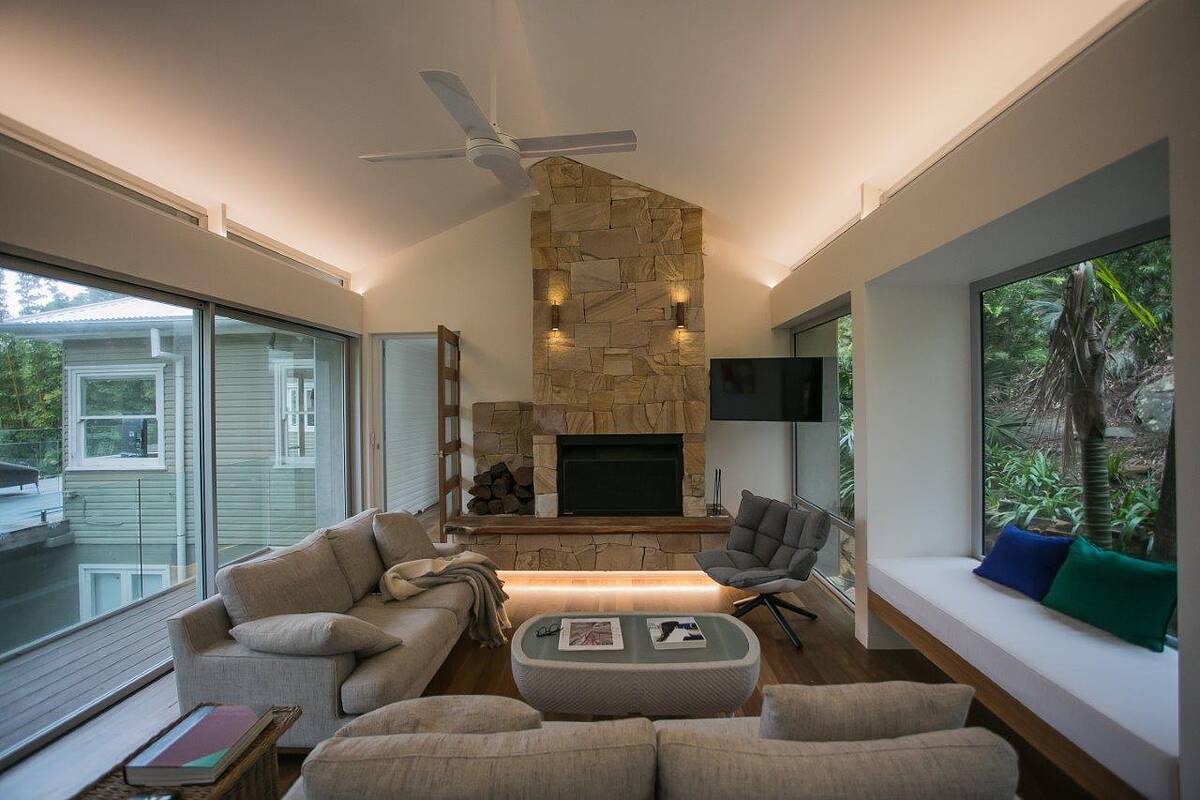
A floor-to-ceiling sandstone fireplace under a raked ceiling, with sandstone block garden walls, steps and a crazy-paved path outside.
View projectCrazy Paving
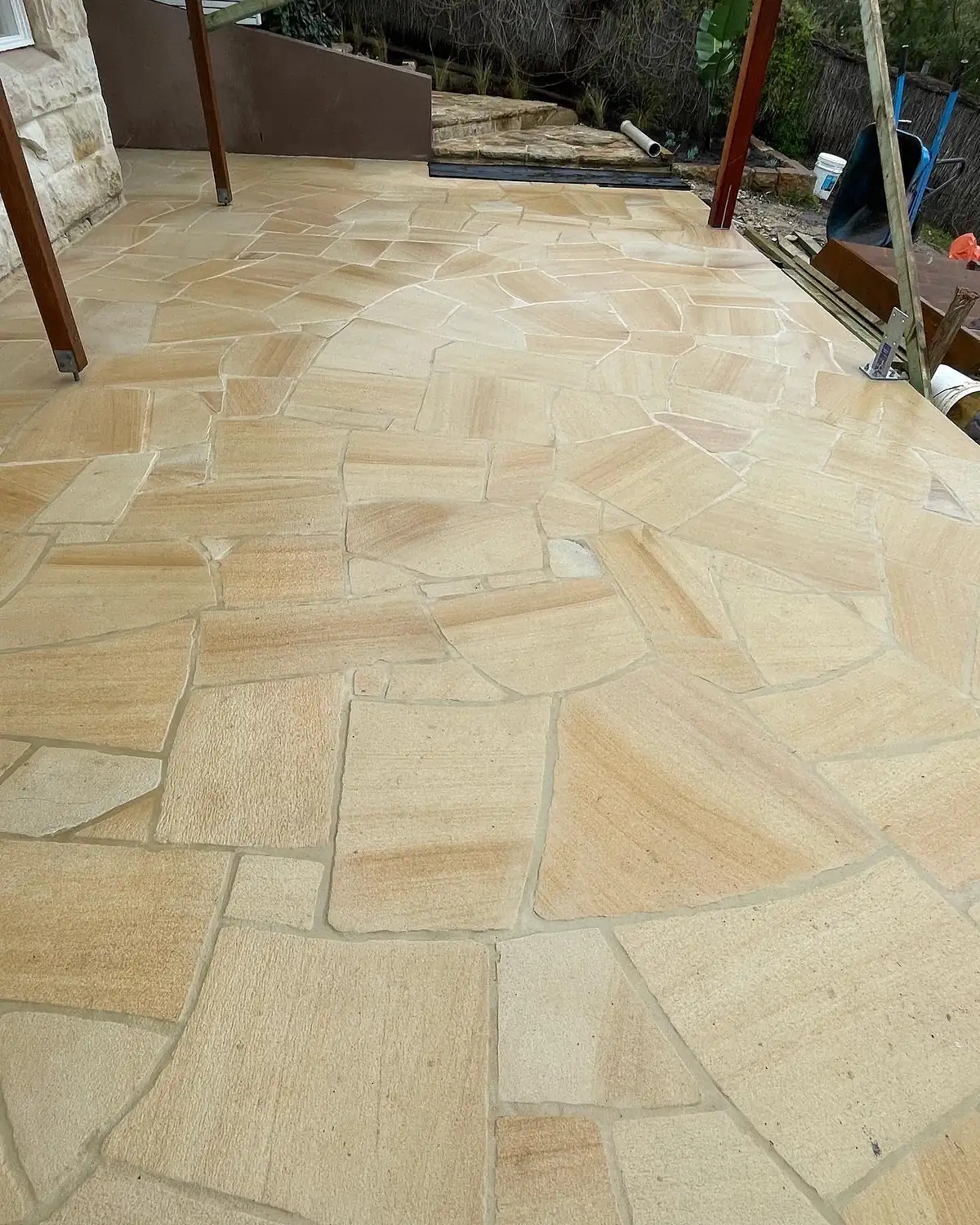
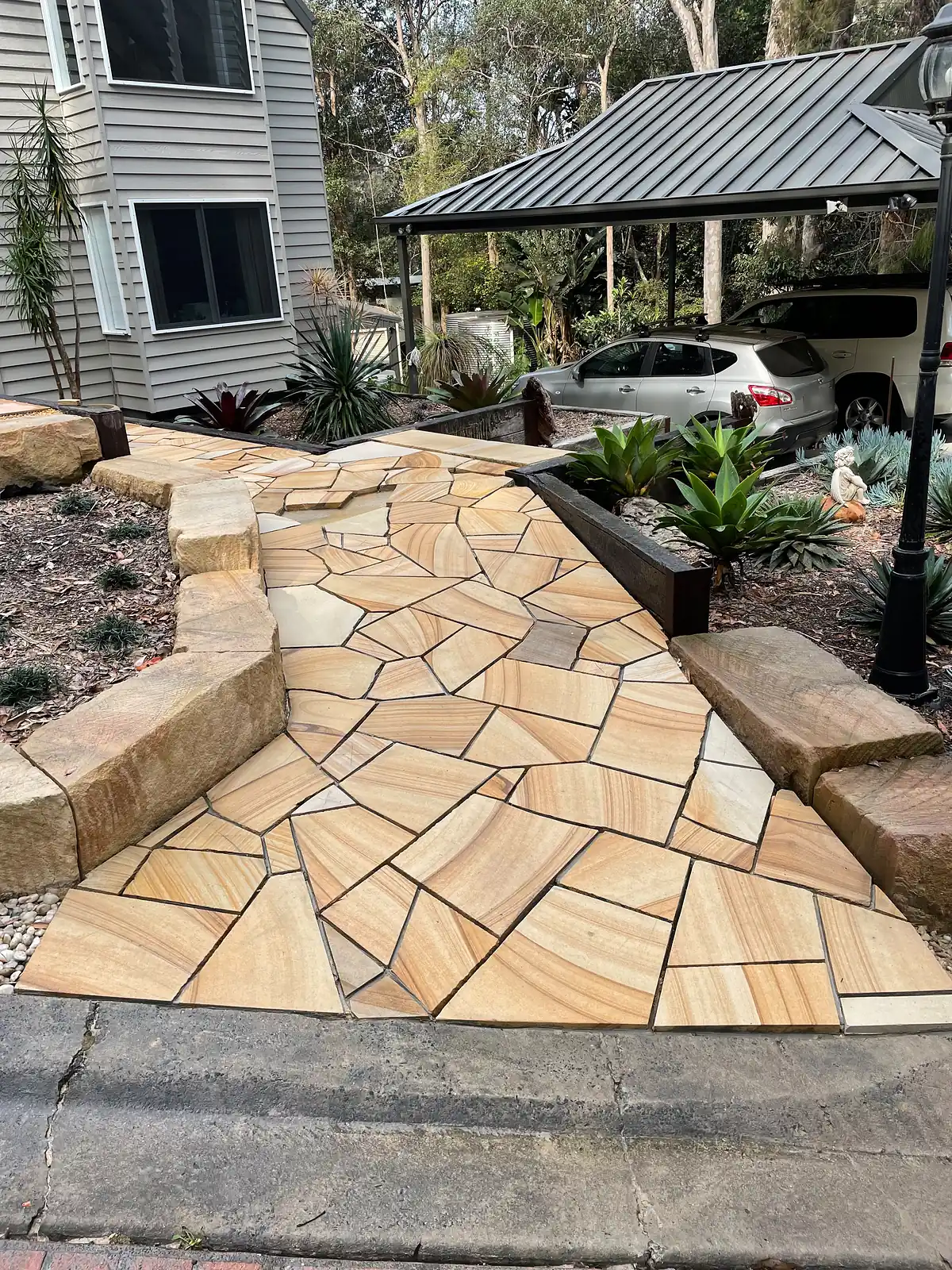
Crazy paving is irregular natural stone, fitted piece by piece into a tight, flowing pattern. We lay it for paths, entries, driveways, patios and pool surrounds across the Northern Beaches.
In short
Crazy paving is irregular pieces of natural stone, such as sandstone, bluestone or quartzite, trimmed and fitted by hand into a tight pattern for paths, patios, driveways and pool surrounds. To last, it should be bedded in mortar on a concrete slab or bound base, because pieces laid on sand alone tend to rock, sink and lift.
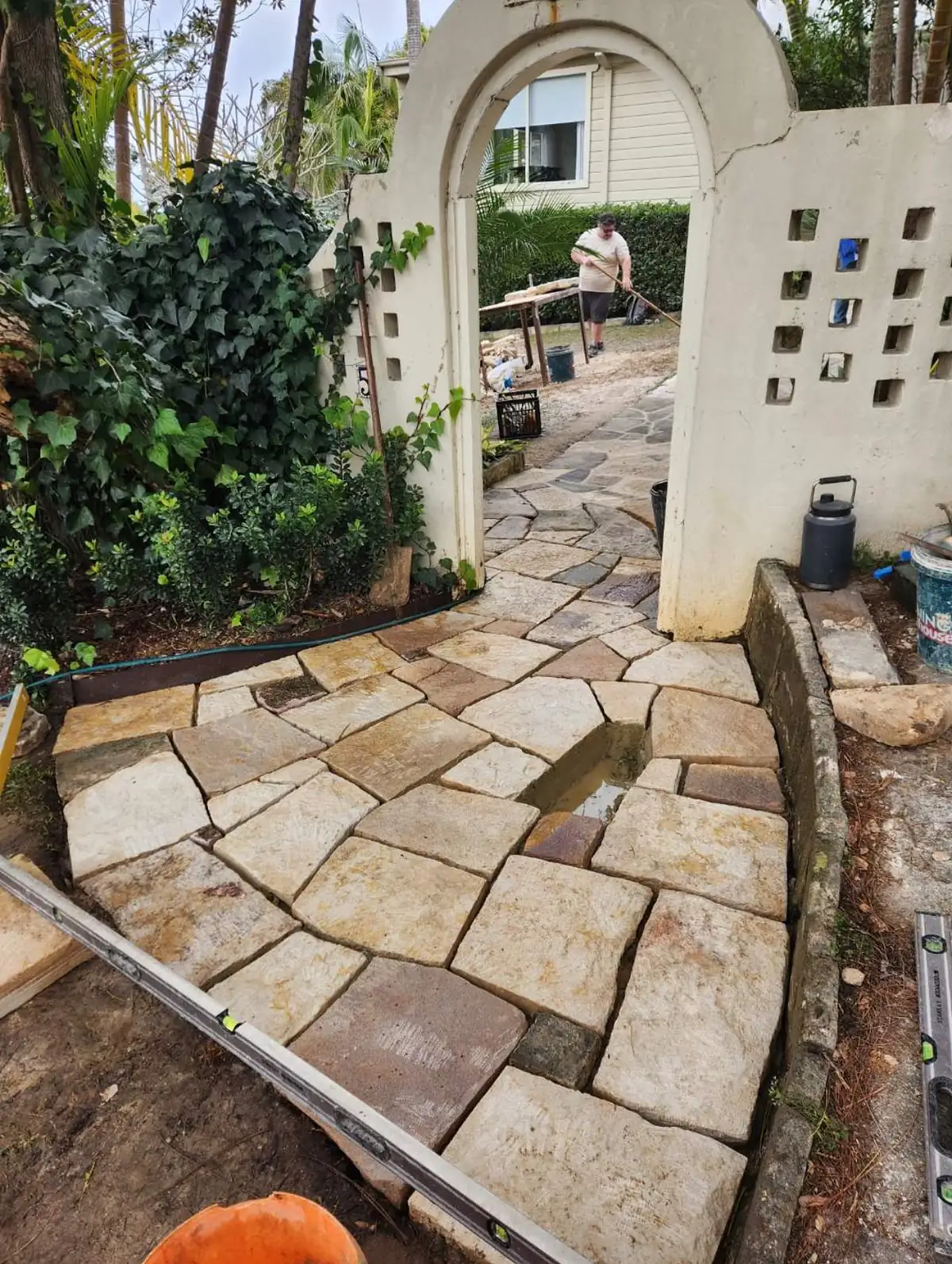
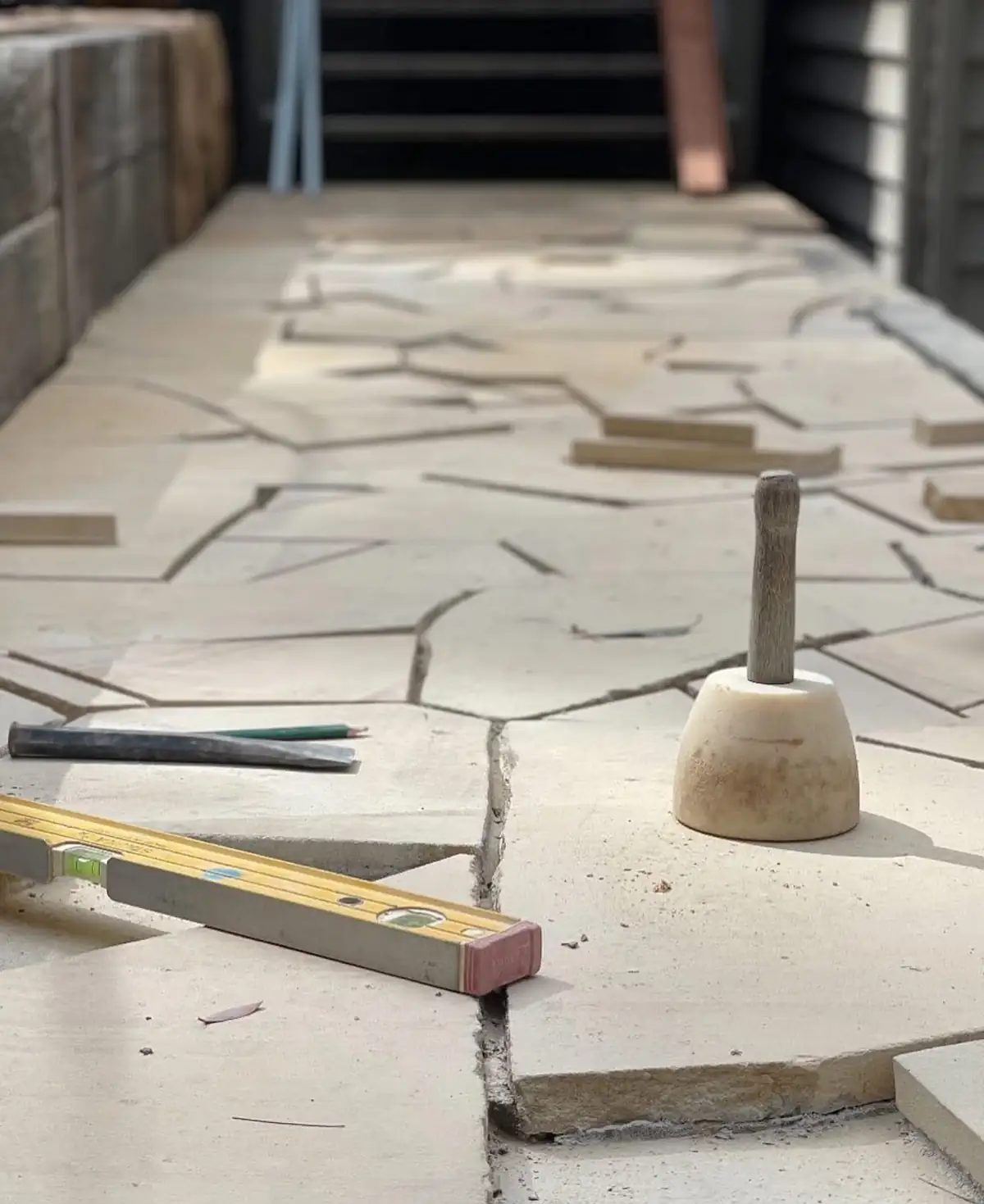
Good crazy paving looks easy and is not. Every piece is chosen, trimmed and fitted so the joints run even, there are no long straight lines through the pattern, and the surface ends up flat and safe to walk on. That is mason's work, done with a mallet, a level and a lot of patience.
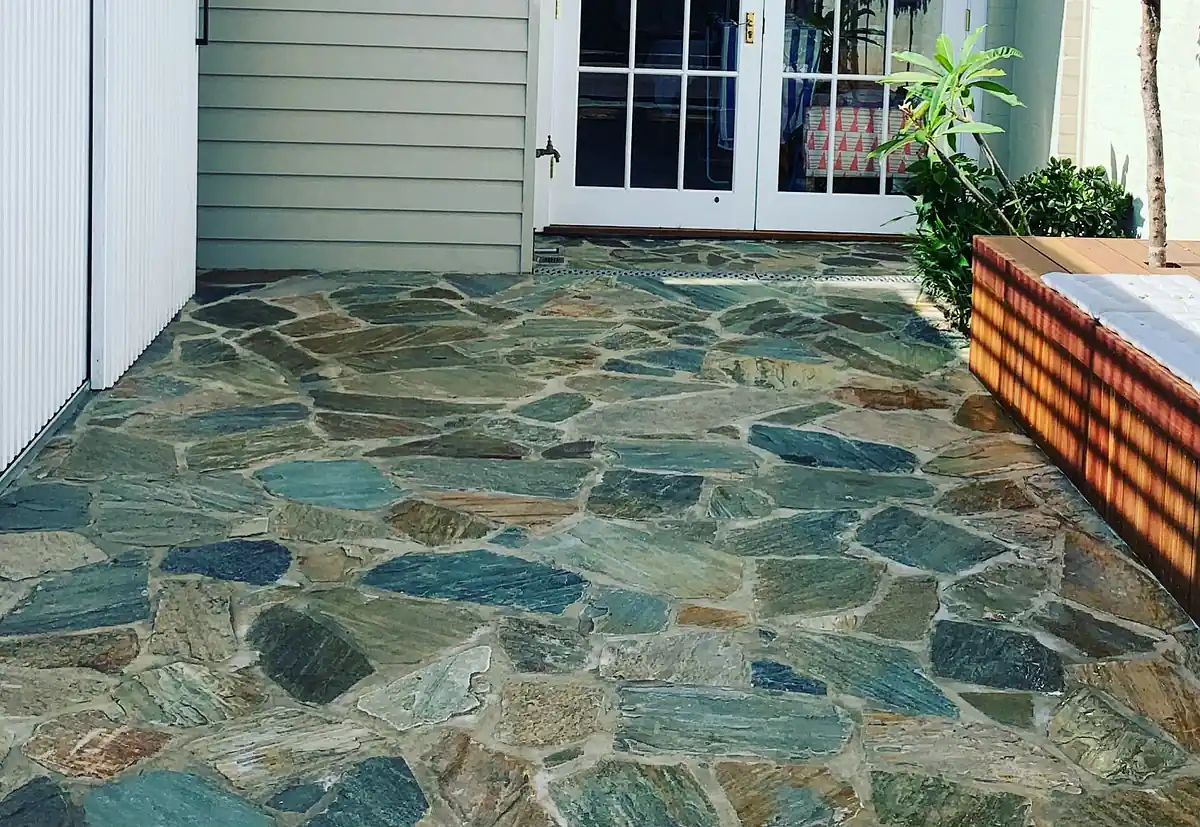
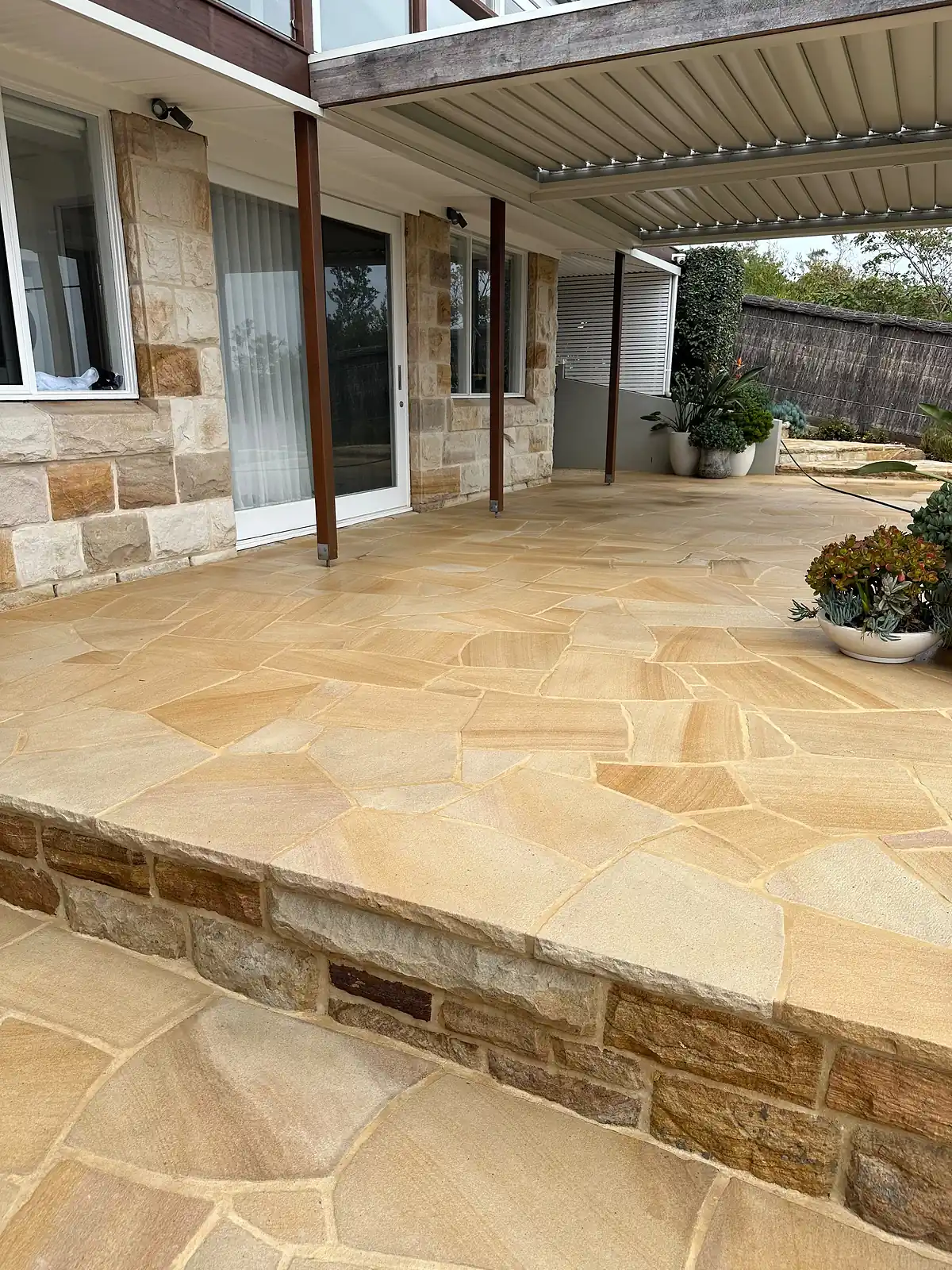
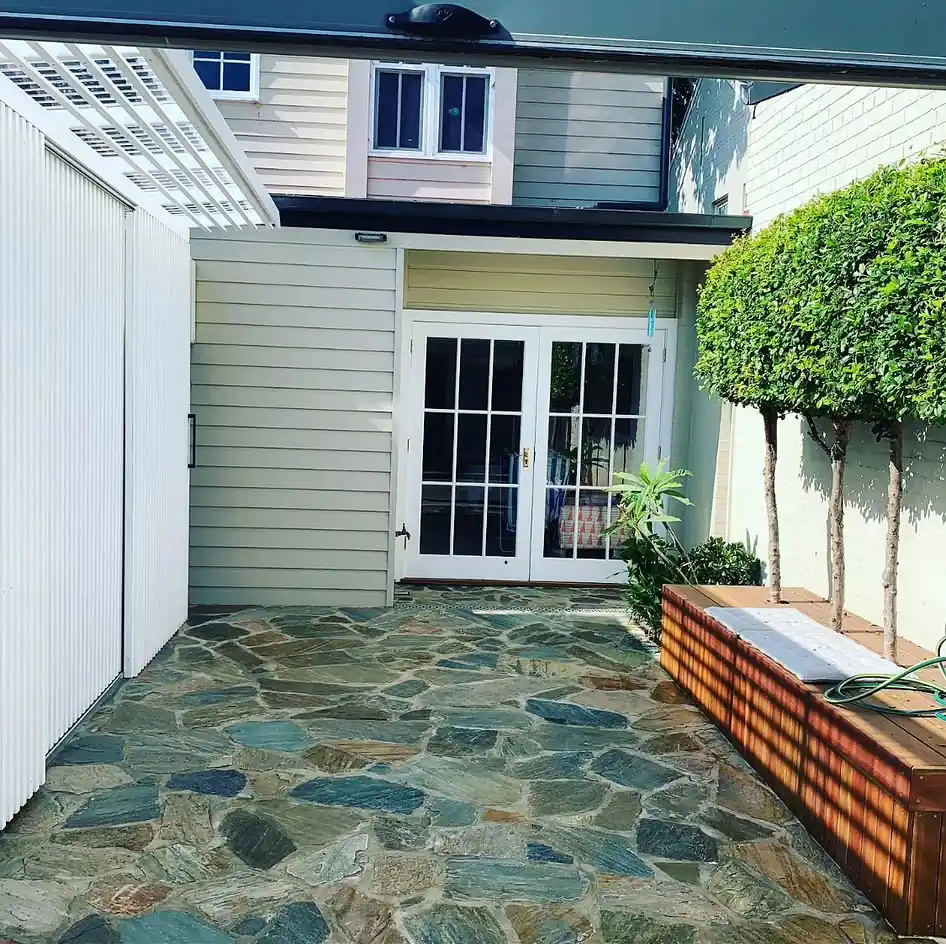
We lay sandstone crazy paving in warm golden and cream tones, plus bluestone and multi-coloured quartzite for a cooler, greener look. The stone sits on a solid base and is bedded in mortar, so it stays put under feet, furniture and, on driveways, cars.
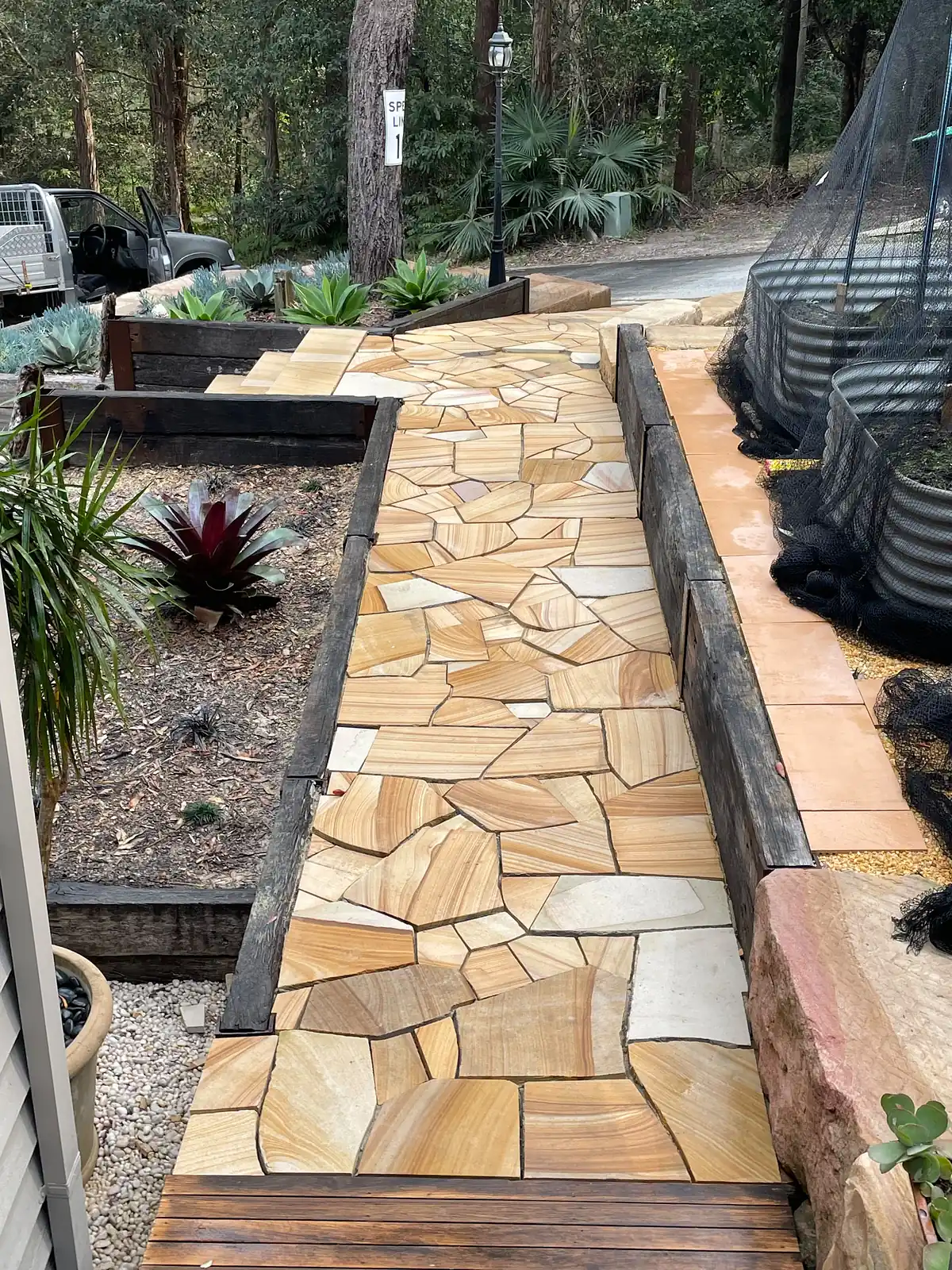
Crazy paved paths through gardens, under arches and up to the front door, often edged with sandstone blocks.
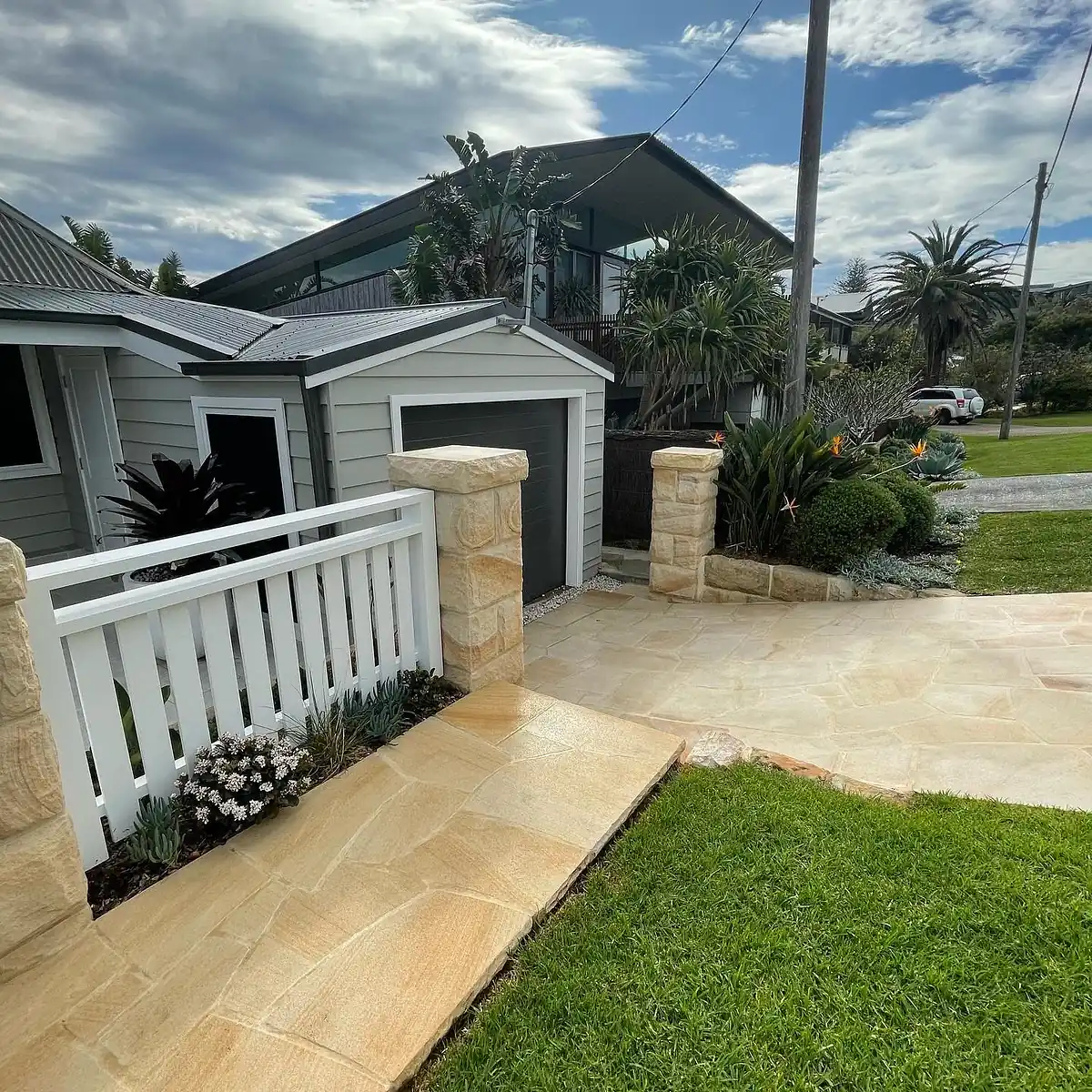
Crazy paving on a reinforced base for driveways and parking areas, with matching edges and pillars.
Entertaining areas under pergolas, raised terraces with block edges and courtyards outside French doors.
Crazy paving around pools with a non-polished, textured surface for grip.
Crazy paved treads and landings that carry the pattern between levels.
The base decides how long crazy paving lasts. For paths, patios and pool areas we recommend a concrete slab or a well-compacted, bound base, with the stone bedded in mortar and the joints filled. Driveways need thicker stone on a reinforced slab designed for vehicle loads.
We set falls so water runs off the surface and away from the house, and keep the finished level below damp-proof courses and weep holes. Any structural concrete slab is formed by the appropriate trade where the job calls for it, with the stone laid on top by us.
Sandstone is warm in colour, has a natural grip and stays comparatively cool underfoot in the sun. It is porous, so it needs sealing, especially around pools. Bluestone is dense and hard-wearing, but darker stone gets noticeably hotter in full sun, which matters for bare feet around a pool.
Quartzite crazy paving brings green, blue and grey tones and is very hard. For a pool surround we usually steer people towards lighter, textured stone and away from polished finishes.
We recommend a breathable penetrating sealer on most sandstone crazy paving. It soaks into the stone, reduces staining, water uptake and salt damage, and still lets moisture escape. Pool areas and high-traffic paths need resealing more often than a quiet garden path, and stone should not be sealed where moisture is rising from below. Our guide covers how to seal sandstone step by step.
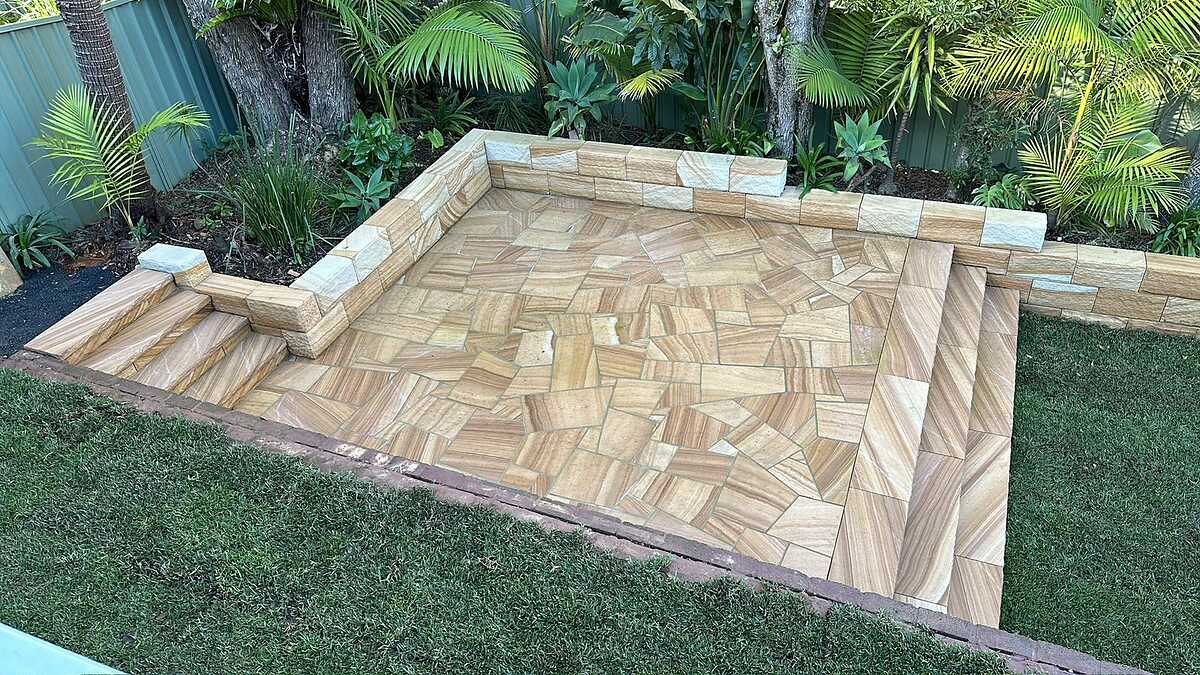
Recent crazy paving by our team. Tap a photo to see it larger.
How we work
We look at the area, levels, drainage and how the space is used, and show you stone options.
We excavate, set levels and falls, and prepare the slab or compacted base.
We lay out and trim each piece by hand so joints are even and the pattern flows.
The stone is bedded in mortar, checked for level and the joints are filled.
We clean the surface and apply a penetrating sealer once the stone is ready.
Crazy paving is priced per square metre laid, but every site is different, so we quote each job. These are the main cost drivers.
A floor-to-ceiling sandstone fireplace under a raked ceiling, with sandstone block garden walls, steps and a crazy-paved path outside.
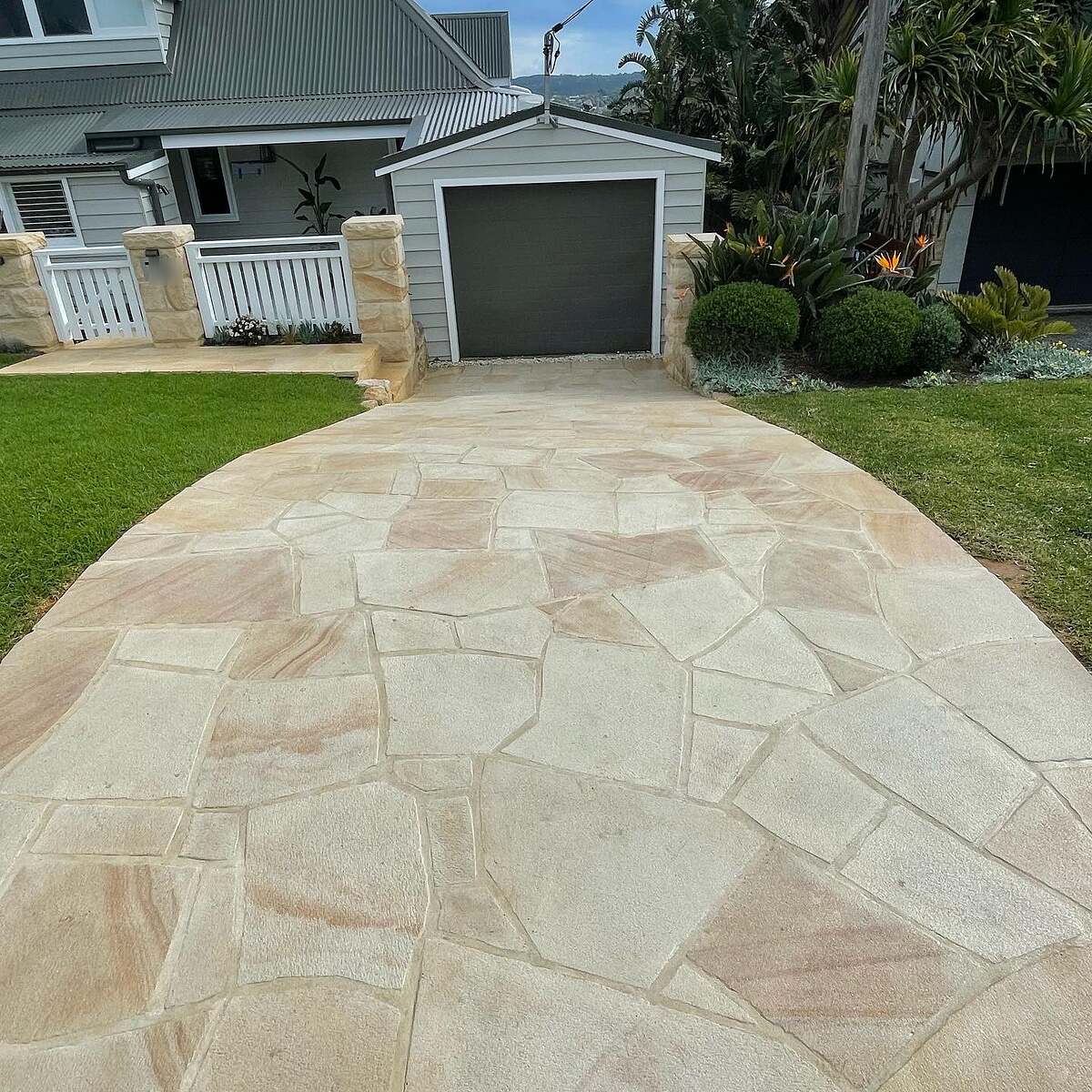
View projectA wide sandstone crazy-paved driveway and entry path, with a row of rock-face sandstone pillars carrying a white picket fence across the front lawn.
View projectCrazy paving is usually priced per square metre laid. The cost depends on the stone you choose, the base needed (a slab costs more than a path base), the shape of the area, access and sealing. Fitting irregular pieces takes more labour than square pavers. We measure up and give a free, no-obligation quote for Northern Beaches and North Shore jobs.
For durable paths, patios and pool areas, crazy paving is best laid on a concrete slab or a well-compacted, bound base, with the stone bedded in mortar. Laid on sand alone, the irregular pieces tend to rock, sink and lift. Driveways need thicker stone on a reinforced slab. We plan the base for each Northern Beaches site before quoting.
Bluestone crazy paving gets hotter in the sun because it is darker and denser. Sandstone crazy paving is lighter in colour and stays comparatively cool underfoot, which is why many Sydney pool owners prefer it for bare feet. Bluestone is harder-wearing and less porous, so the right choice depends on sun, use and the look you want.
Natural split stone crazy paving generally has good grip around a pool because its surface is textured, not polished. Slip risk rises with polished or very smooth finishes, algae in shaded spots and some film-forming sealers. For pool surrounds on the Northern Beaches we use textured stone, keep the falls right so water drains away, and use a penetrating sealer.
Sealing is recommended for sandstone crazy paving. A breathable penetrating sealer reduces staining, water uptake and salt damage while letting moisture escape from the stone. Pool areas and busy paths need resealing more often than a quiet garden path. Do not seal crazy paving where moisture is rising from below, as it can trap salts and damage the stone.
Sawn sandstone flagging, pavers and random flagging, plus travertine and bluestone, for terraces, courtyards and paths.
Learn more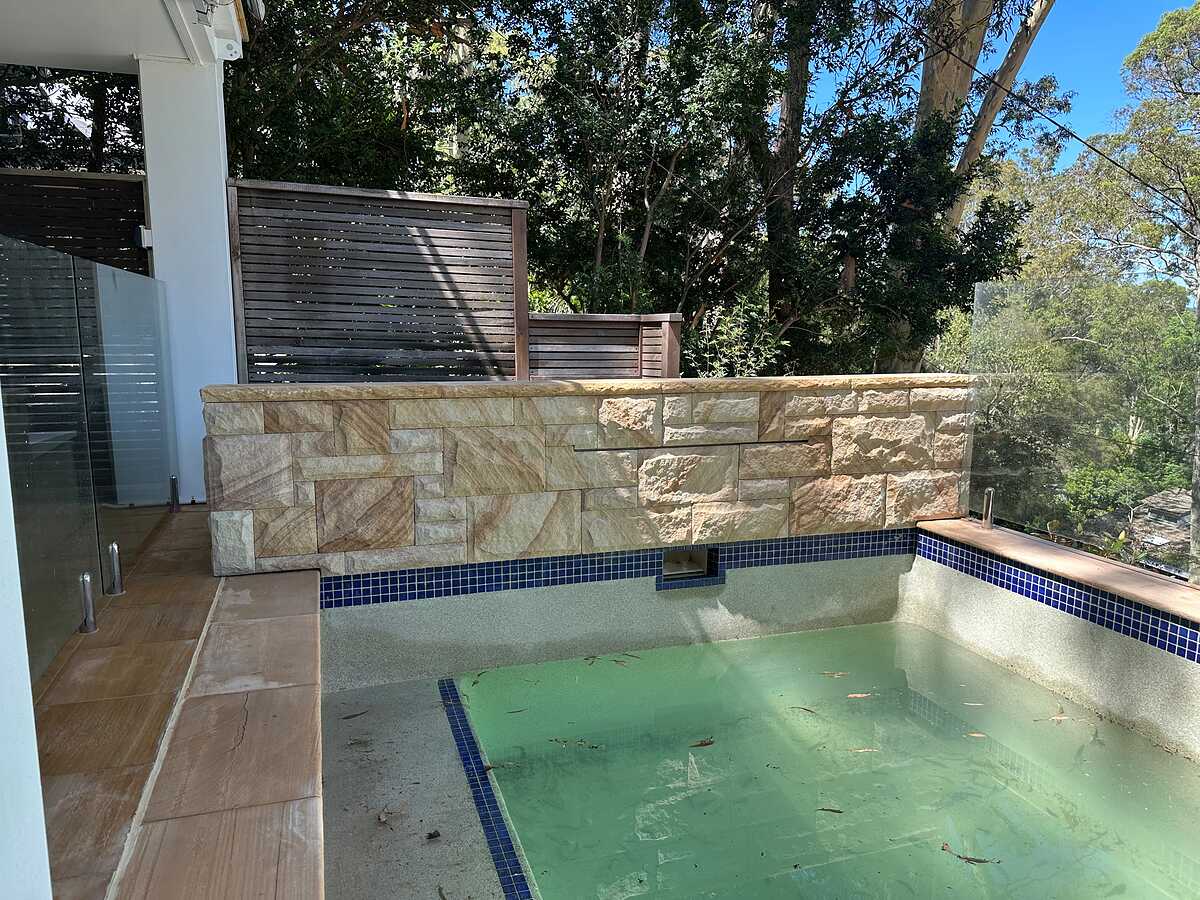
Sandstone bullnose and drop-face coping, pool paving and split-face feature walls, with honest advice on stone for salt pools.
Learn more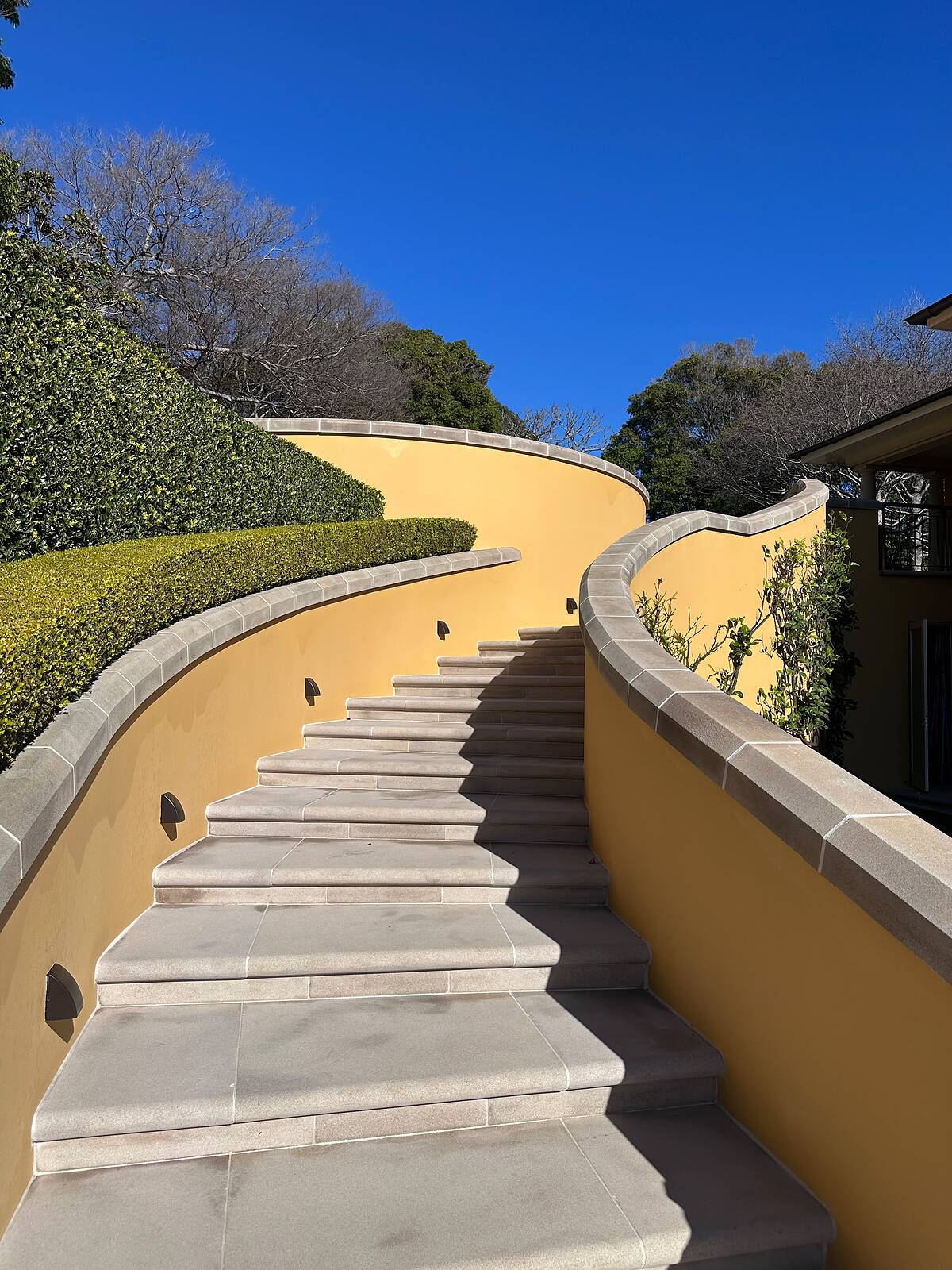
Sandstone entry steps, garden stairs, block steps and curved staircases, built with even rises and solid footings.
Learn moreWe work across the Northern Beaches and North Shore.
Tell us what you have in mind. Blake will talk it through, visit the site and give you a clear written quote.